Luxury Resale Is Growing Faster Than Primary Luxury Market

https___hypebeast.com_image_2019_08_gucci-leads-resale-consumer-report-hypebeast gucci fashionado

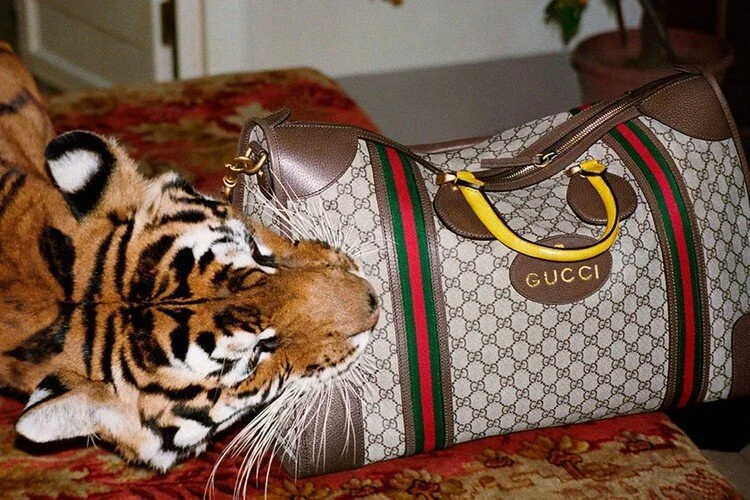
A new report from the Boston Consulting Group details that the luxury resale market is expected to grow at a faster rate than the primary luxury goods market. According to The Fashion Law who first reported on the study, luxury resale expects a 12 percent average growth rate through 2021, as well as a nine percent share of the personal luxury goods market. This level of growth would outshine the primary luxury goods market that’s expected to grow at an average rate of three percent.

The survey states that 50 percent of customers in the US that have purchased a luxury item within the past year have also participated in the luxury luxury market. It also notes that “secondhand sellers typically use resale to regain some of the money they spent on firsthand purchases—often so they can reinvest in new, full-priced luxury products.”

Analysts who worked on the survey conclude that this is actually “a powerful opportunity” luxury brand consumer bases because they have the chance to convert resale consumers to the primary resale market. Boston Consulting Group’s study found that 44 percent of consumers surveyed said they purchase “more-expensive luxury items than they would have bought without a resale market.”

Along the same lines, Bloomberg’s Sarah Halzack and Andrea Felsted also argue that higher access to reselling platforms could actually encourage younger consumers to take the plunge and purchase primary luxury goods instead of resale. “Say you’re considering a classic Balenciaga City bag for about $2,000 USD. Is it worth the investment? A scroll around The RealReal shows that you might be able to resell it for about $600.” They note that this could be “exactly the kind of assurance a first-time millennial or Generation Z luxury buyer needs to take the plunge on a pricey accessory.”

FASHIONADO

SOURCE THE FASHION LAW
Burberry Holiday Campaign 2019

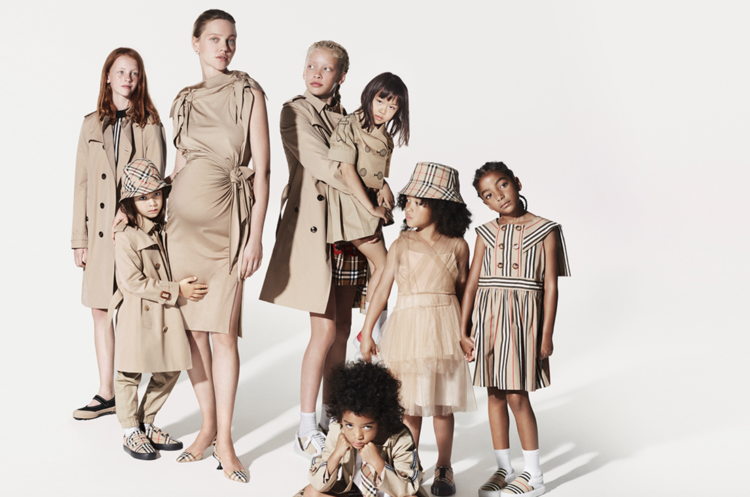
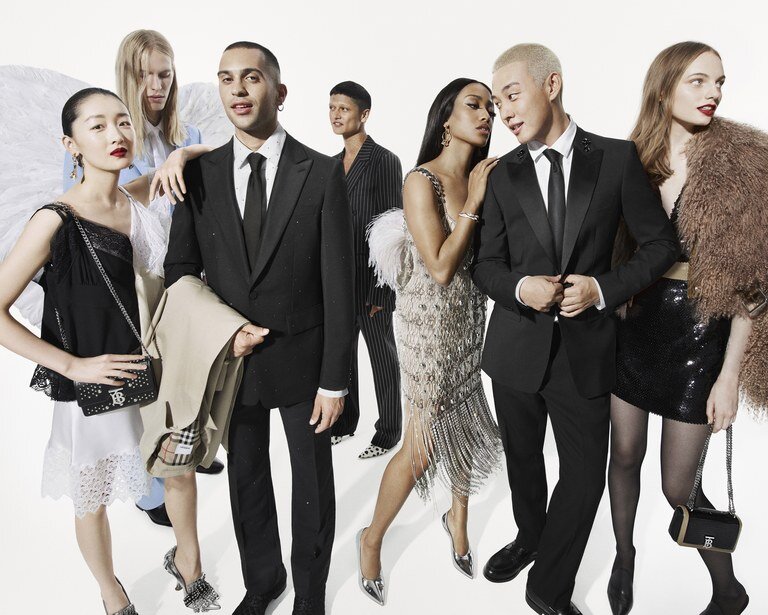
Burberry has just released a full look at its newest campaign for the 2019 holiday season. This new campaign is effectively Riccardo Tisci’s first festive campaign with the label since being appointed Chief Creative Officer of Burberry.

For this year’s festive campaign, Tisci instills the feeling of togetherness, or in other words, “a campaign for everybody, everywhere at a time for union, love, and family.” Enlisting friends close to the Burberry family, the lookbook features the likes of Carla Bruni, Fran Summers, Zhou Dongyu, Shay, Ikram Abdi Omar, Lea T, Boychild, as well as brand ambassadors Ah In Yoo, Mahmood, and Ruben Loftus-Cheek.

View the entire Burberry Holiday 2019 campaign above, where it will run until the end of December.

Source: HypeBeast

FASHIONADO

Martin Margiela: In His Own Words

“Have you said everything you wanted to say in fashion?”

“No.”

That is the promise dangling at the end of Reiner Holzemer’s new documentary, Martin Margiela: In His Own Words, which premiered at the Doc NYC film festival last week. After 90-ish minutes of exposition from Margiela himself, who remains so elusive only his hands were filmed, Holzemer abruptly asks if fashion’s most celebrated genius is really, truly, undeniably done with it all. No. And then the screen cuts to black.

Any hopes of Margiela’s return to fashion will have to be sidelined for now, however. “He won’t work as a fashion designer anymore in his life—probably,” Holzemer told Vogue during an interview on the day of the film’s world premiere. “But you never know. We all love that the movie ends with this. It gives you a nice smile in the end, which is important.”

Holzemer’s film is not so much about where Martin Margiela is in 2019—the designer speaks of painting and sculpting, though those pursuits are not shown in the documentary—or what he might do in 2020, but about the 20 years from 1989 to 2009 during which Margiela operated his eponymous label. As a portrait of a finite body of work—the two decades of Martin Margiela runway shows—Holzemer’s film operates as a circle: It begins with Margiela’s Spring 2009 20th-anniversary show, his final one, then waltzes through a chronology of his life and career with the help of talking head interviews with Olivier Saillard, Carla Sozzani, Stella Ishii, Pierre Rougier, Cathy Horyn, and more of his models, collaborators, friends, and critics, before finishing back at Margiela’s swan song.

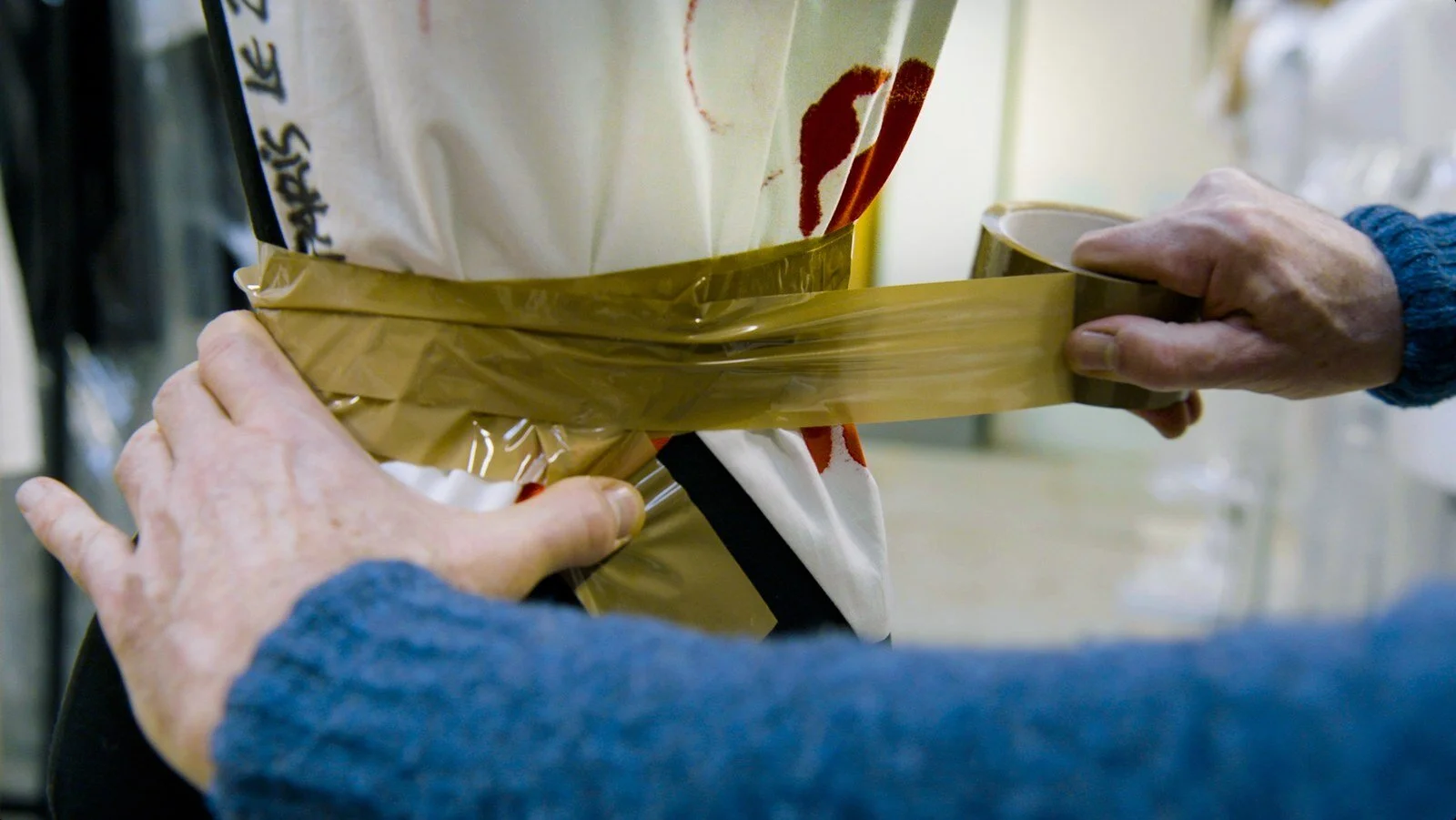
That format allows for deep dives into the designer’s key collections and career points. It helps that the documentary was made alongside the preparation and installation of the Palais Galliera’s 2018 exhibit, Margiela / Galliera, 1989-2009. For 42 days, Holzemer, sometimes alone, sometimes with a skeleton crew, would visit the museum or Margiela’s studio and get the designer talking. “Which garments are important, which do you think we have to include in the movie?” Holzemer says he asked Margiela as they began filming. There were 110 items in the exhibit, and he made a list of 90 for the film.

Ultimately, they settled on around 70 crucial pieces, which are presented with voiceovers by the designer. These range from his cork necklaces—which we see Margiela making with his own hands as the film starts—through his doll collection of 1994 and his stockman collection of 1997. “I’m very grateful that he opened up and he trusted me so much. It was not always easy for him,” Holzemer says. The hits are all here: The Spring 1990 show staged in a playground (“The most magical show of my career”), his time as creative director of Hermès (“For me, luxury is the perfect balance between quality and comfort and if I could go farther I would add timelessness”), the Spring 2007 show that worked to establish new Margiela codes (“I wanted to be different, new, without rejecting my fans…. It felt like a new beginning.”)

Martin Margiela

As the movie seeks to illustrate, Margiela did almost everything that is on trend in contemporary fashion first: He had street cast shows, he popularized the long, lean lines of the ’90s, he made a reissue collection for his 10th show, he pushed and pushed and pushed the creative bounds of what a fashion show was and what a fashion brand could look be. “I hope that, first of all, his name and the work stays alive, that people discover how influential he was, how much of what we see today on the catwalks is sometimes copied one-to-one—I don’t need to mention the names, I’m not an expert of that,” Holzemer says. “I think if the world knows where the Margiela influence comes from, that would make me very happy.”

Of course, what Margiela also did first was what he did last: Leave fashion for good. “I was not made to cope with that system as well as Jean Paul Gaultier,” says Margiela, who was Gaultier’s assistant before launching his own label. “Jean Paul always said, ‘Martin you’re too serious,’ and it’s true […] I am probably too serious for that world.” Margiela’s departure is a story that has become familiar within fashion’s creative industries: the struggle to translate a personal passion into a corporate consumer product. It’s here that the film touches a nerve, but instead of prodding it, it lets the audience read between the lines. The sale of Maison Martin Margiela to Renzo Rosso’s Only the Brave group, the departure of Margiela’s partner Jenny Meirens, and Margiela’s own absence are covered without too much emotionality, although fashion insiders will be able to interpret Margiela’s careful language about the reason for his departure: “At the end, I became, in a certain way, an artistic director in my company and that bothered me because I am a designer […] I am not a creative director who directs his assistants.”

The irony of Holzemer’s delicate portrait of an artist in absence is that it was Margiela’s replacement who inspired the director to take an interest in fashion as a subject. (Holzemer worked on films about photographers before taking up fashion with the documentary Dries about Dries Van Noten in 2017.) “Why I wanted to make a fashion movie was the Galliano story,” Holzemer says, referencing the public meltdown that got John Galliano fired from his position at Christian Dior. After entering rehab, Galliano was named the artistic director of Maison Margiela in 2015. “I read a big article about the pressure fashion designers are under. I was really touched by that article. It was a bad thing that Galliano did, but in that article it explained that some of the designers take drugs to survive. Alexander McQueen killed himself. That was the thing that caused my sensitivity for the profession, for the world, for the industry. […] How do I say it? I work hard too, but the fashion designers work so hard under such pressure wherever that pressure comes from, sometimes it’s big companies, sometimes it’s yourself. That it’s really a challenge to remain in that business for so long and to survive in that business in a healthy way.”

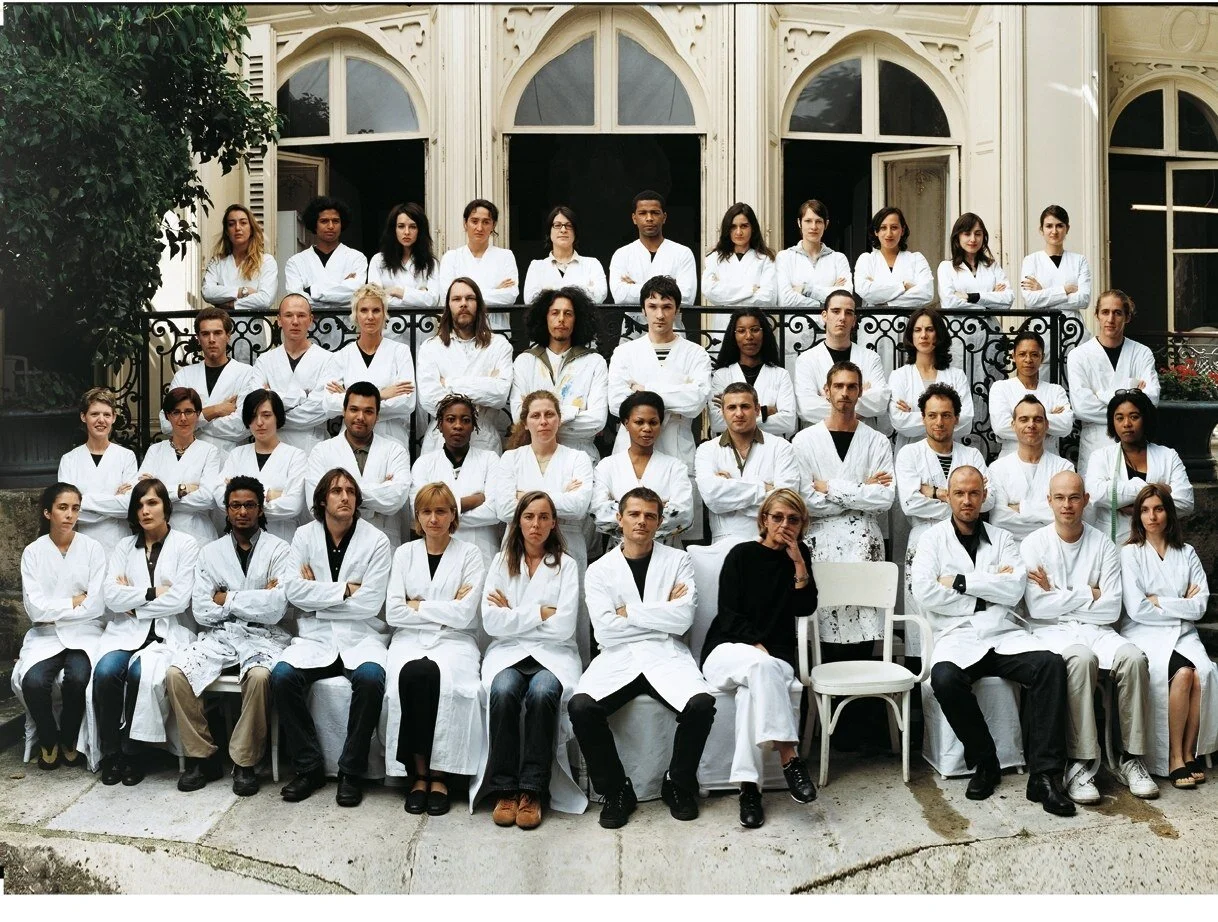
Maison Martin Margiela Team

Holzemer indicates that he knows there is a lot of pain here for Martin Margiela—but he won’t say anything about it, nor does much of that tension make it to the screen. “You don’t see that in the movie. Often I was looking at his face, the camera was on the wall, it was only listening, and I thought, It would be so strong if I could show your face now. I still have it in my memory. It was often very touching. The story was always surprising because you could not read it. He told it for the first time: How he felt after the first show, how he felt after 10 years, and how he felt in the end. Nobody knew that before.”

Even with these small, tender moments of Margiela’s vulnerability that reveal the glimmer of a sensitive, caring, gentle man, this documentary doesn't go beyond affirming many of the myths already made about Martin Margiela. Yes, there are incredible glimpses into his childhood in Genk, Belgium, and his sketchbooks—with every year of the designer’s life saved by his mother, Léa Bouchet—but the final film still works behind layers of abstraction. It is mostly about the exhibit, it is without its star’s visage, and even the voice over of Margiela’s lyrical Franco-Belgian intonation is slightly engineered to cloak the reality of what Martin Margiela actually sounds like. In Dries, one of the most compelling moments is one that seems almost incidental: Van Noten and his partner, Patrick Vangheluwe, silently snipping flowers from their garden and arranging them throughout their house, not a word spoken, not a nod exchanged. “You can talk a lot about perfectionism or obsession but there you see it, you feel it, and it says it all,” Holzemer says of that scene.

Martin Margiela: In His Own Words never gets to that show-don’t-tell moment because so much of the story has to be told in voiceover or in interview segments. To adequately show the brilliance of Martin in the year 2019—30 years after his seismic start and a decade after that anniversary show that proved to be his last—something really unexpected would have to happen in the film. For the most part, it doesn’t. But maybe it’s best that the curtain stays drawn a little longer. By protecting Margiela from the cold gaze of a camera, Holzemer allows us superfans to keep our fashion-world hero alive, no flaws, no tensions, no negativity; only these memories and the knowledge that the heart behind the Margiela universe is still beating. Toward the end of the film, Holzemer shows the opening of the Galliera exhibit, long lines shivering in Paris’s March cold. Inside, Vogue editors gasp at the installation, Raf Simons gestures at a mannequin, Rick Owens contemplates in admiration. The legend of Martin Margiela lives on. And then there’s always the promise of his return….

Source: Vogue

FASHIONADO

Atlanta Fashion Week Officially Announced

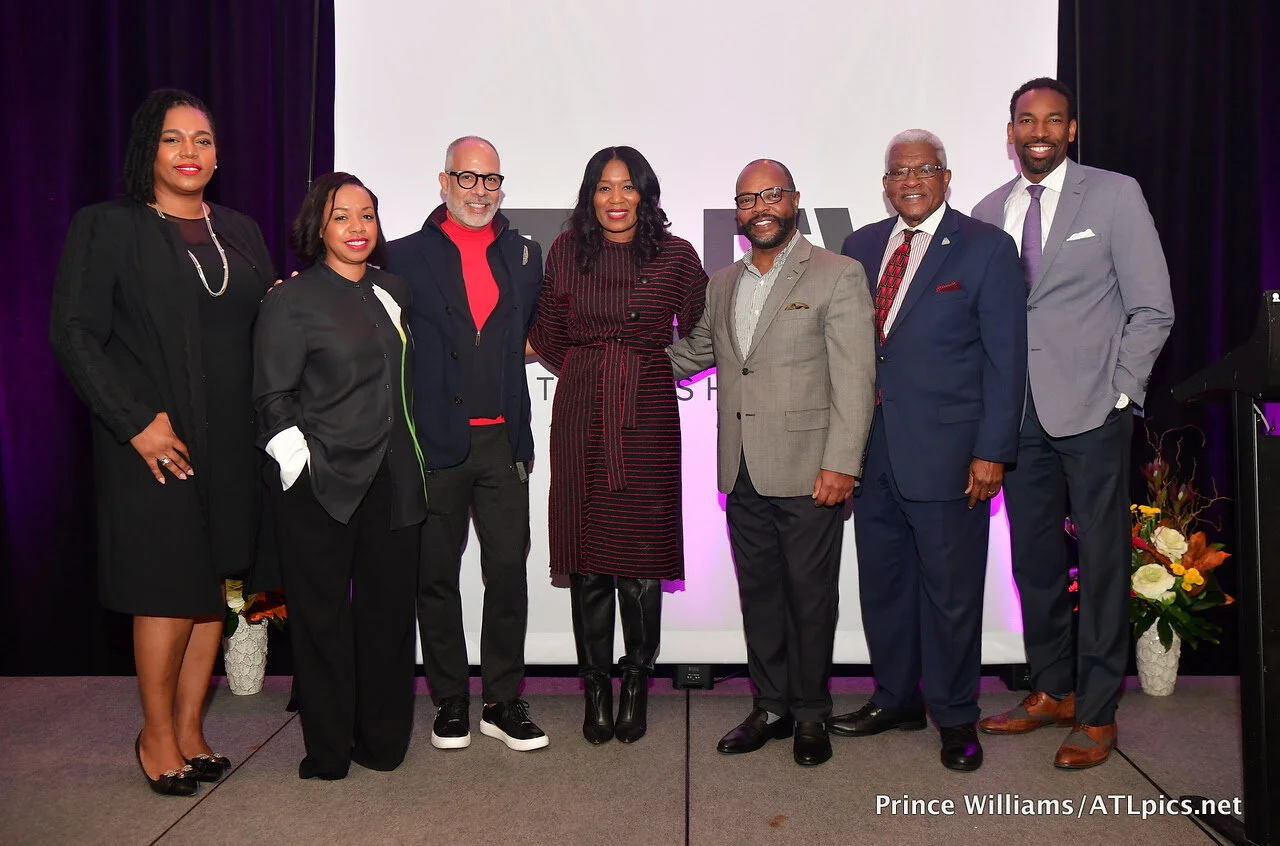
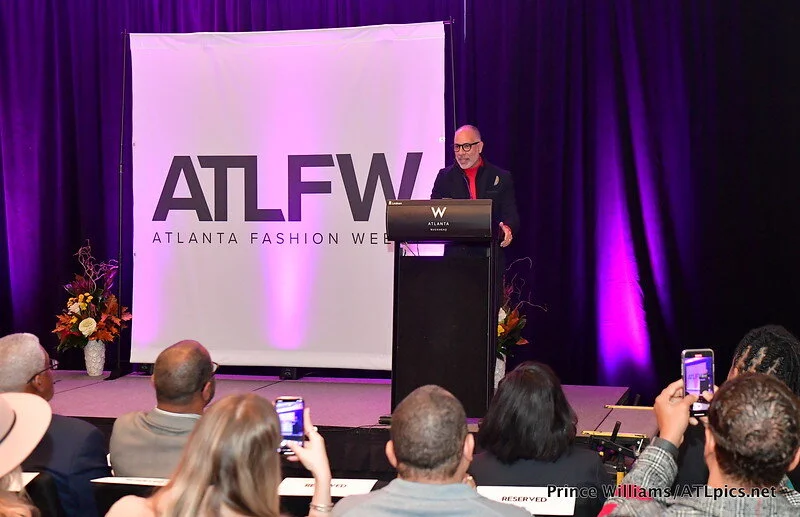
Atlanta Fashion Week (ATLFW) was officially announced with the City of Atlanta Mayor’s Office of Film and Entertainment, Invest Atlanta, RAGTRADE ATLANTA and more at the W Atlanta-Buckhead hotel. Atlanta Fashion Week will take place August 5 – 9, 2020 and will host a series of runway shows, fashion presentations, shops and industry talks. The city-wide event will feature a diverse group of local, national and global designers and talent.
atlfw atlanta fashion week

Diversity and inclusion will play a major role in not only positioning Atlanta as a global fashion destination, but the success of Atlanta Fashion Week. With a highly acclaimed reputation and influence in pop culture, Atlanta is primed to intersect fashion, tech, music and visual arts on a national stage.

The Mayor’s Office of Film & Entertainment under the direction of Phillana Williams committed their support and resources to ensure the success of Atlanta Fashion Week. Williams also spoke to the positive impact fashion week will have on Atlanta’s economic growth including culture, commerce and jobs. Lonnie Soobar, director of small business development for Invest Atlanta shared additional insight about the many programs the agency provides to support local designers. Saboor also shared Invest Atlanta’s commitment to expanding their small business programs further. Philanthropic Educator and Founder of Fashionado.net, E. Vincent Martinez discussed how Atlanta Fashion Week will benefit fashion students with real life experience and how the platform will assist in retaining talent in the Atlanta market. Tracey Lloyd, district manager of JC Penny shared three key reasons why Atlanta is uniquely positioned to deliver on a fashion week; discussing how demand, supply and culture are closely aligned with our retail community. Robert Woolridge, general manager of W Atlanta-Buckhead shared his excitement around the launch of Atlanta Fashion Week and how his property is in full support.

Angela Watts, producer of Atlanta Fashion Week (centered) shares her vision about the upcoming show in 2020.

Angela Watts, producer of Atlanta Fashion Week (centered) shares her vision about the upcoming show in 2020.

Atlanta Fashion Week is committed to evolving into a global fashion destination with the mission of celebrating diversity, innovation and creativity in fashion. Our primary goal is to create an interactive hub for fashion designers where trend-setting work is celebrated before it reaches a mainstream audience. Atlanta Fashion Week is the ultimate resource for fashion designers and represents fashion as a conduit for expression in technology, music and visual arts.

Visit ATLFW HERE & Join their mailing list.

FASHIONADO

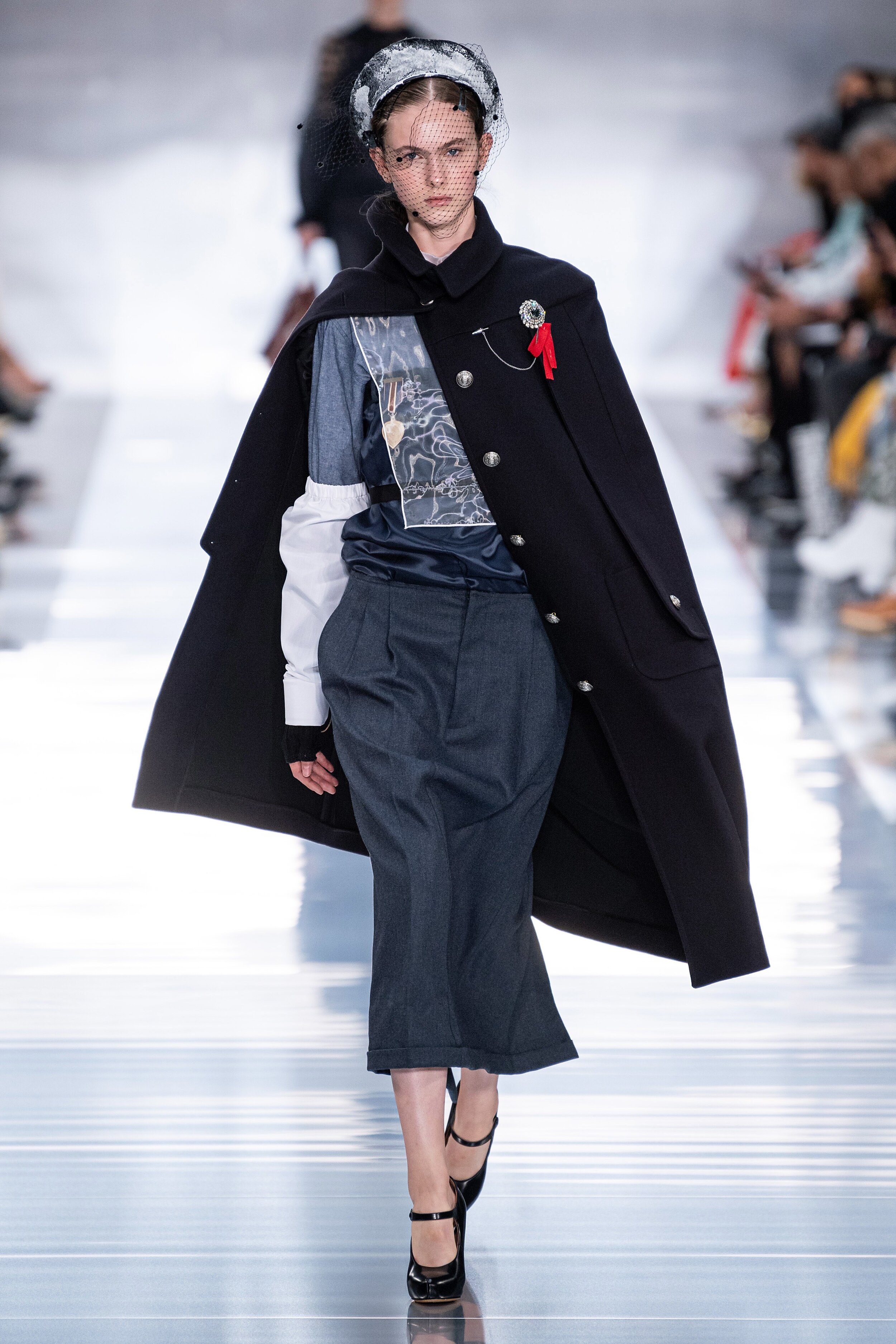
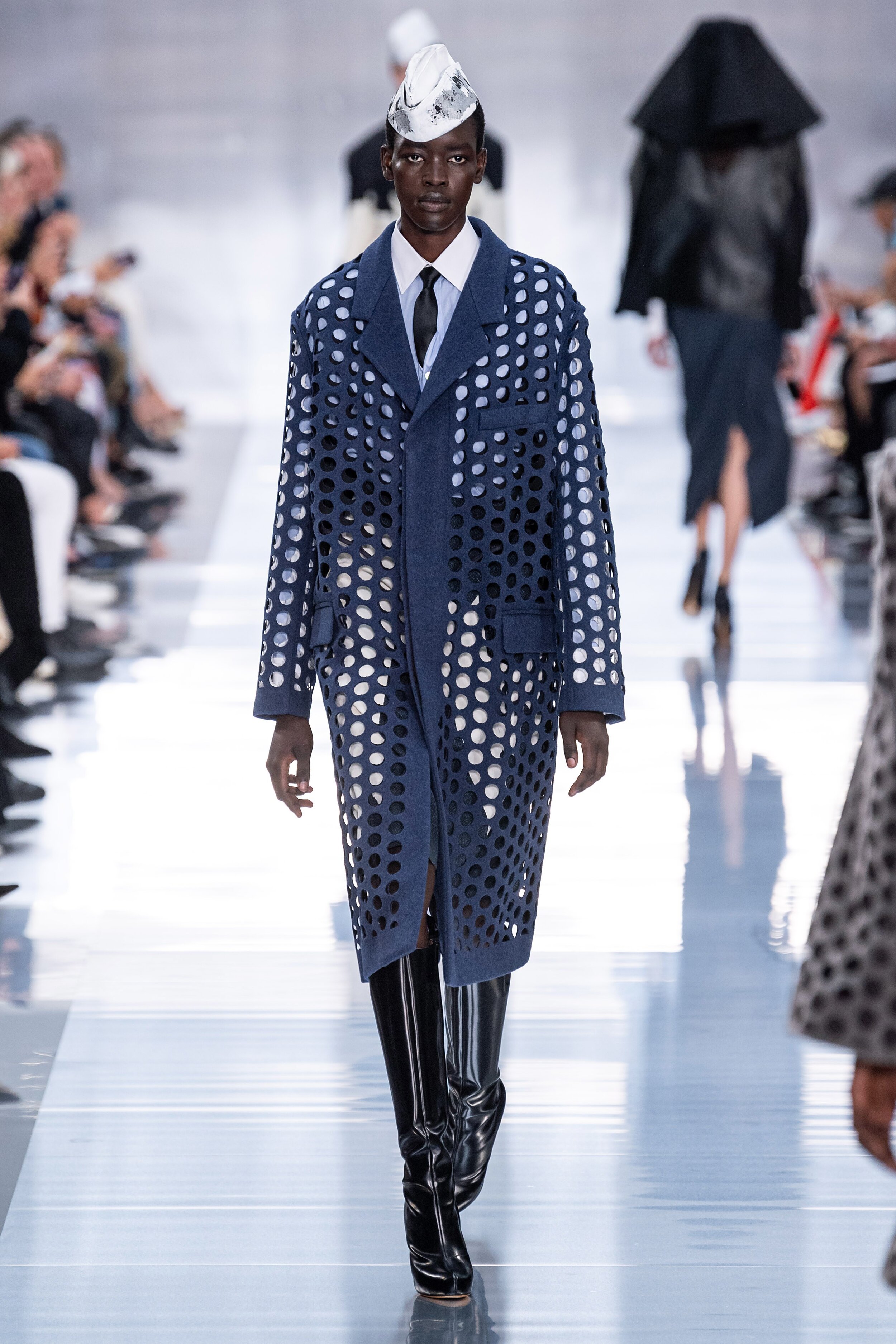
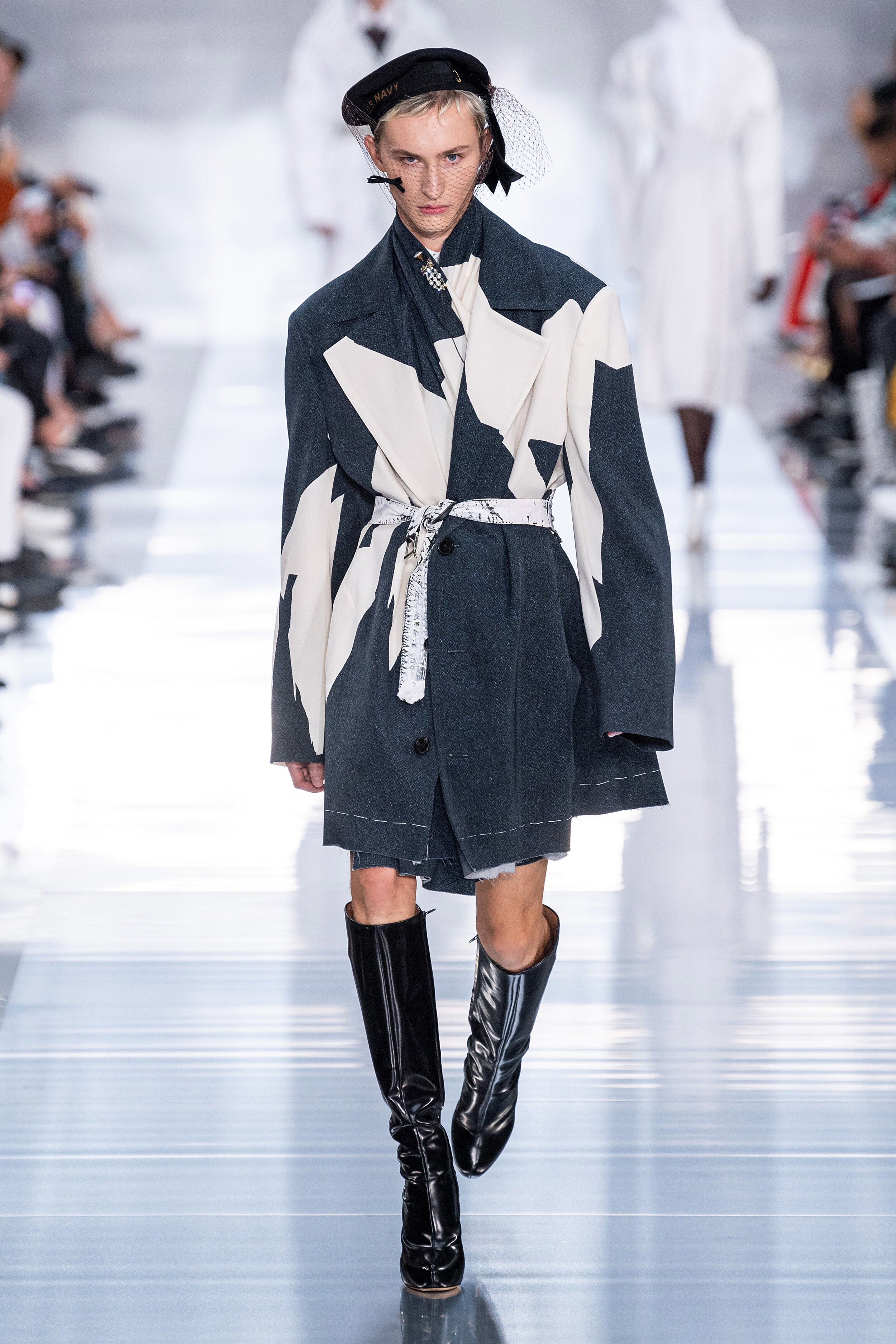
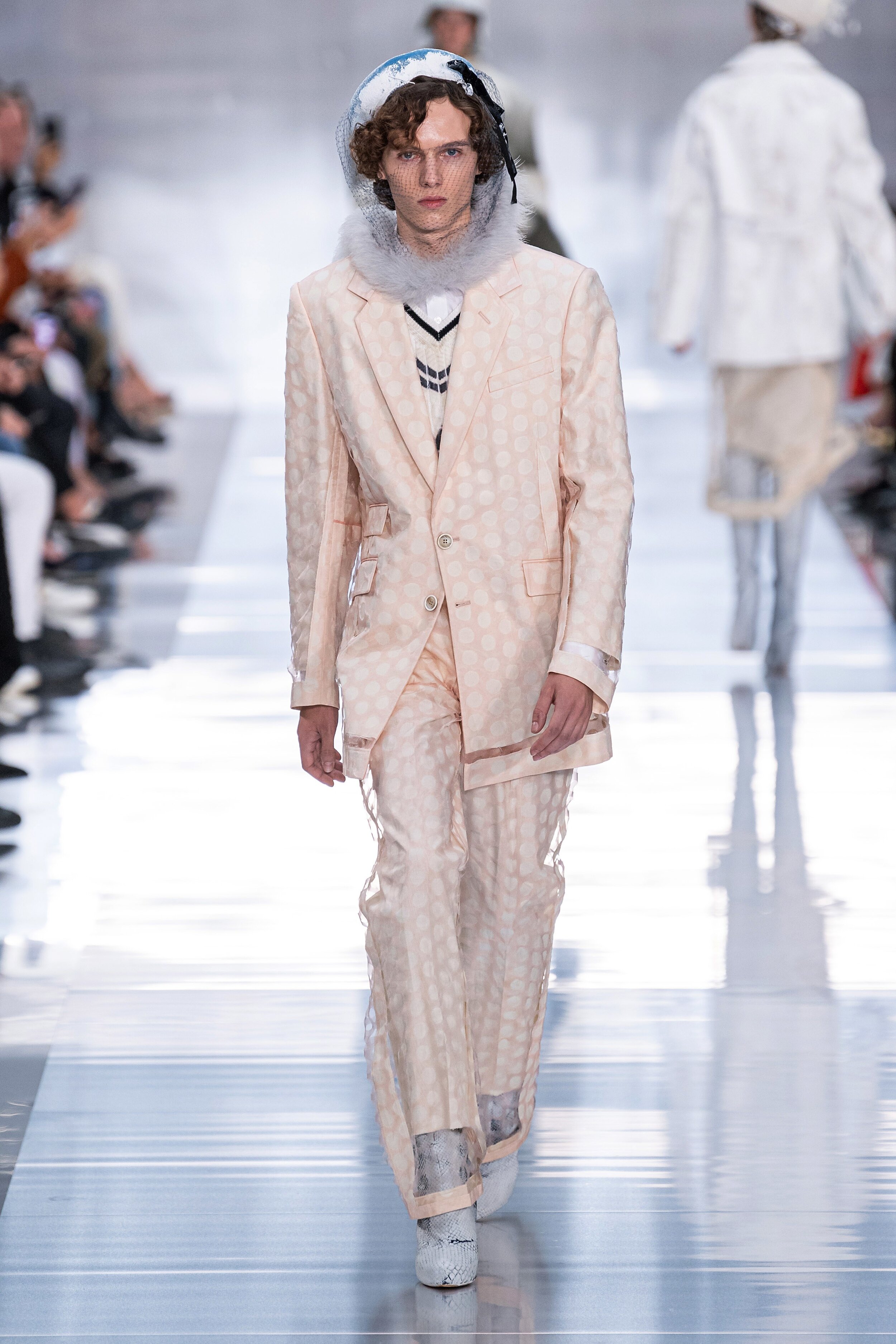
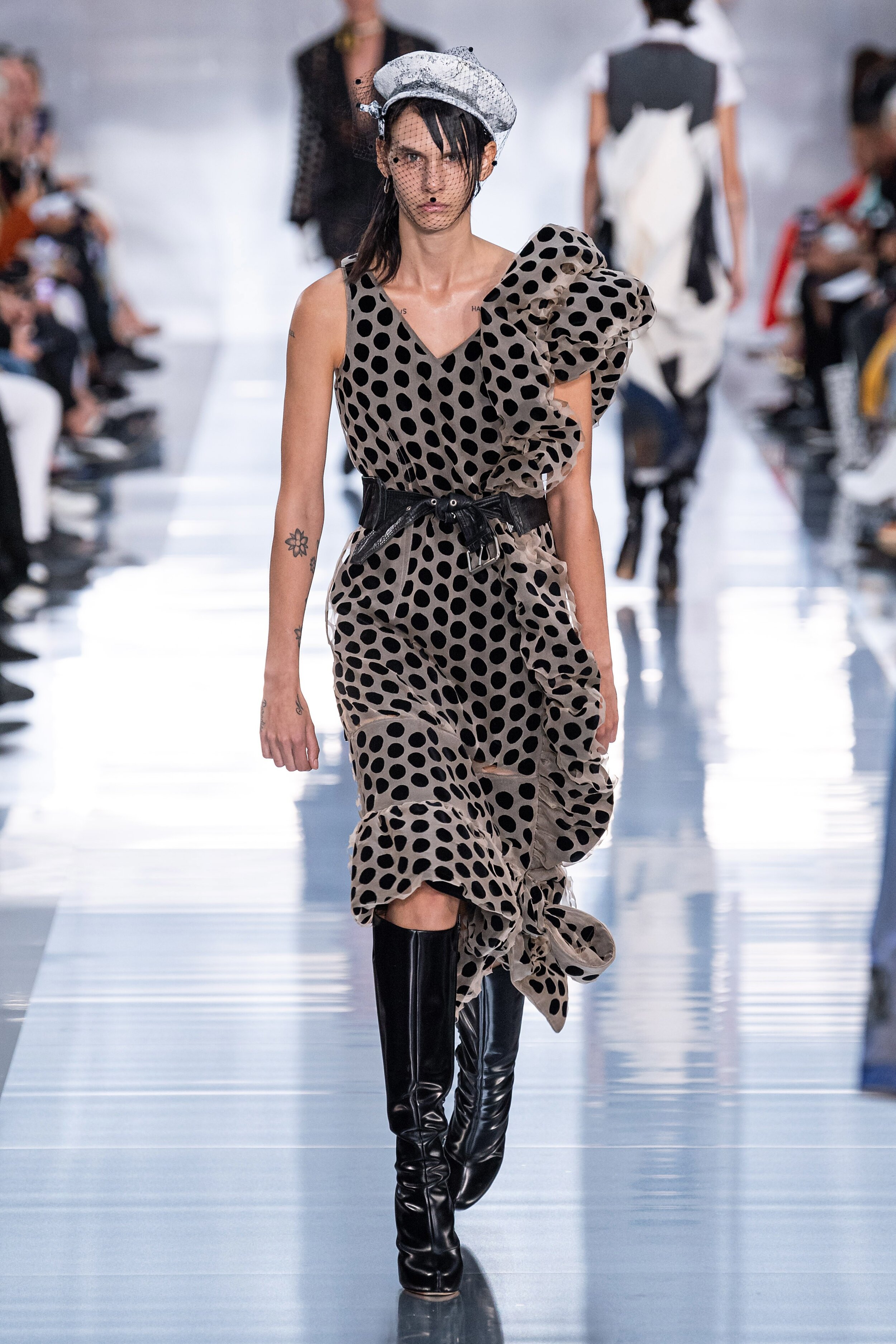
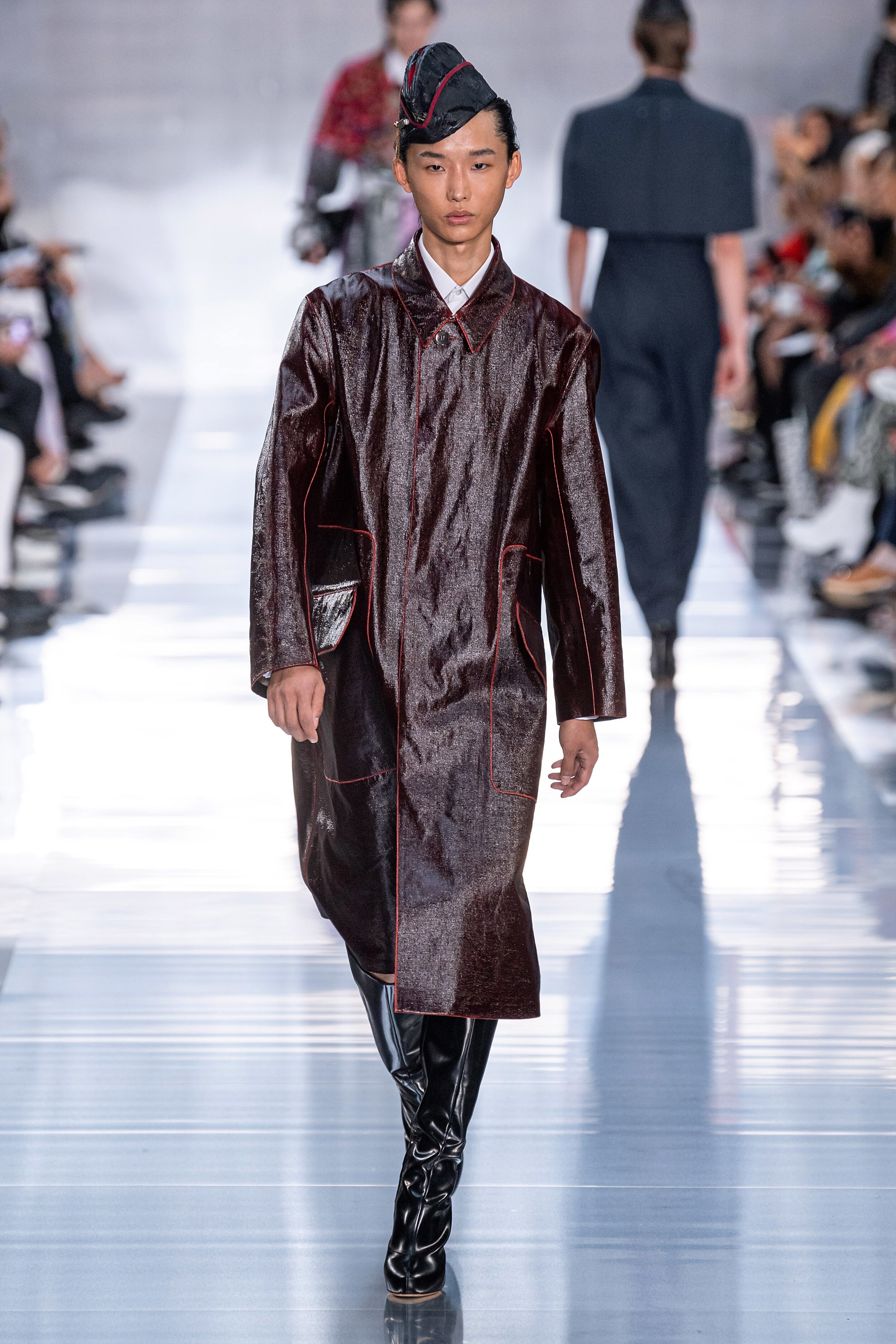
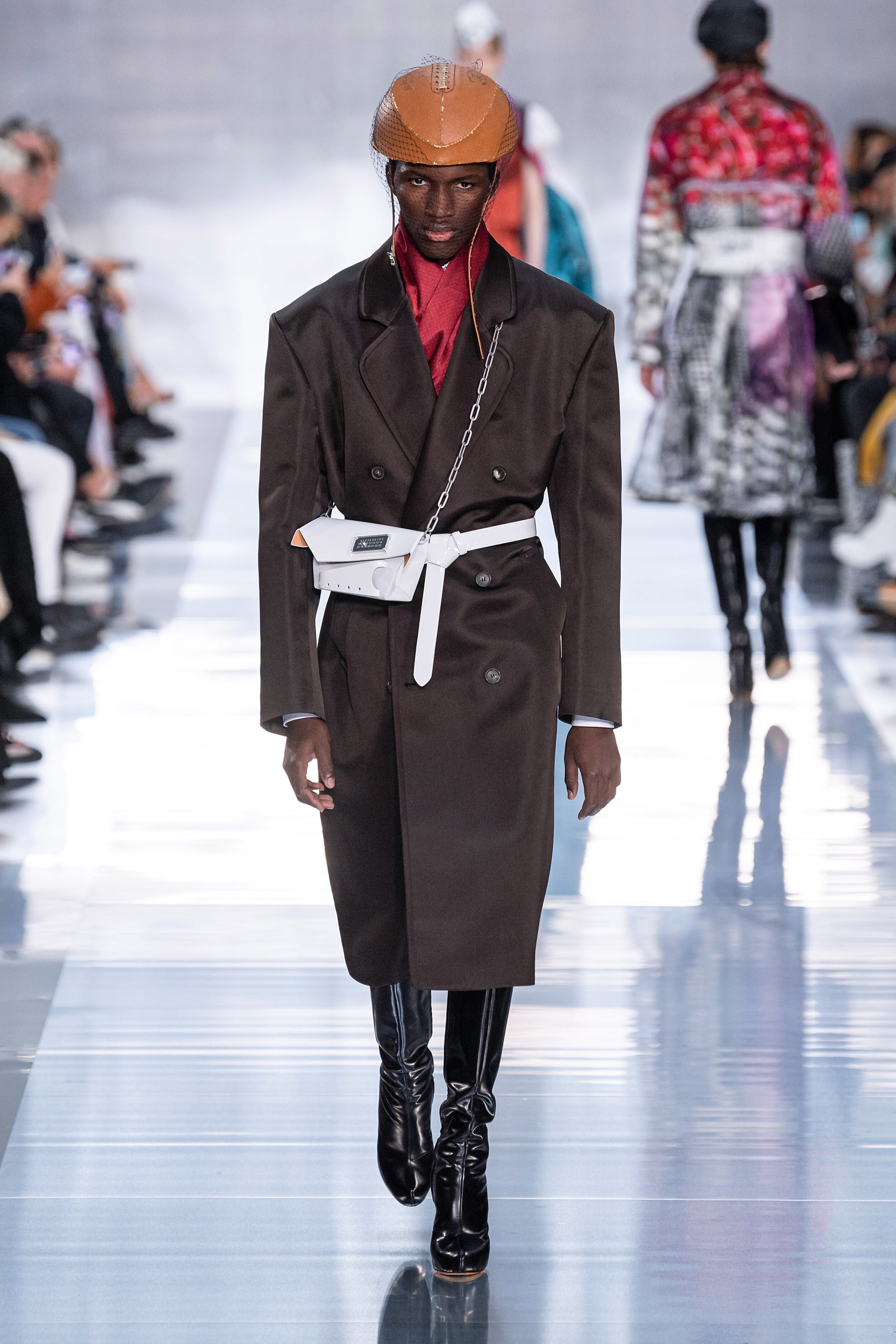
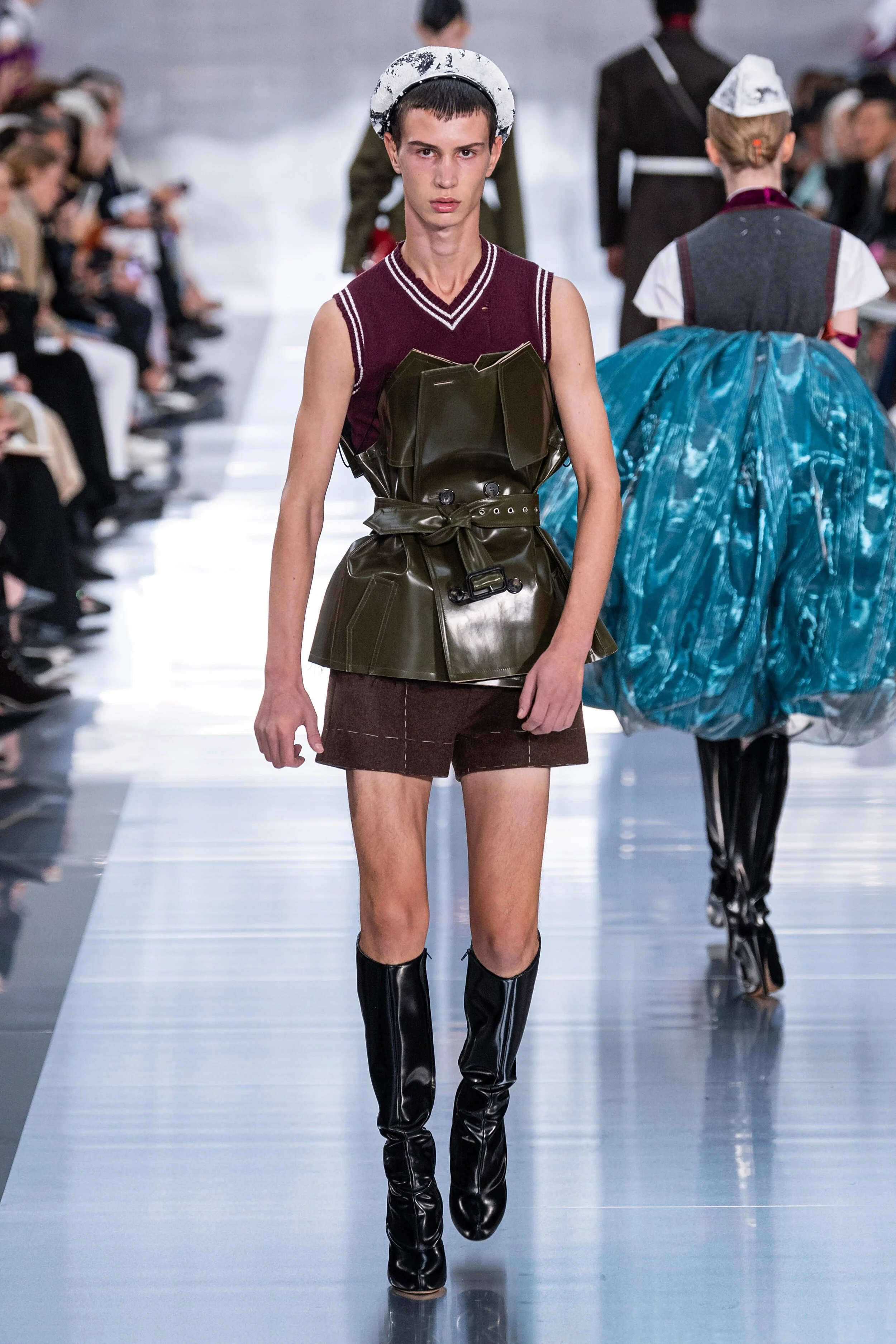
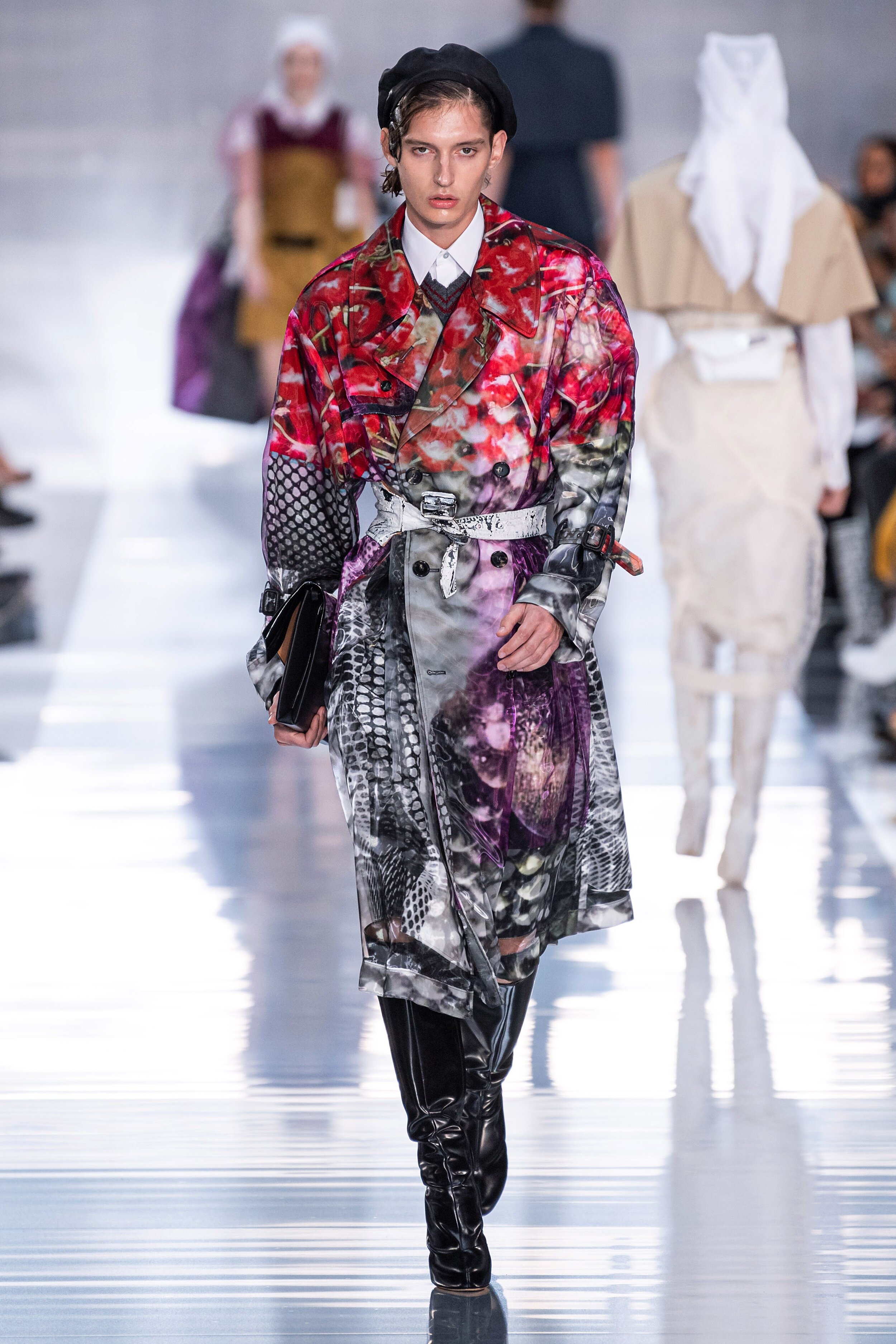
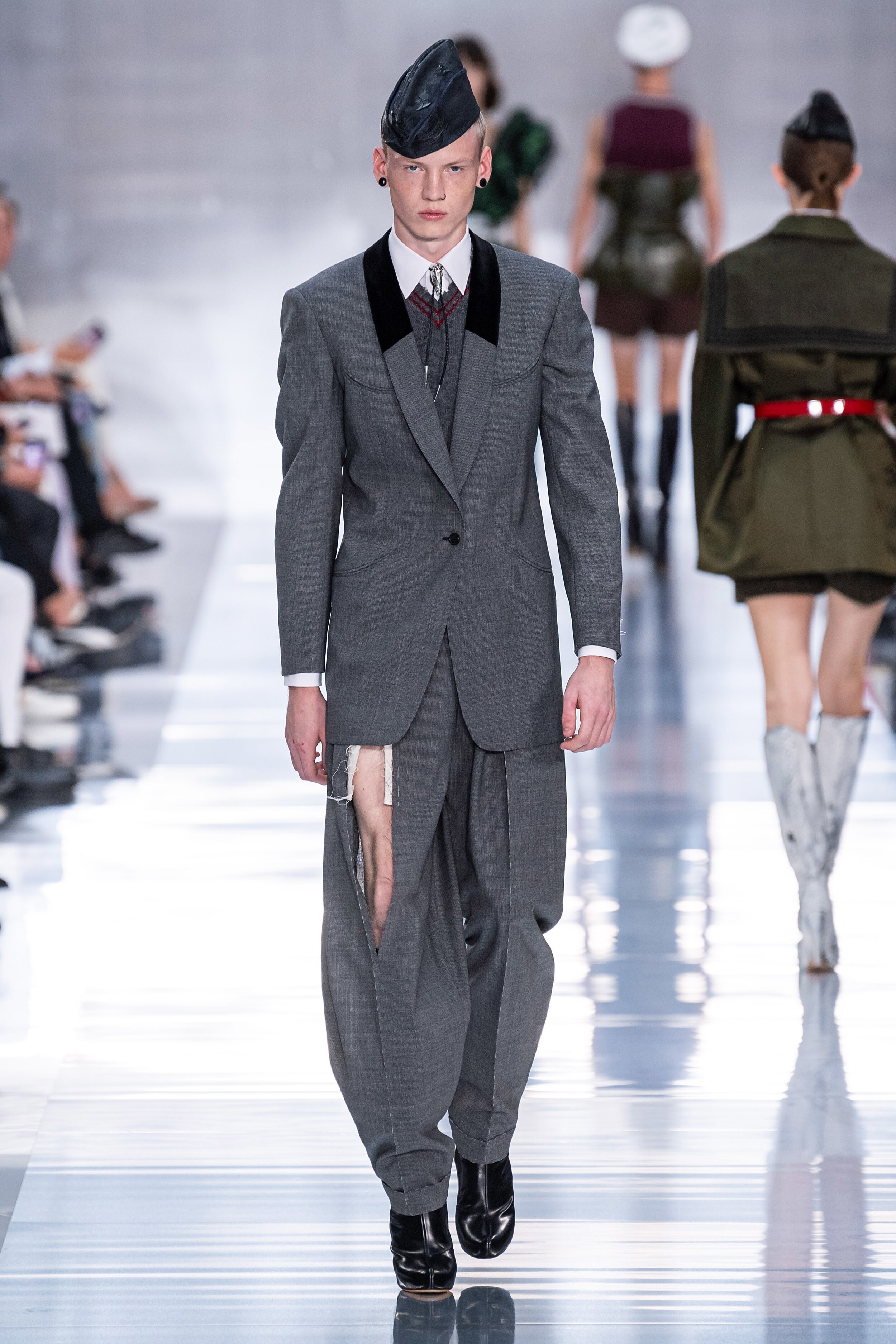
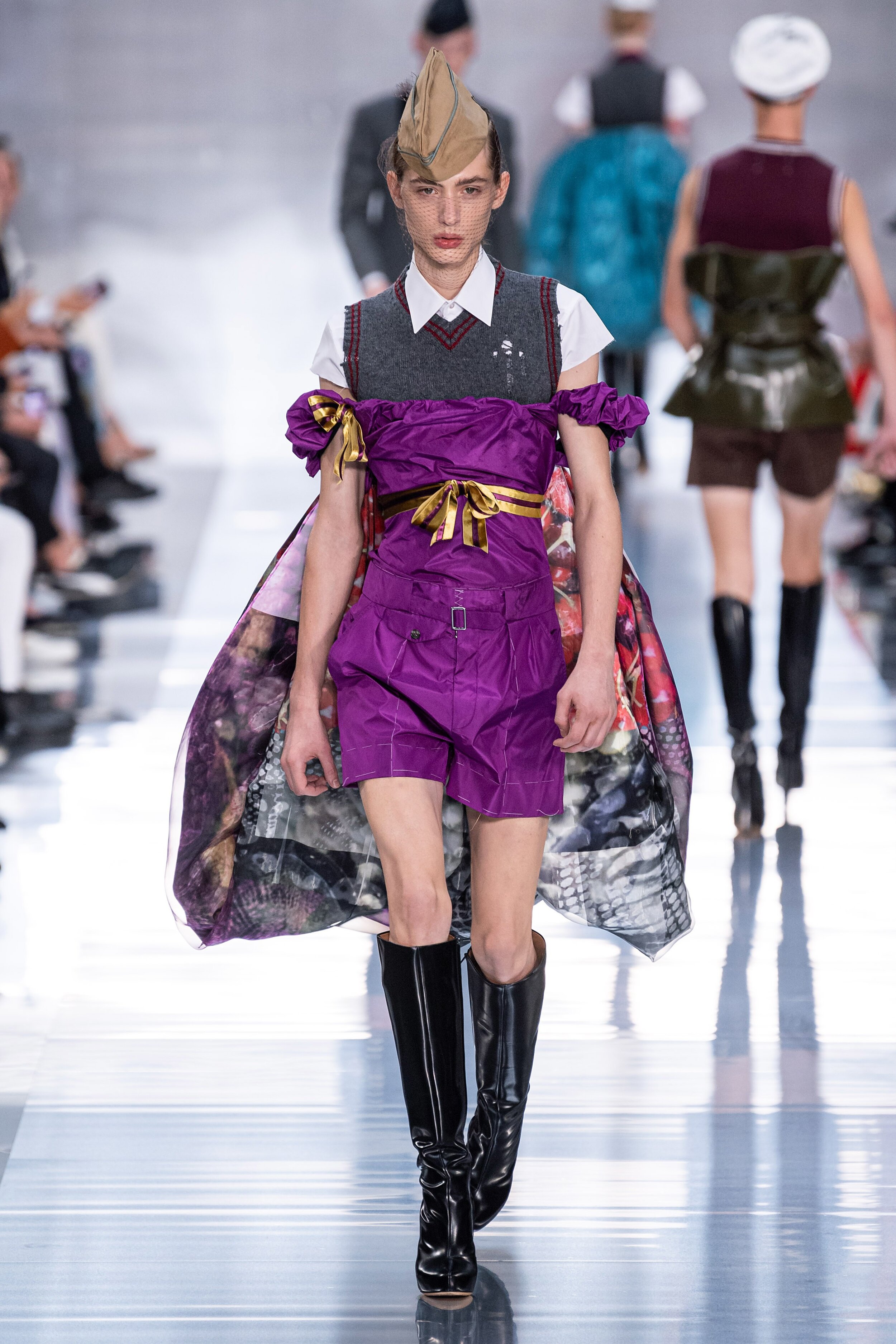
Maison Margiela SPRING 2020 READY-TO-WEAR

Maison Margiela

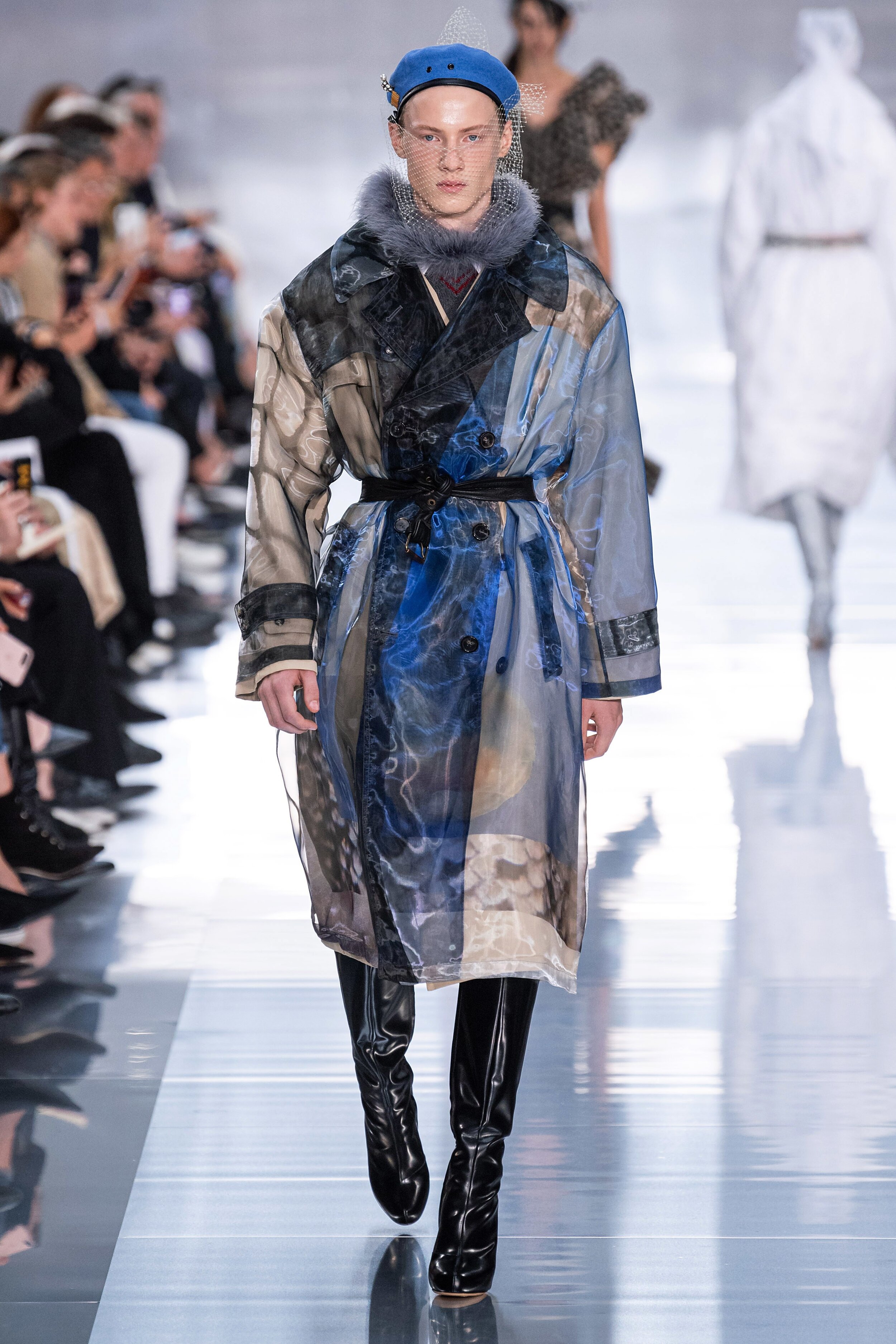
Lest we forget, John Galliano is a British man living in France. Among all the noise and polarized positions generated by Brexit, one of the slogans frequently voiced by the right is that British independence is “what we fought for in the war”—a trigger phrase which totally ignores the fact that the fight was against the forces of fascism in Europe. His Spring collection was a timely salute to the ordinary young men and women—the nurses and airmen, the army and navy boys—who stepped up to win the victory against Nazism in alliance with the French Resistance in occupied France.

The march of the Margiela liberation army is all about what’s going on today, of course.

“Reverence for the lessons of history and what they taught us,” read a thought line in his press release. “Stories of hope, heroines, and liberation are forgotten as history draws ever closer to repetition.”

Call to witness his first volunteer, a nurse in a navy serge cape, white hospital sleeves, and a gray serge pencil skirt. Second, a girl in a black dress with a veiled hat trimmed with a feather, somewhere out of the ’30s or ‘40s—maybe one of those chic-against-the-odds Frenchwomen of the Resistance who went about their undercover work carrying secrets and explosives in their sensible handbags.

Later on, when a couple of girls came out with poufs of fabric floating behind them, you had to wonder: Were those partial evening dresses or vestiges of the parachutes used by that secret army of female agents who dropped behind enemy lines? Where there was jewelry, it was in the form of decorations, medals, pins, and military stripes.

The fact that Galliano turned to exploring uniform—the ultimate built-to-last clothing—chimed with fashion’s current drive to put forward clothes with substance and value. In recent seasons, his consciousness of the digital world, social media, and what the Gen Z interns bring to his studio has sent him into explorations of creative chaos. This still wasn’t a collection of literal costume narrative—there were layerings of coats with holes—but the feverish fragmentary collaging and back-to-front and upside downness of recent shows were largely gone, replaced by a sense that this is a time for shaping up and showing what you stand for—skills and beliefs included.

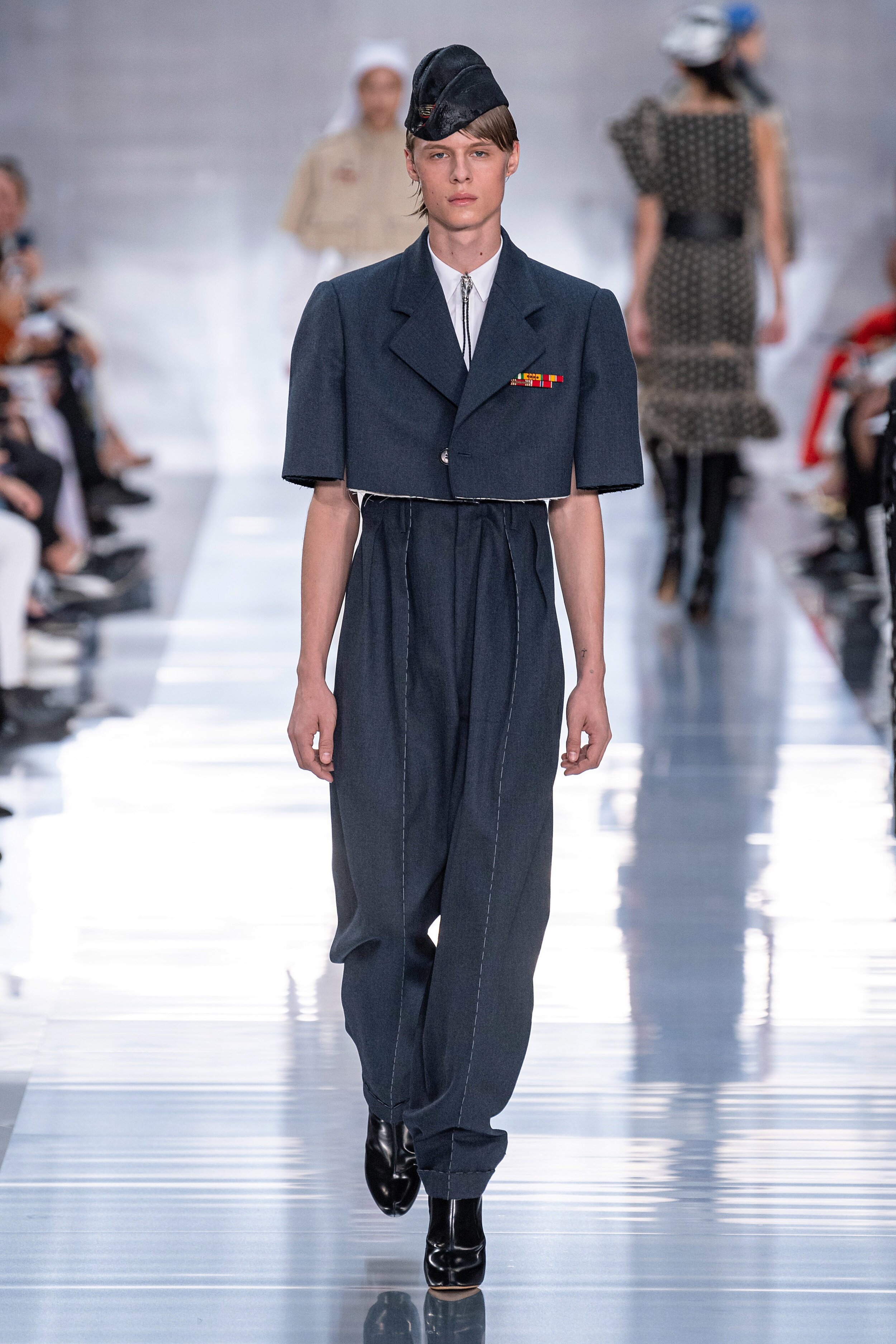
What he showed is that he’s a tailor who cuts it with the best, be that in a man’s civvy-street double-breasted pinstriped jacket, or a subverted airman’s uniform, the jacket cropped to the midriff over way-up-high pleated trousers.

Somewhere in the mix too, there was a pure white mackintosh, made-in-Britain trad as its most timelessly classic. There is plenty to be proud of in heritage, he seemed to be saying, but that includes the right to freedom of self-expression, inclusive of defending the LGBTQ+ rights that have been enshrined in law—only very recently—since Europe has been united. It was exuberant; it was fun; it was a celebration of male eroticism—a platform for everyone’s right to camp it up in vertiginous platform knee boots. Somewhere in there too was the hope that all that progress won’t have to be fought over again.

Source: VogueRunway

FASHIONADO

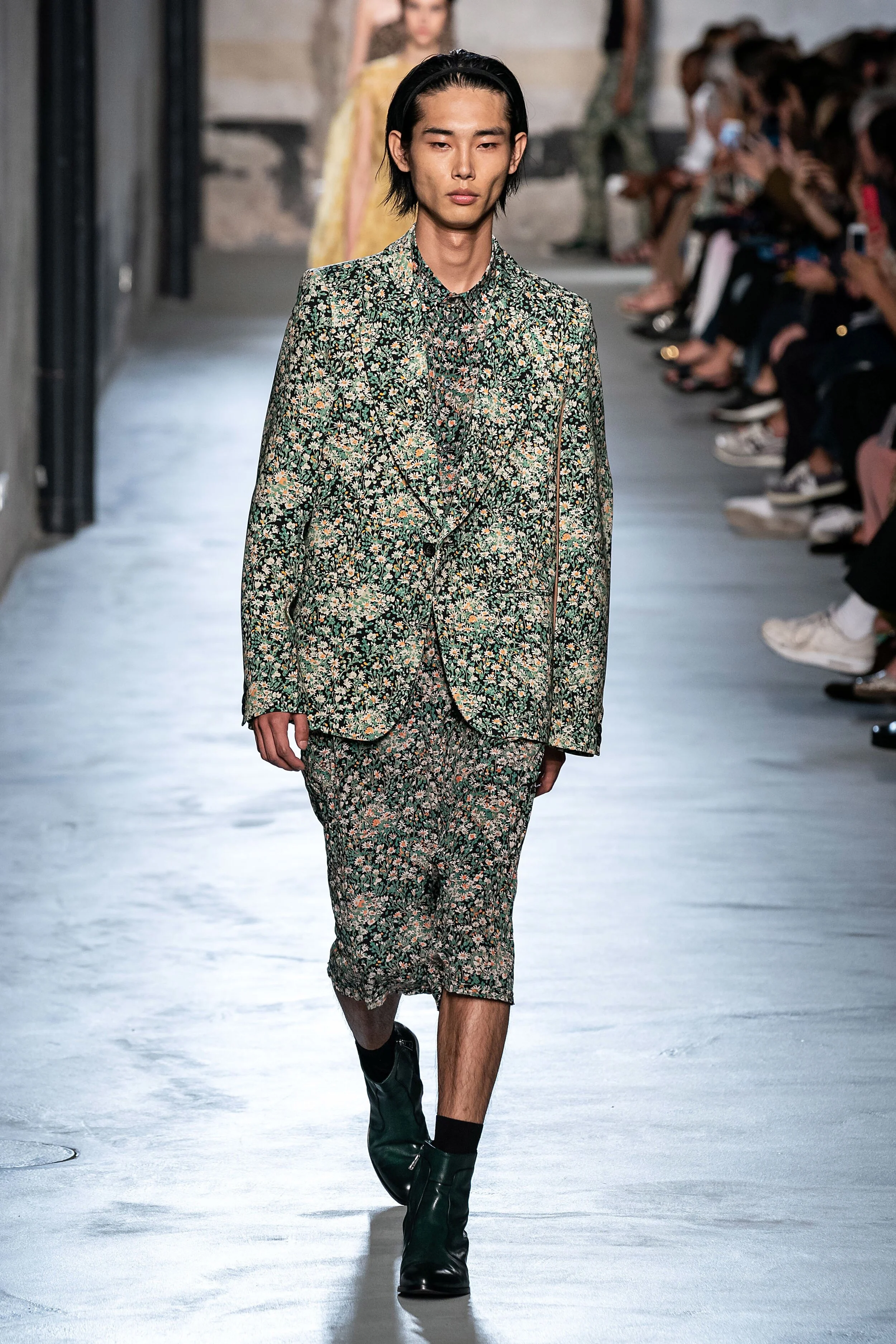
No. 21 SPRING 2020 READY-TO-WEAR

No. 21 SPRING 2020 READY-TO-WEAR

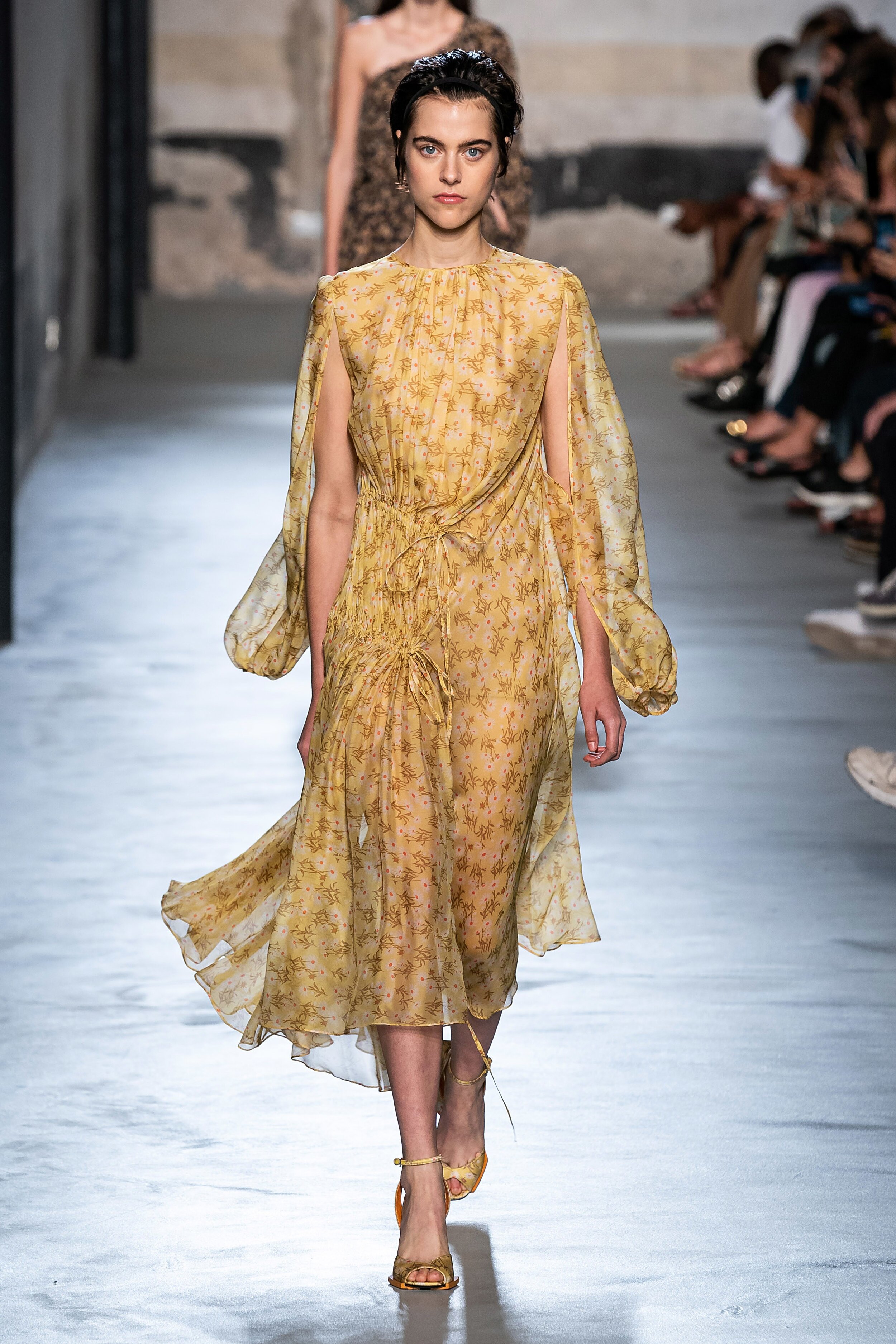
If invitations give some hints to a collection’s mood, the one sent by Alessandro Dell’Acqua for his No. 21 Spring show left room for interpretation. A pair of men’s briefs in see-through nude net tulle arrived encased in a clear PVC envelope. Slightly puzzled by the message, I asked the designer backstage to expand on the subject. “It’s just a provocation,” he said. “But it can come across as a not-too politically correct statement. The briefs are masculine but can also be worn by a woman. So what? There’s too much bigotry and moralism around these days. There’s zero tolerance for too many things. I think it’s time to say basta!”

Dell’Acqua rounded the message by referencing the famous collection du scandale, designed by Yves Saint Laurent in 1971—at the time it made waves with its overt erotic tones, while launching the couturier into the fashion stratosphere. “It’s one of my favorite collections of all time,” said Dell’Acqua. Its spirit of sophisticated transgression appealed to the designer, resonating with his penchant for insouciant eroticism.

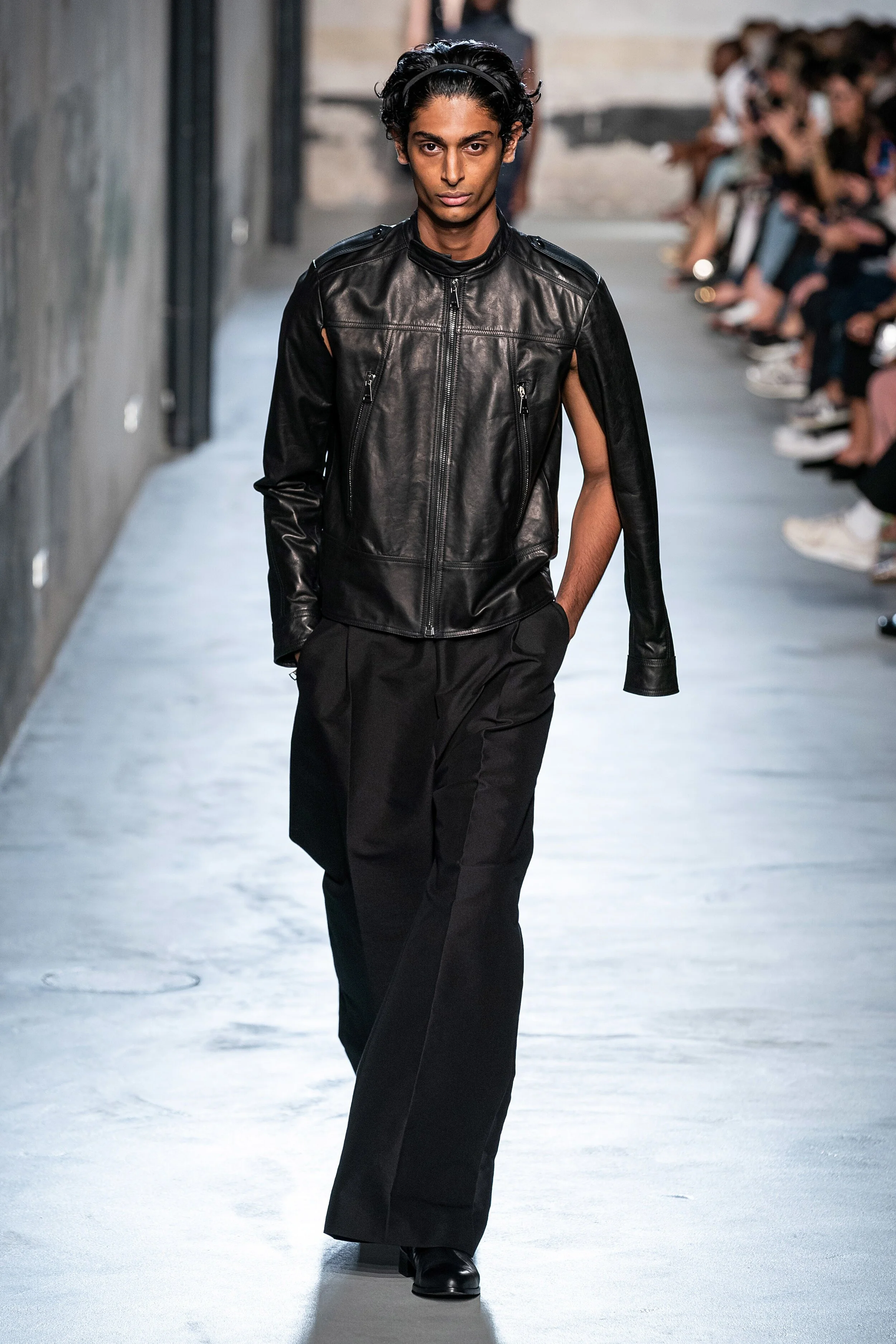
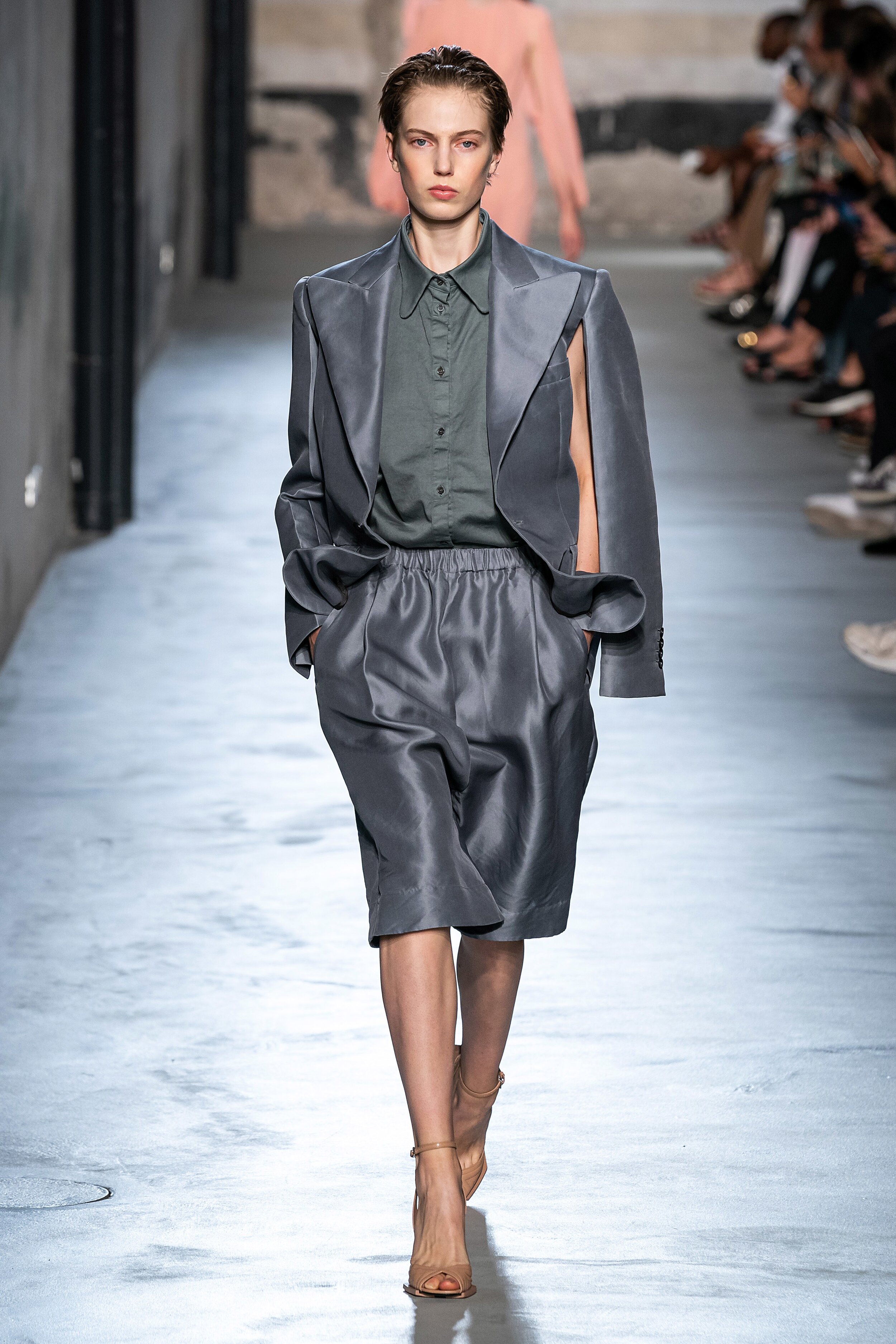
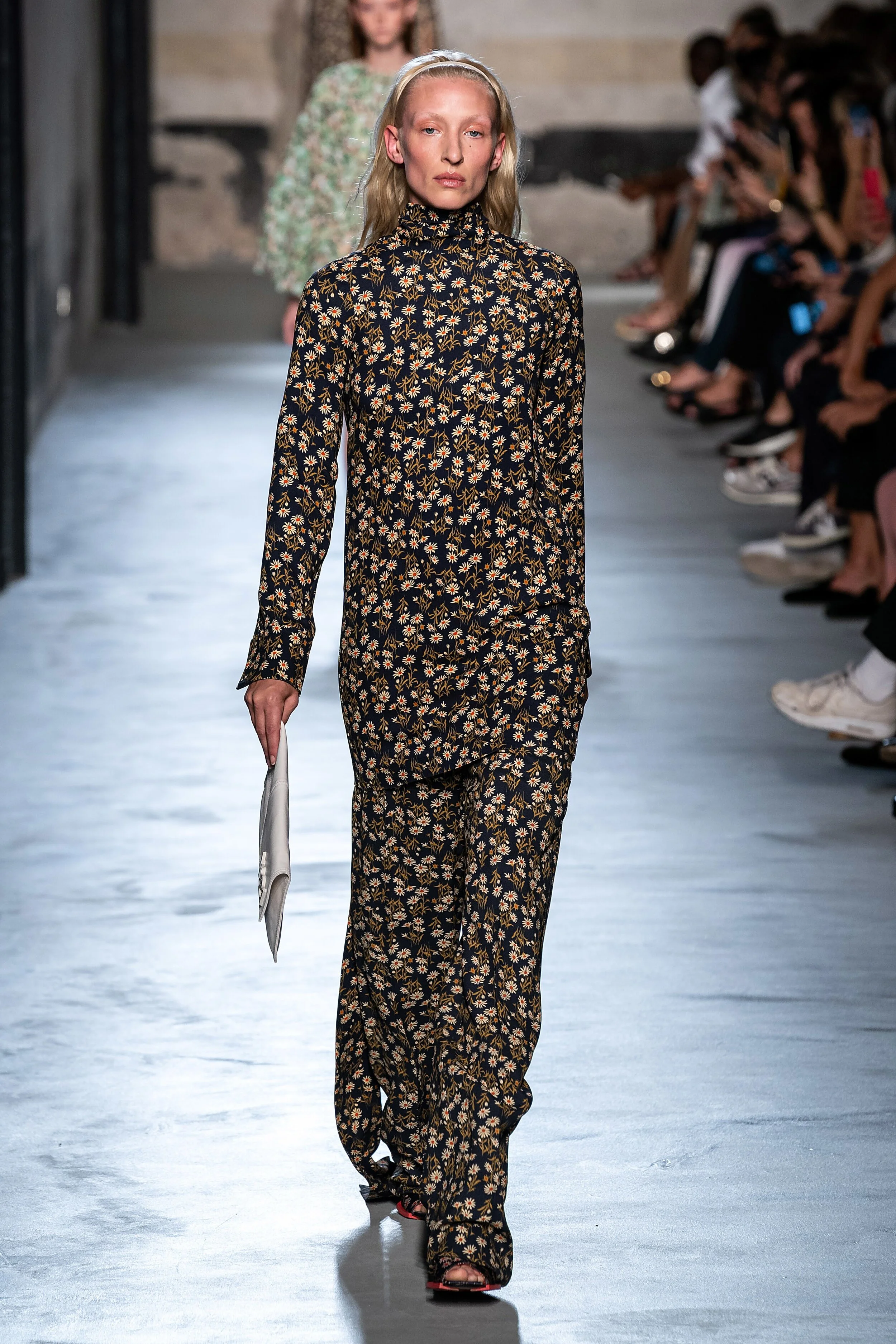
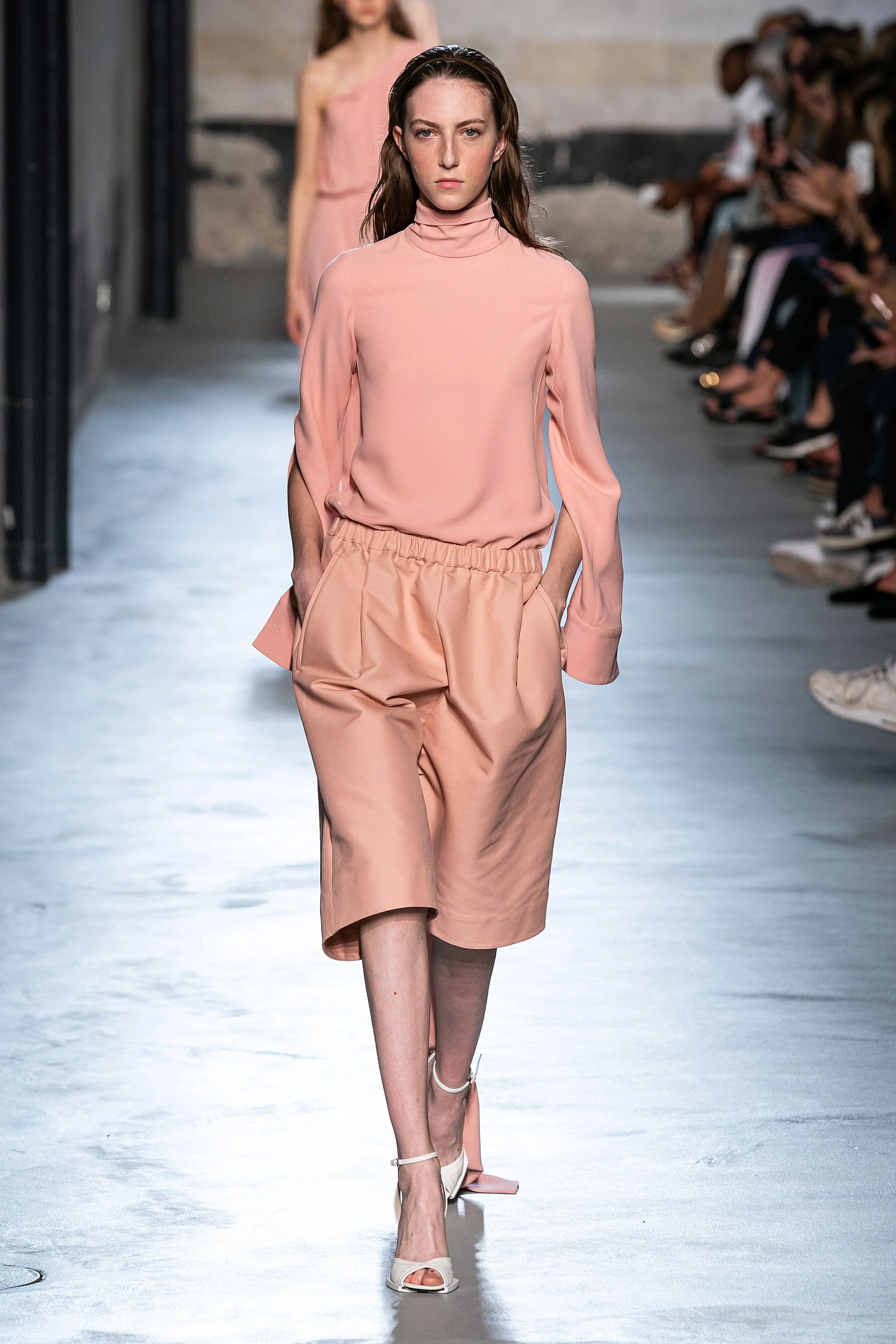
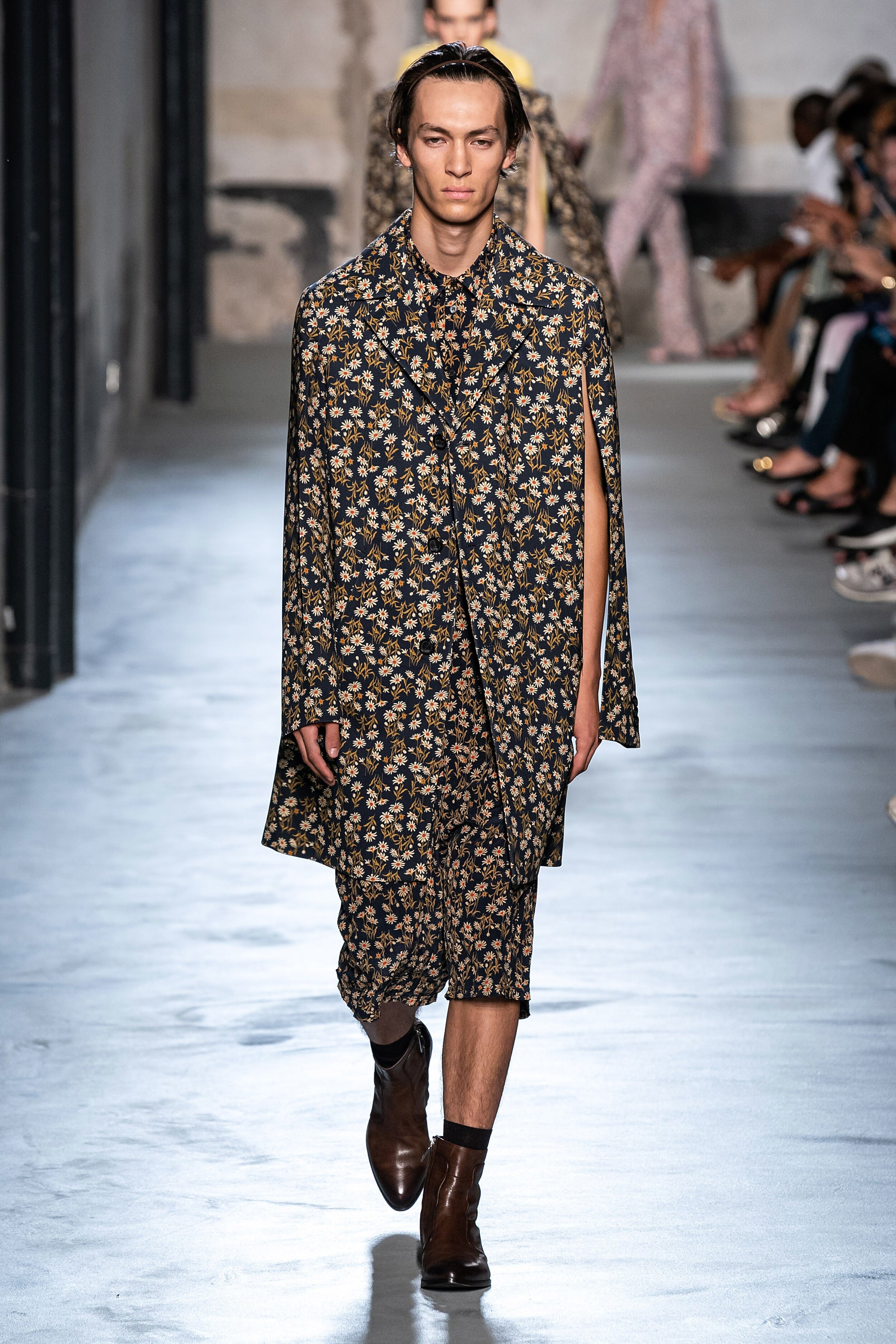
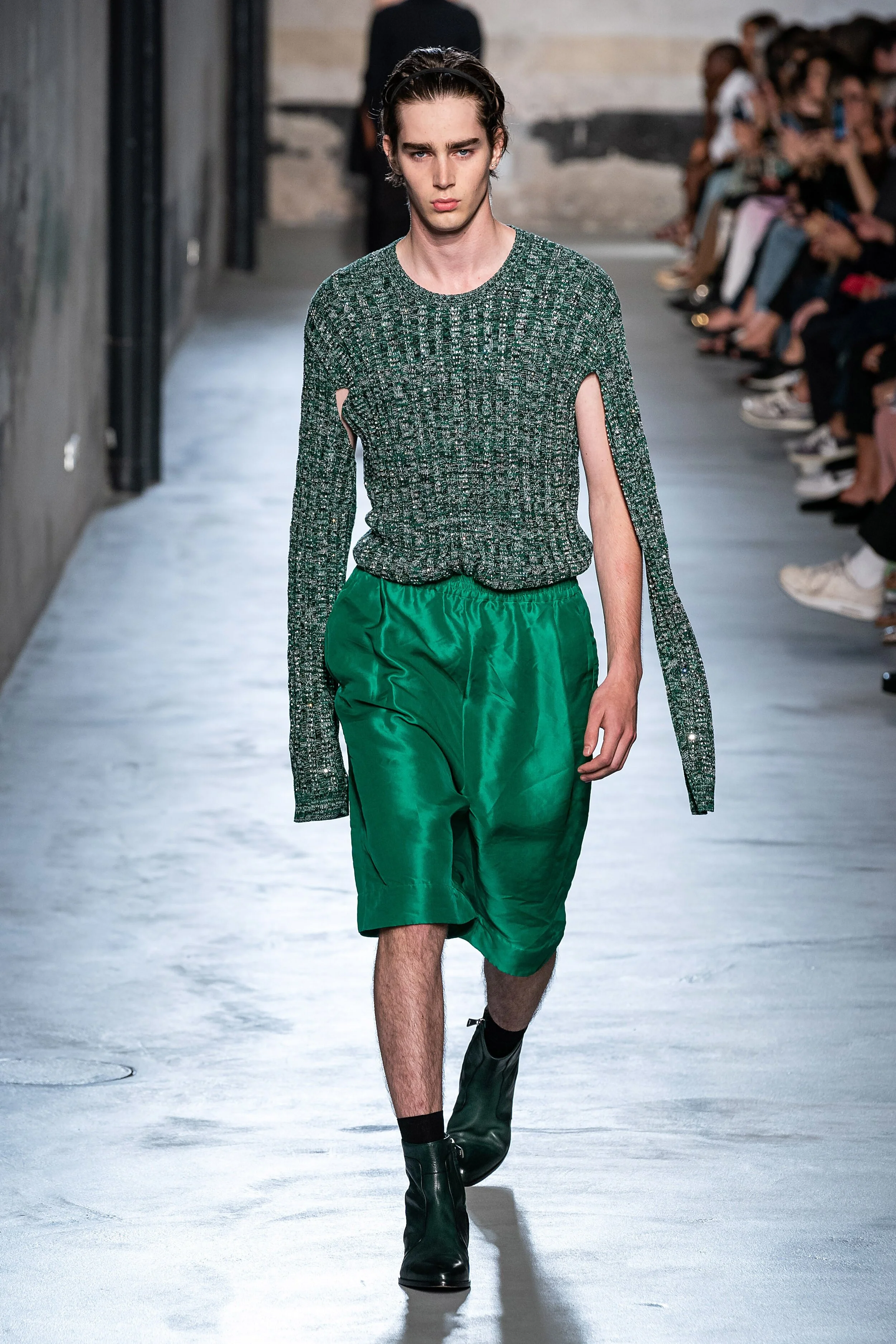
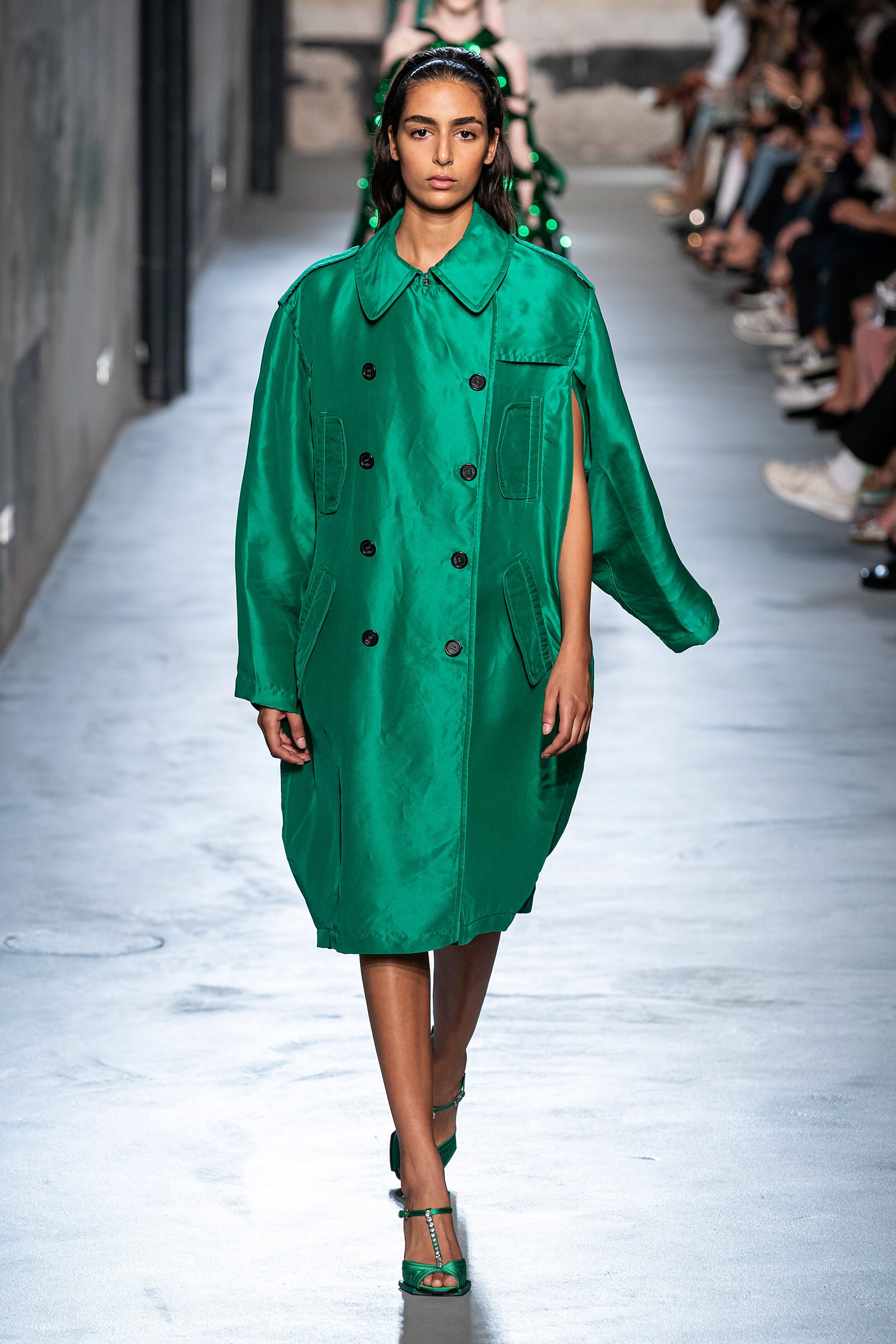
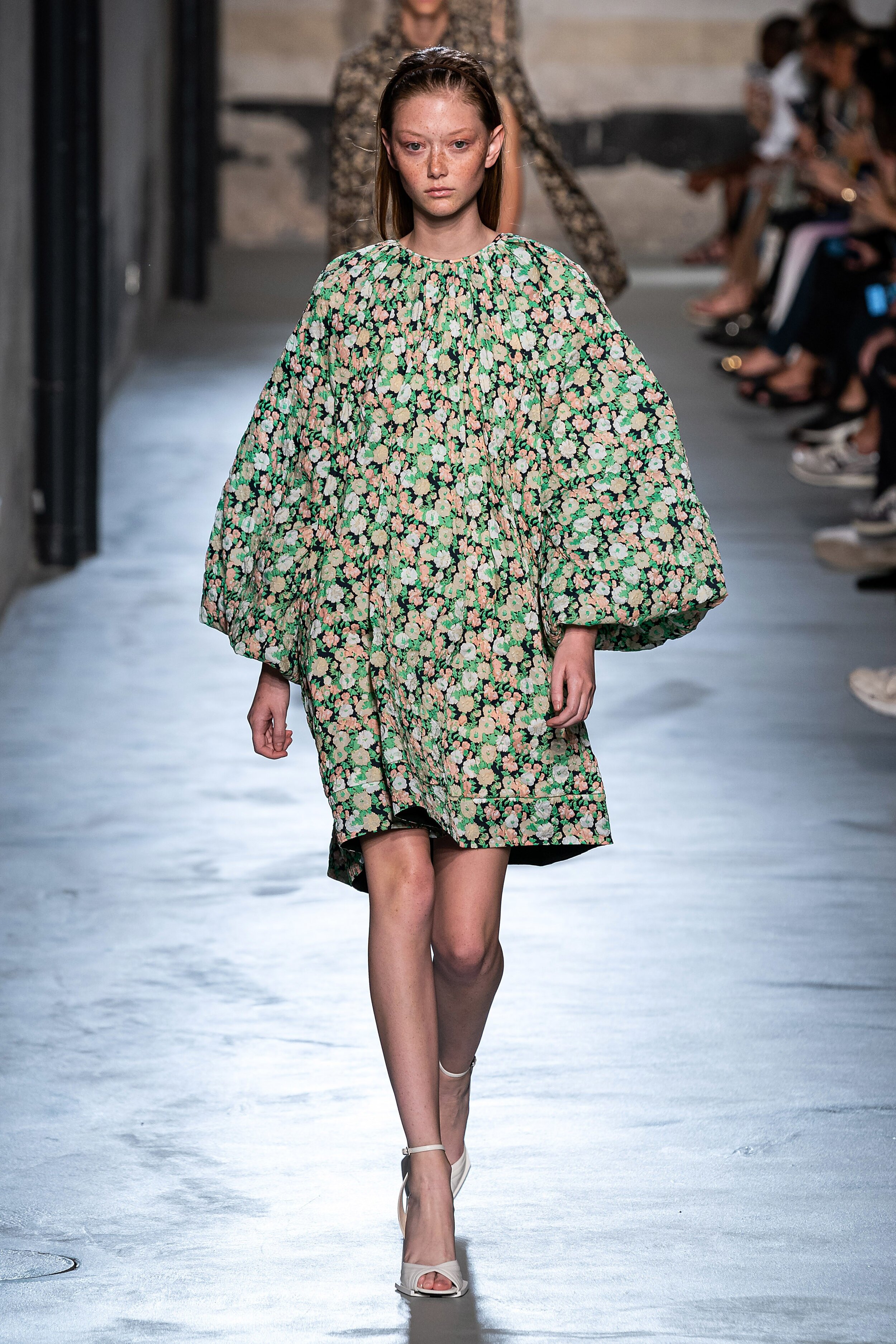
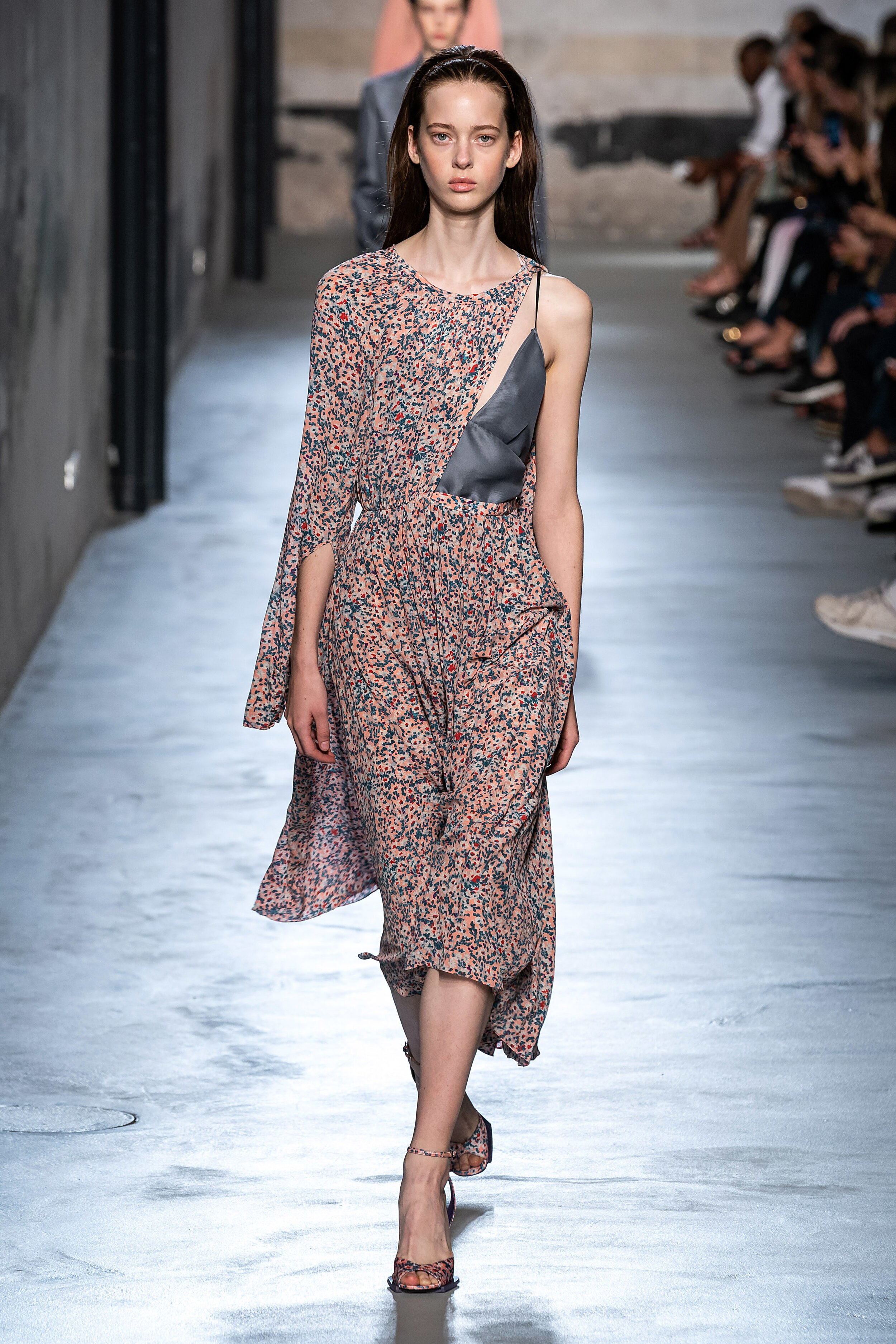
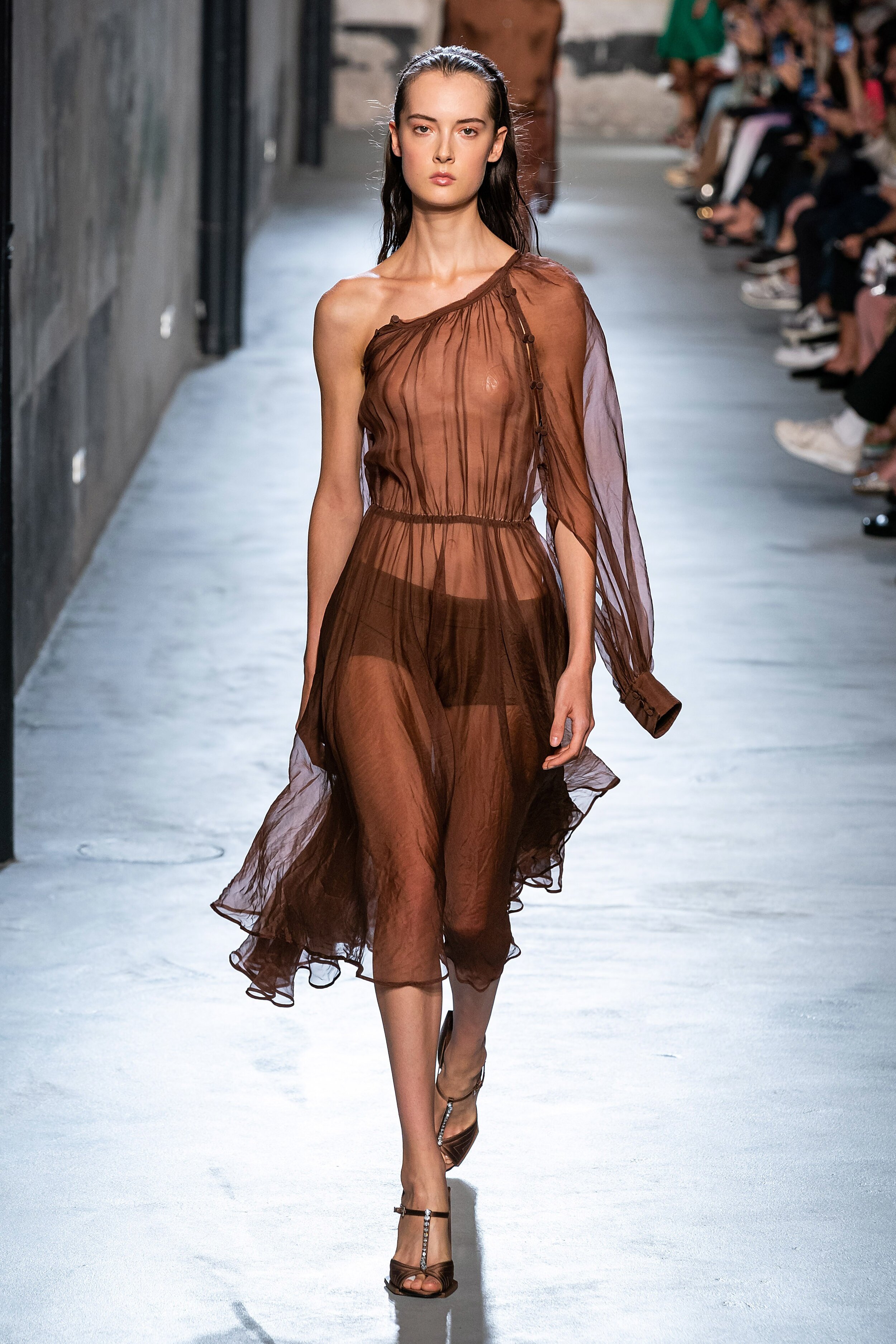
The coed Spring collection, a first for Dell’Acqua, had un undone, provocative feel, with a certain disheveled polish thrown in for good measure. Flowing dresses in microfloral-printed, washed, sweet-hued chiffon—primrose, candy pink, pea green—looked deceptively demure, but their billowy sleeves were slit to reveal the arms with apparent nonchalance. Pleated skirts were buttoned-unbuttoned askew on one side, exposing the legs. Floral shirtdresses were worn as if they were one-shouldered; diagonal slits on bodices revealed a lingerie top underneath. Even tailored blazers got their dose of unraveling, with sleeves mercilessly cut open. The look felt pretty sensual, confident, and alluringly elegant, without crossing the line into being too obviously, boringly seductive.

Lately Dell’Acqua has introduced an atelier-like feel in his No. 21 collections, working on more substantial volumes with rich, luxurious fabrics like cady, gazar, silk cloqué, and duchesse, yet he has kept the attitude modern, feminine, and unfussy. Here he continued the play on short balloon shapes and abbreviated hourglass silhouettes embroidered with crystal ribbons, nicely contrasting the fluidity of drapings and asymmetries or the playful strictness of tailoring. It made for a convincing exercise in style dynamics.

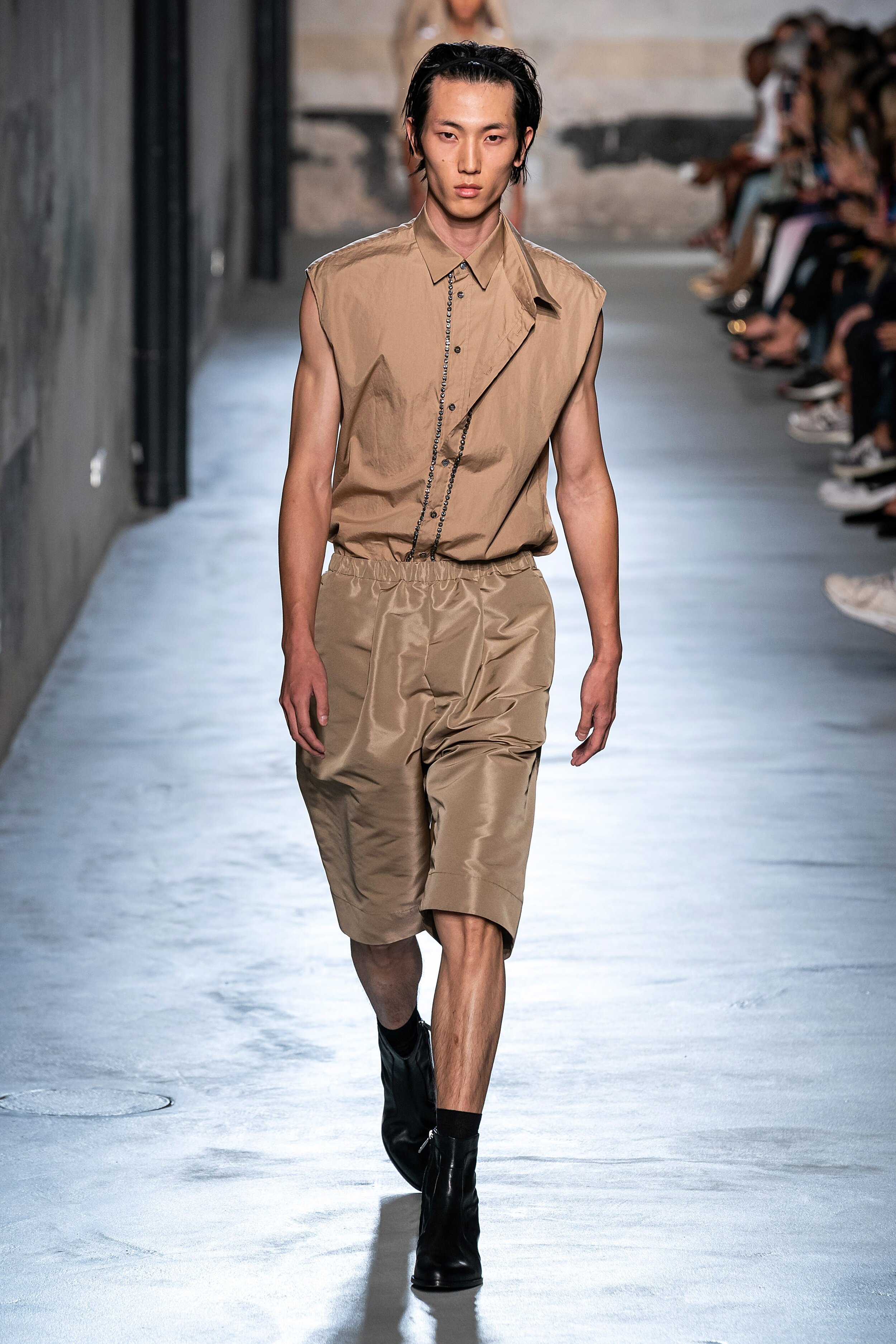
Menswear was infused with a feminine, nonconformist vibe; suits were cut sharp but softened by micro-floral allover prints and worn with baggy, slouchy Bermudas or overstretched, open-cut-sleeve knits. As for the invitation briefs, they’ve apparently proved a success. “They’re in great demand! People are asking for them,” said Dell’Acqua. “I’ll probably have to start a production.”

Source: VogueRunway

FASHIONADO

Assembly New York SPRING 2020 READY-TO WEAR

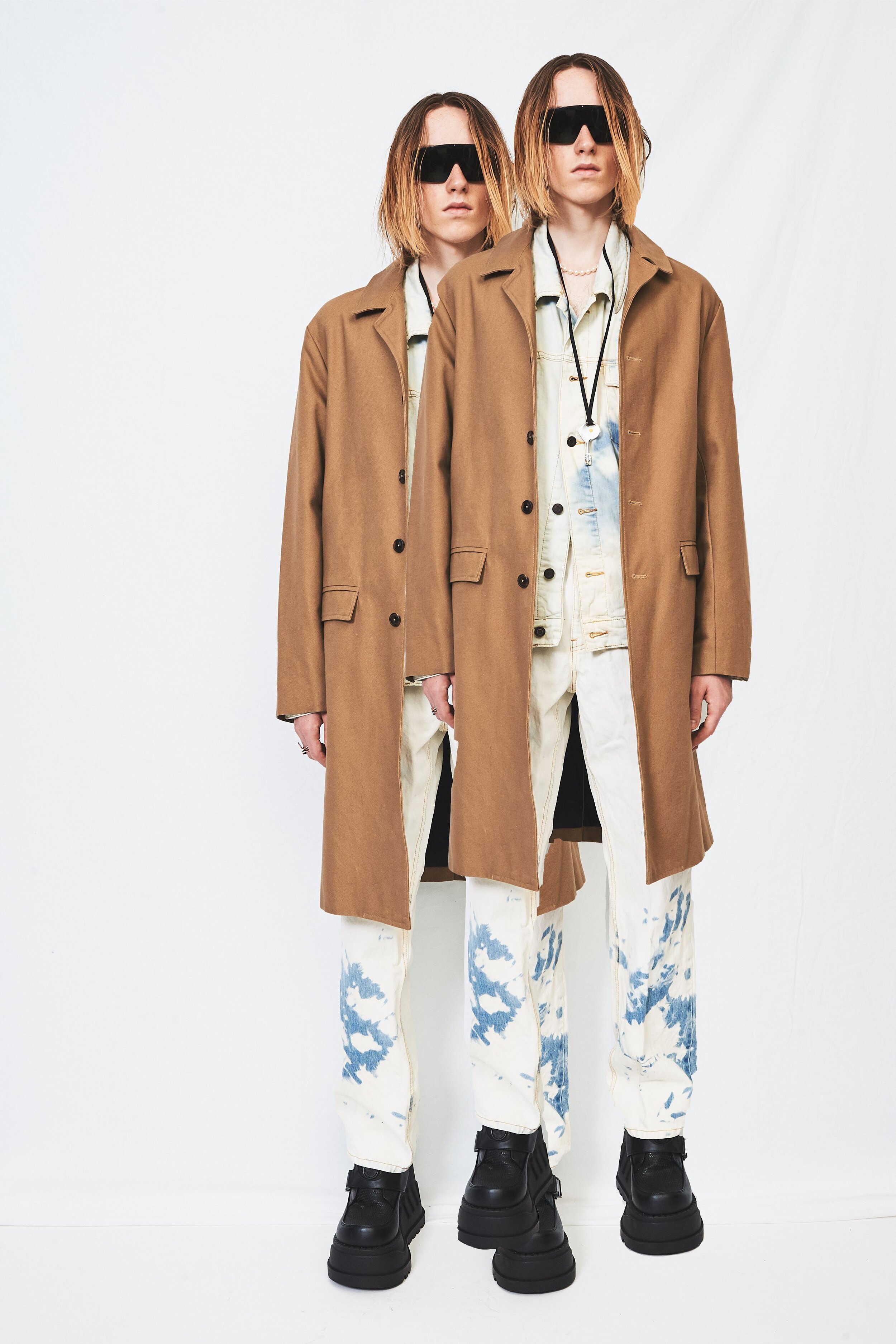
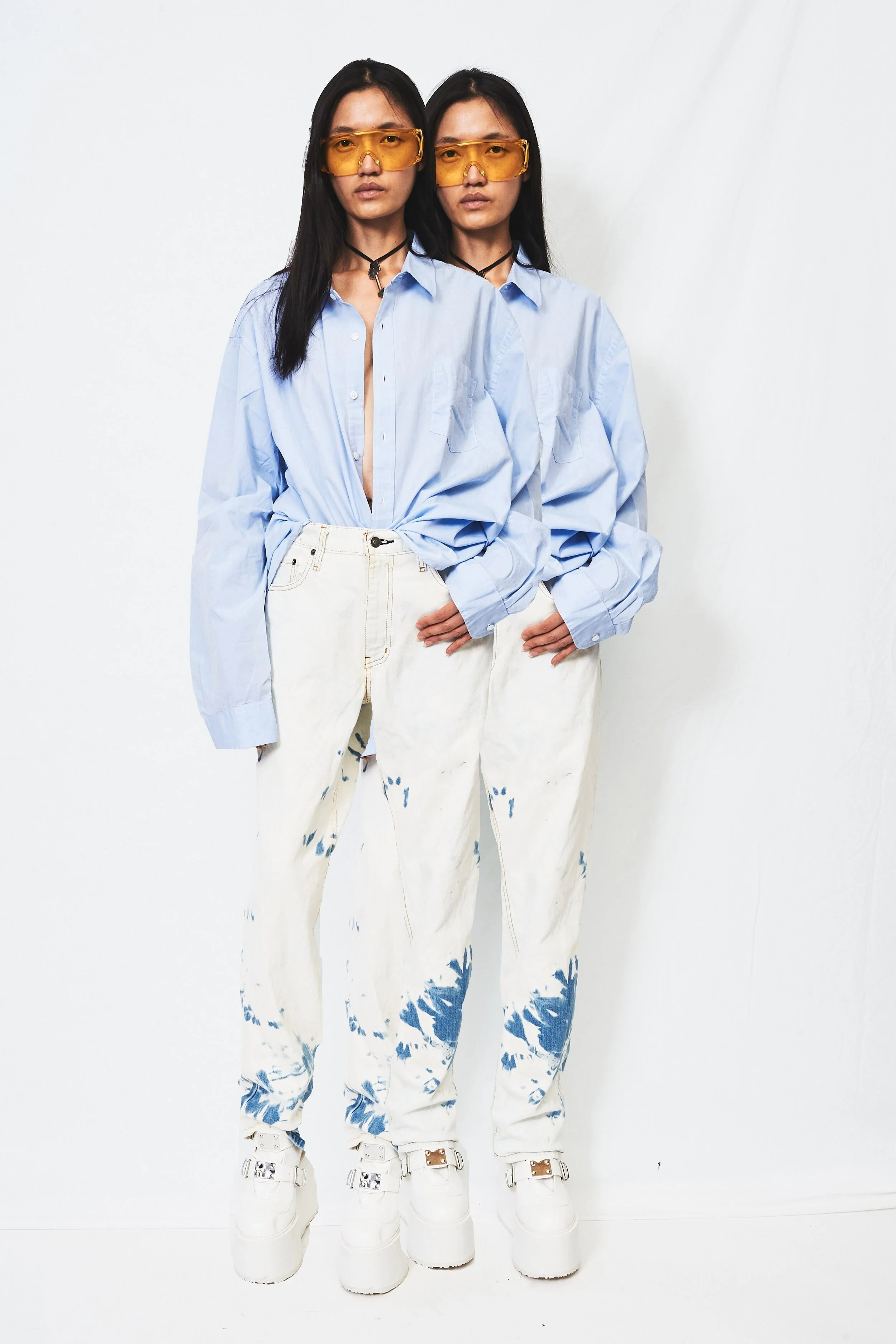
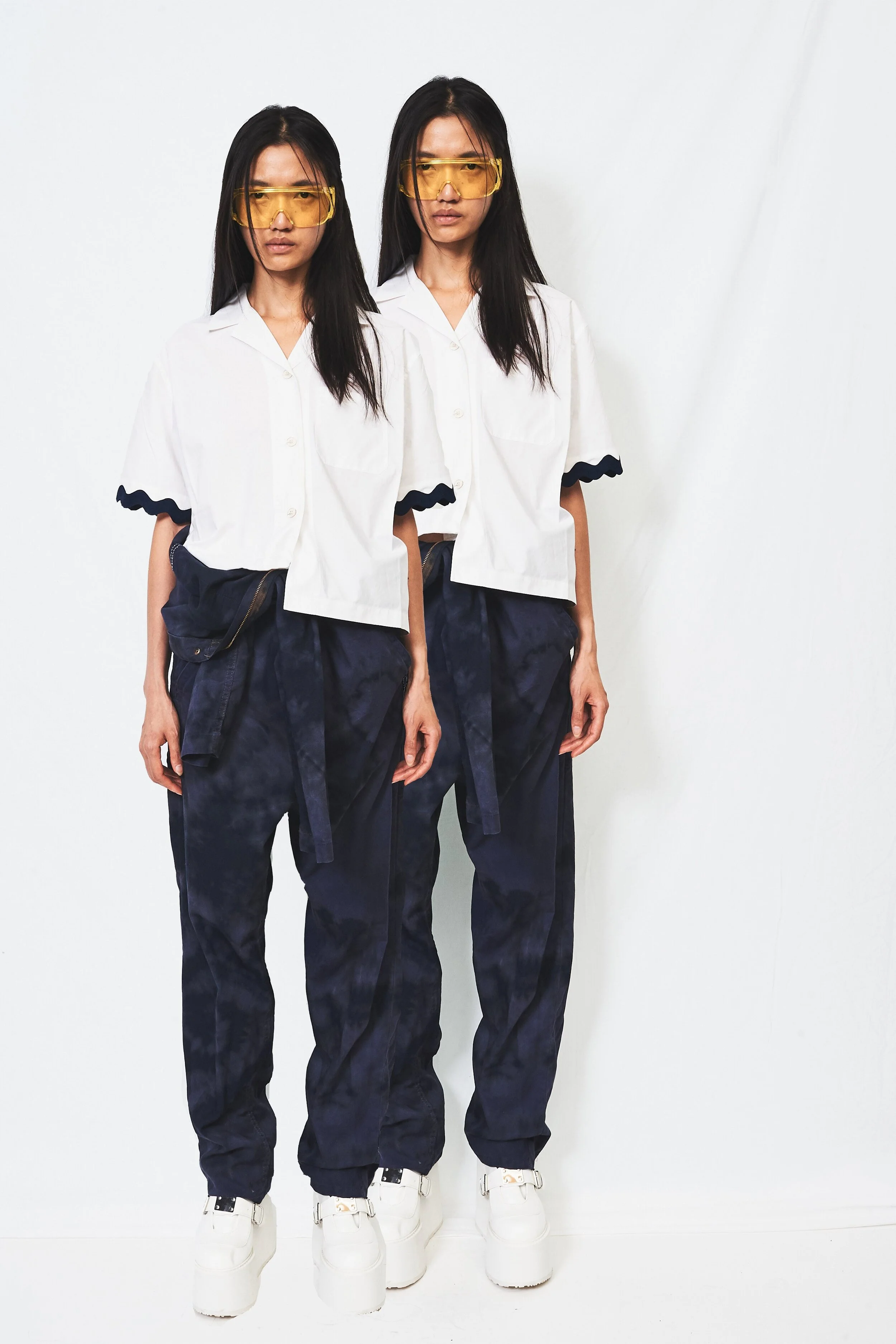
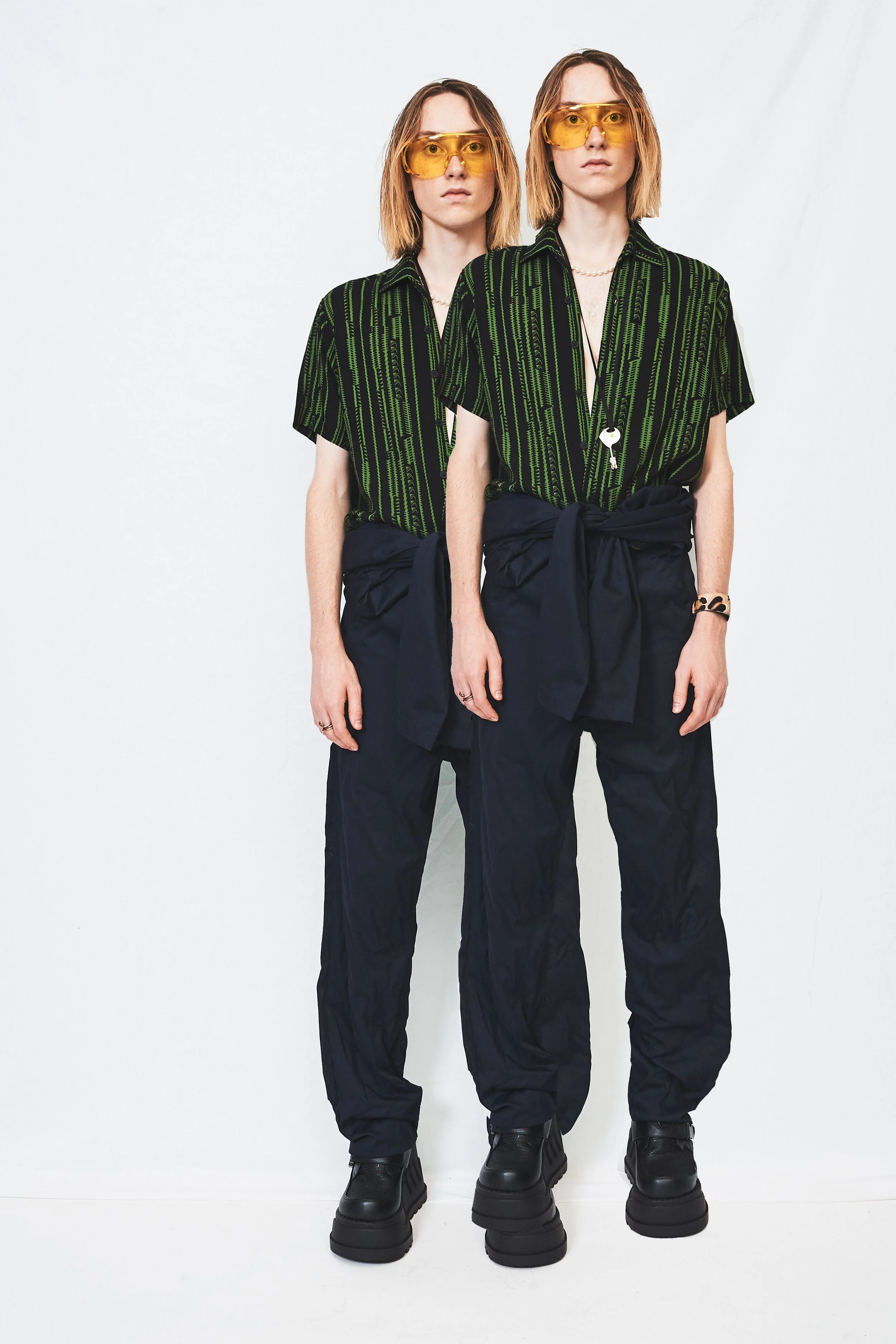
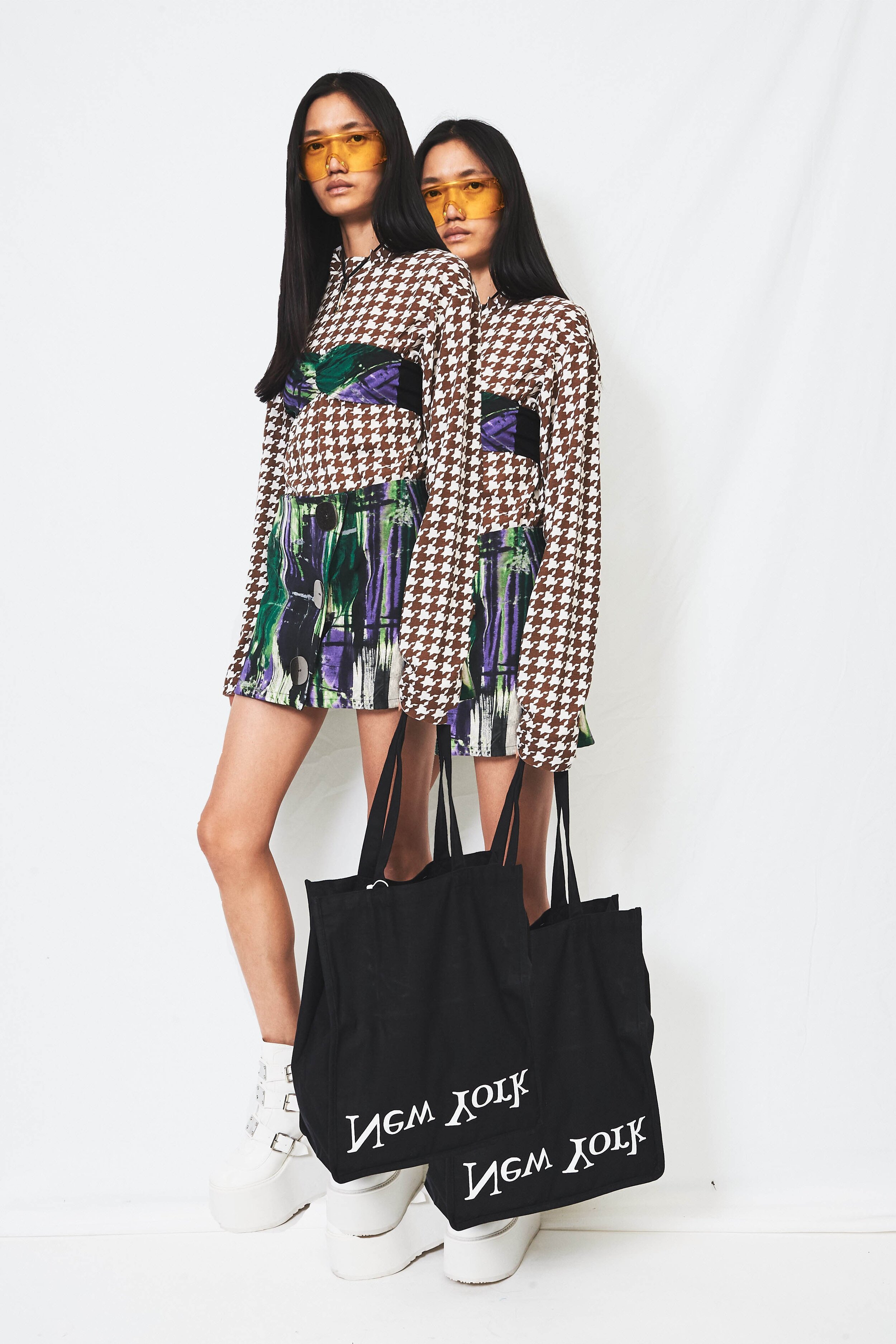
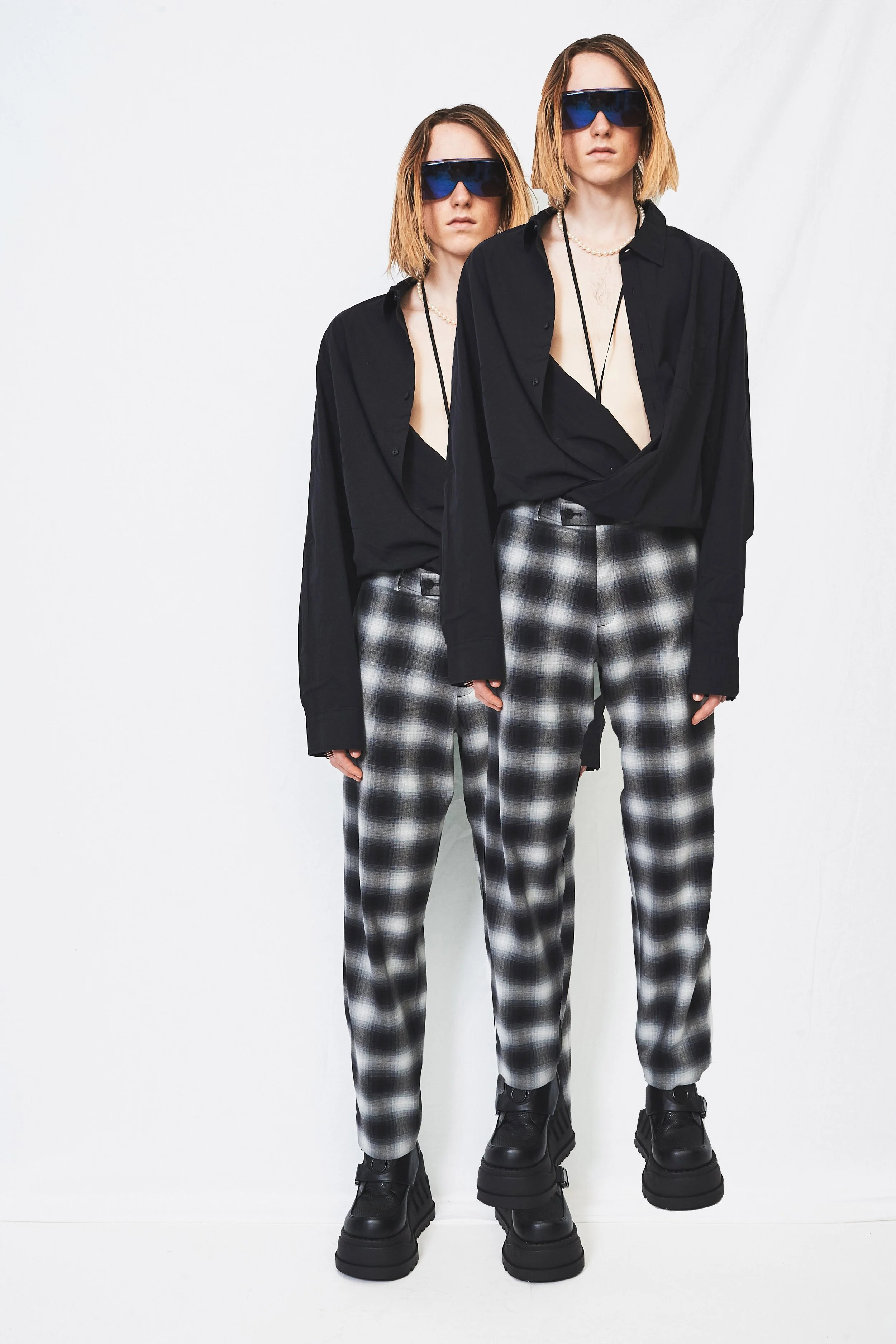
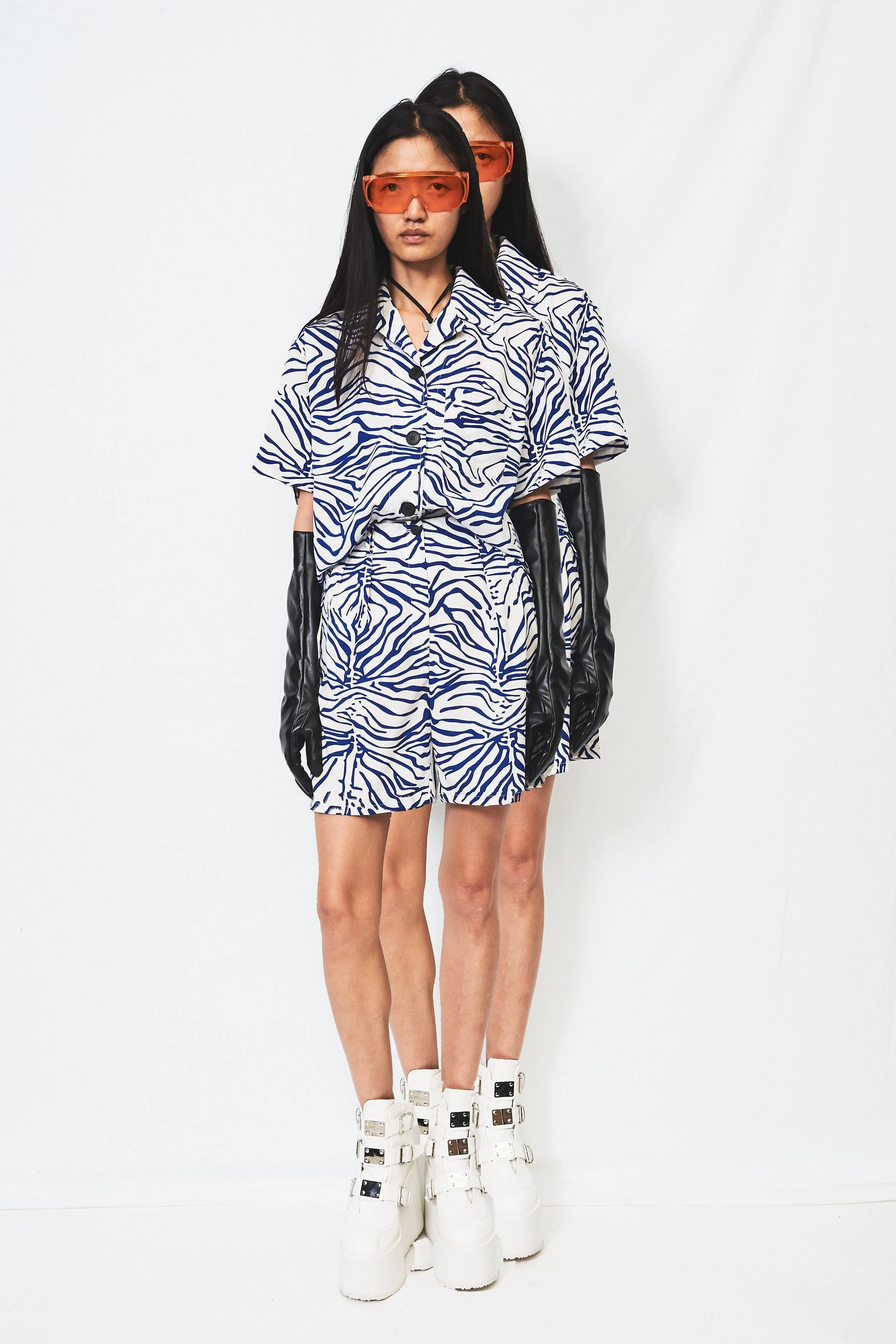
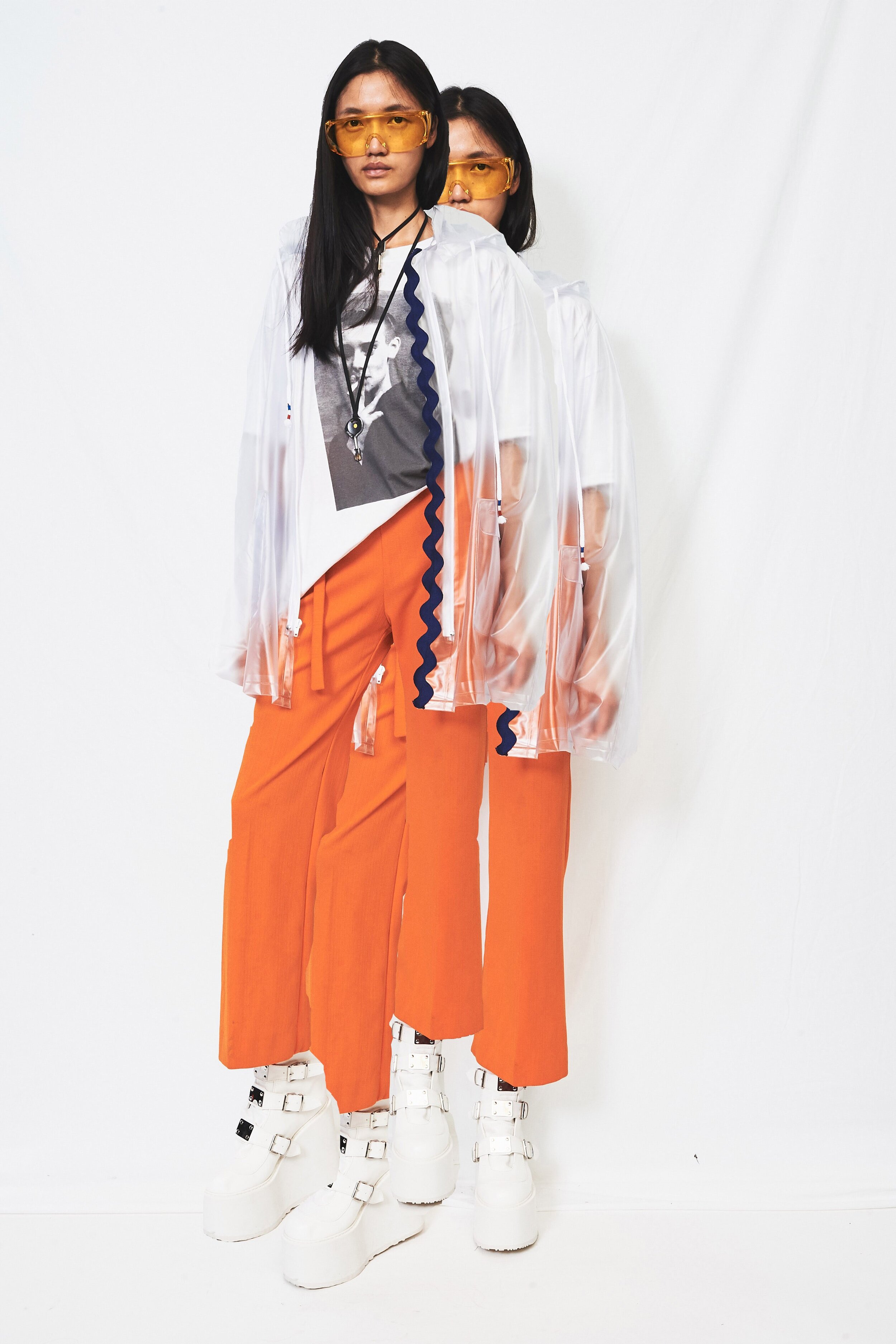
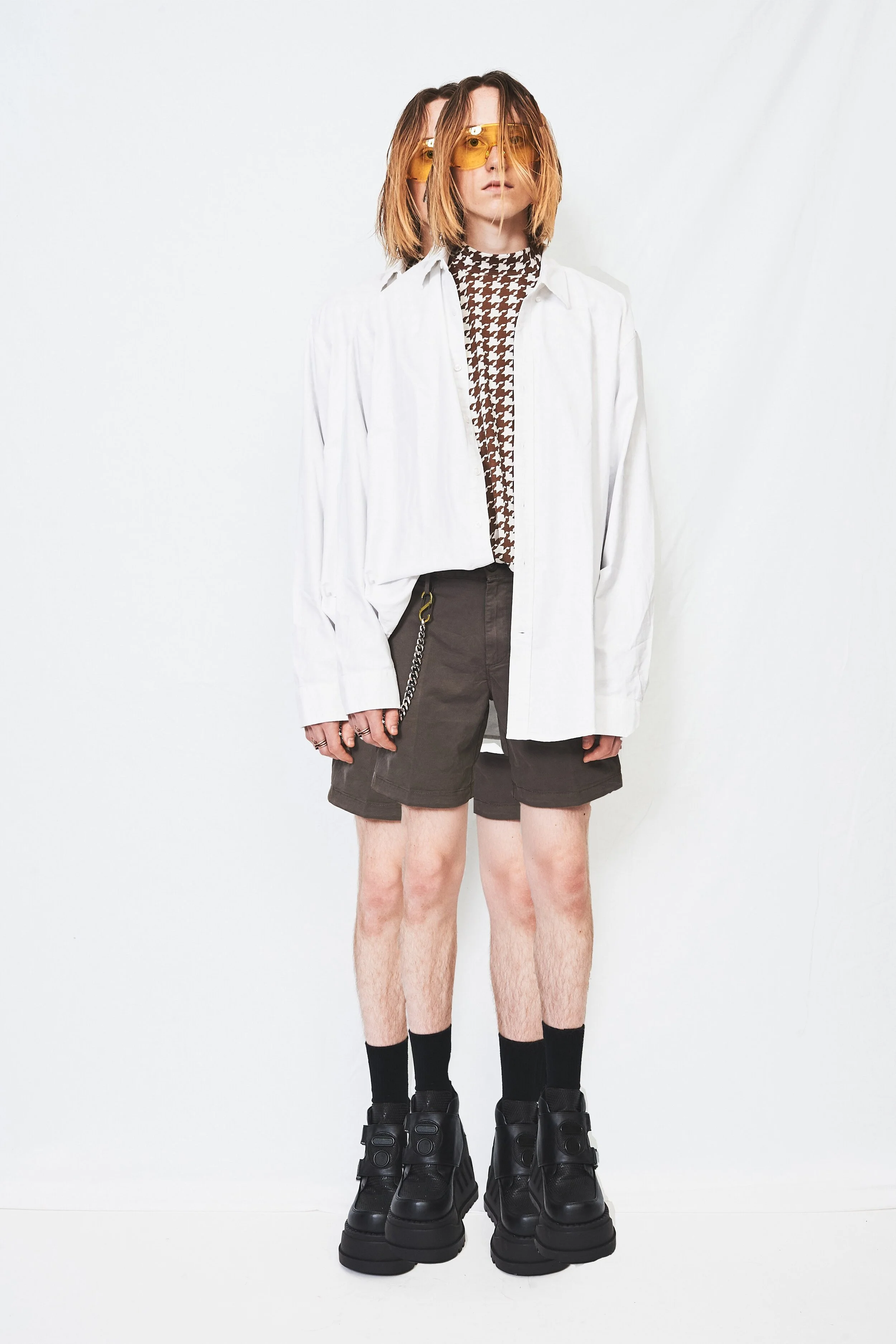
Making the old feel new again is Greg Armas’s specialty; since he founded Assembly New York, his eye for vintage has largely informed his designs for men and women. Spring 2020 found him thinking about early rave culture, which thrived on reworking 9-to-5 style for after-hours with wild accessories. He interpreted the concept quite literally by mixing his signature suits and shirting with chunky boots and shield sunglasses. There was a new, graphic energy in the zebra stripes and tie-dyed jeans, too, but if you took everything apart, each piece was still inherently wearable. That’s another Armas specialty: clothes that are easy to wear in “real life,” but still feel interesting.

On that note, an oversize, single-sleeved white button-down would pair just as well over a tank and trousers (as shown here) as with jeans. Less intuitive was the abstract bandeau-and-skirt set, but Assembly customers who enjoy layering will get a kick out of Armas’s suggestion to layer a clashing blouse underneath. The designer said he felt he took the biggest risk with color: “I like to challenge myself every season,” he explained. “Aqua and lavender are tones that I’ve never really played with.”

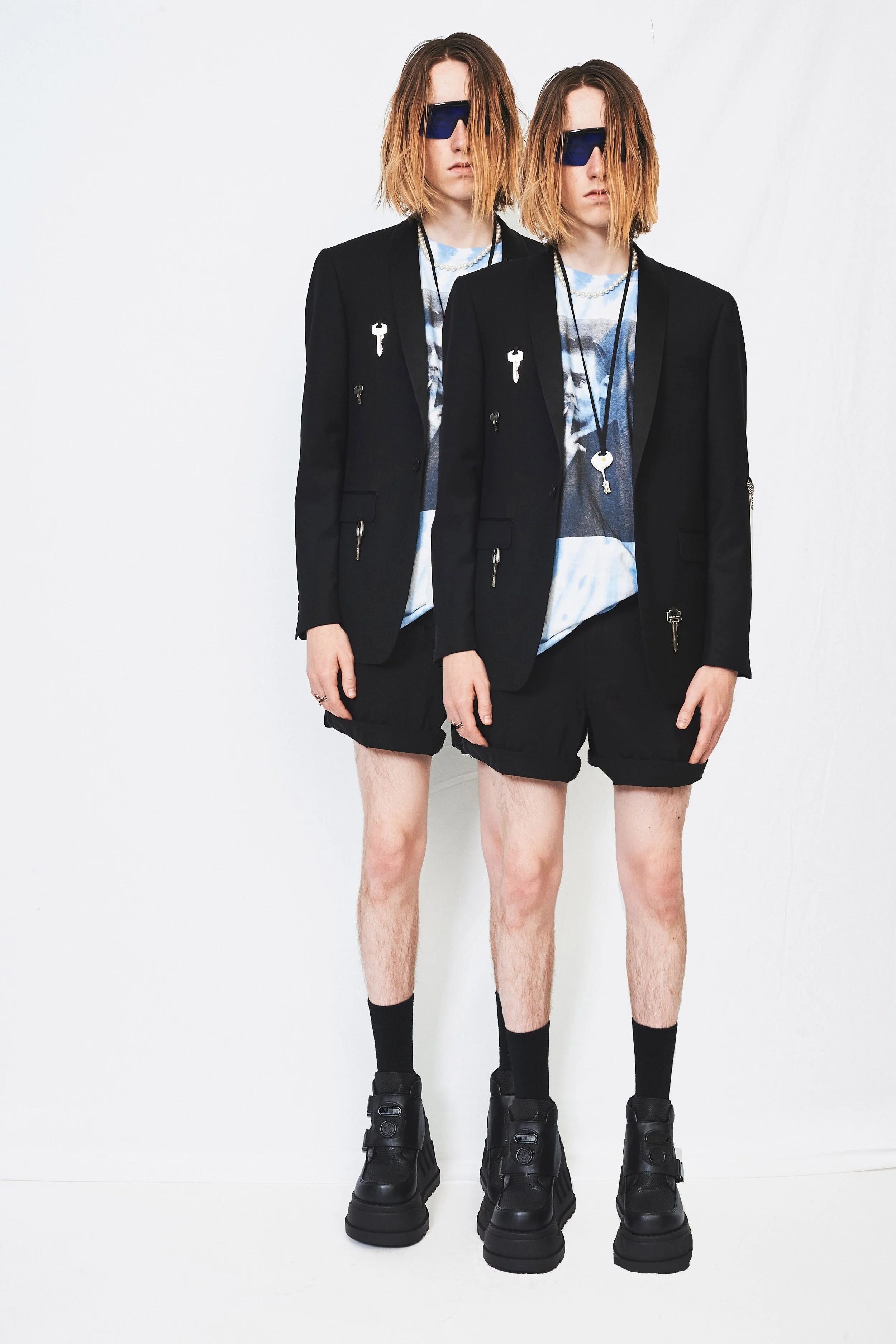
On the men’s side, Armas pointed out a classic blazer embroidered with real keys, a nod to “latchkey kids” who wore house keys around their necks when their parents worked late. He even included one of his own keys, which opens a longtime friend’s house in Los Angeles. “If you were a kid, you may have only had one, but if you’re a bit older, you might have five or six different keys, which are all represented on this special tuxedo jacket,” he said. The concept was mirrored on a pair of jeans as well. Those keys weren’t the central story of Spring, but they added a nice personal touch.

Armas’s love of vintage extends beyond those retro concepts and silhouettes: This season, he reported that 90 percent of the fabrics were upcycled or repurposed. It’s a New Age trend rooted in the past, and it’s gaining popularity this season as fashion attempts to address its massive impact on the environment.

Source: VogueRunway

FASHIONADO