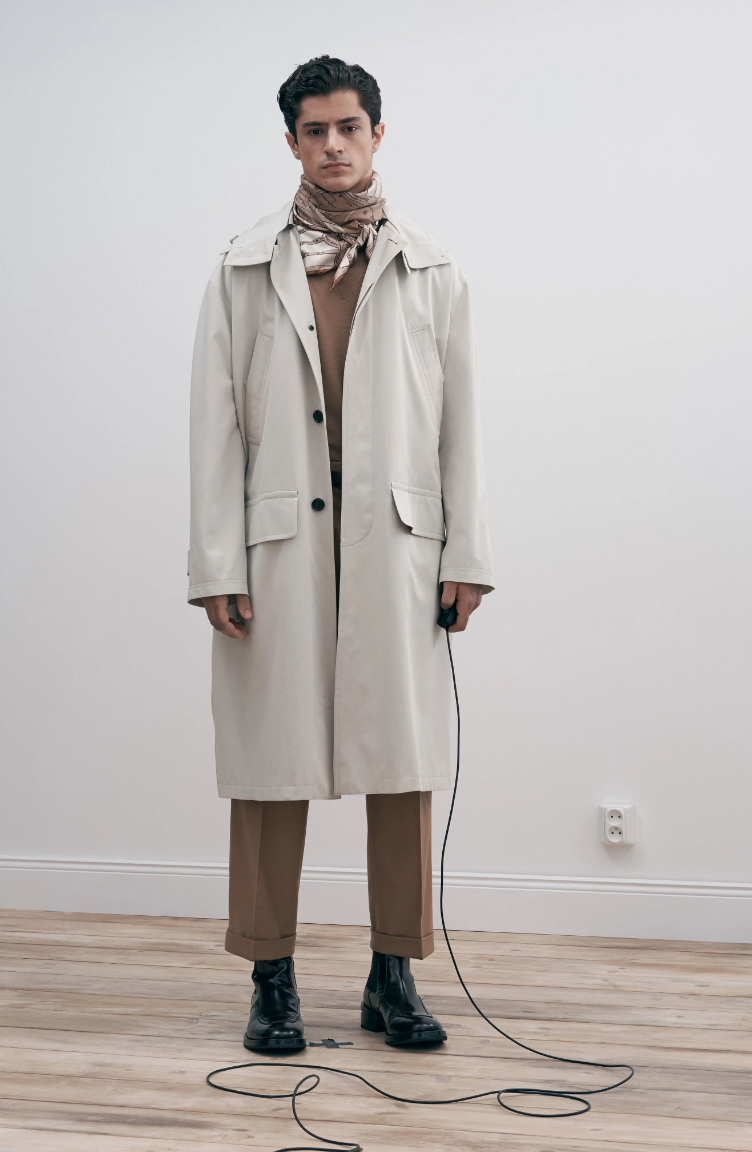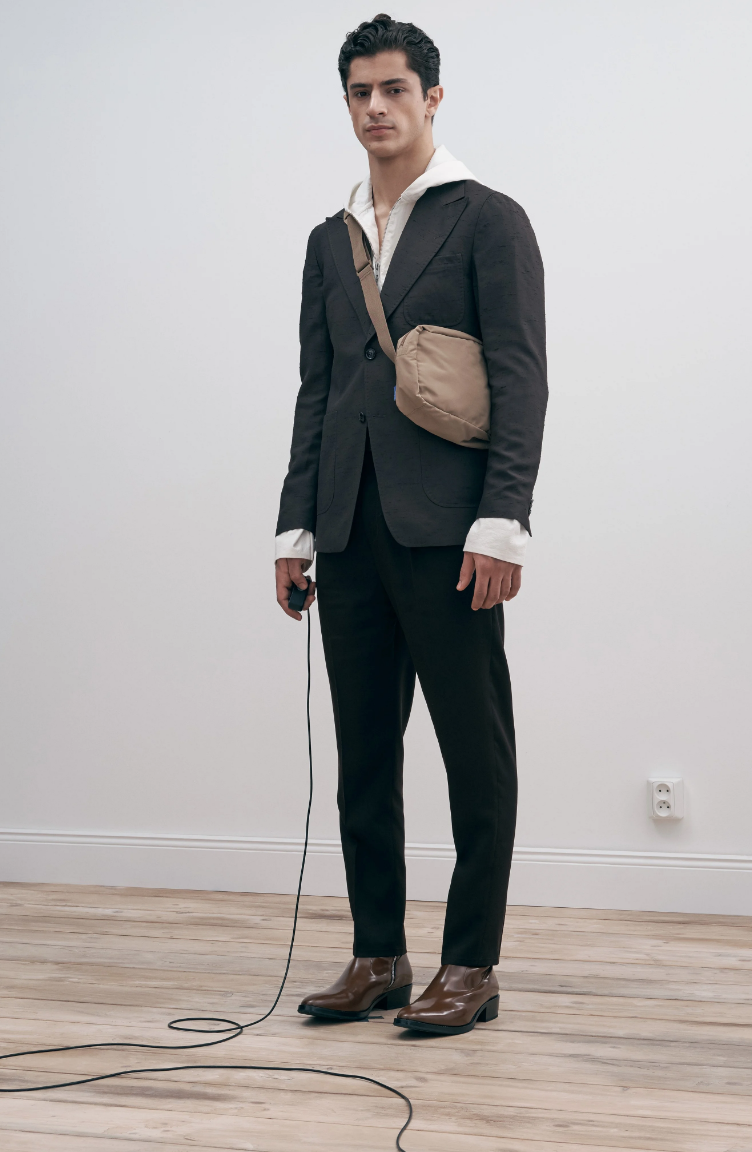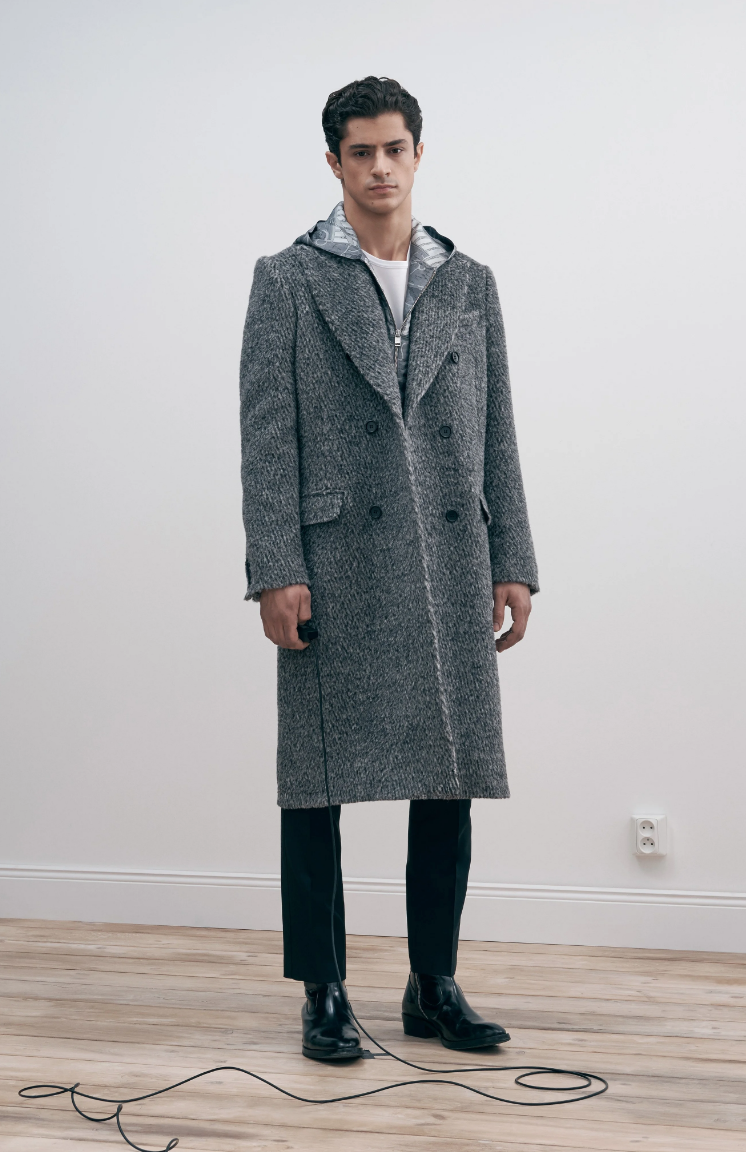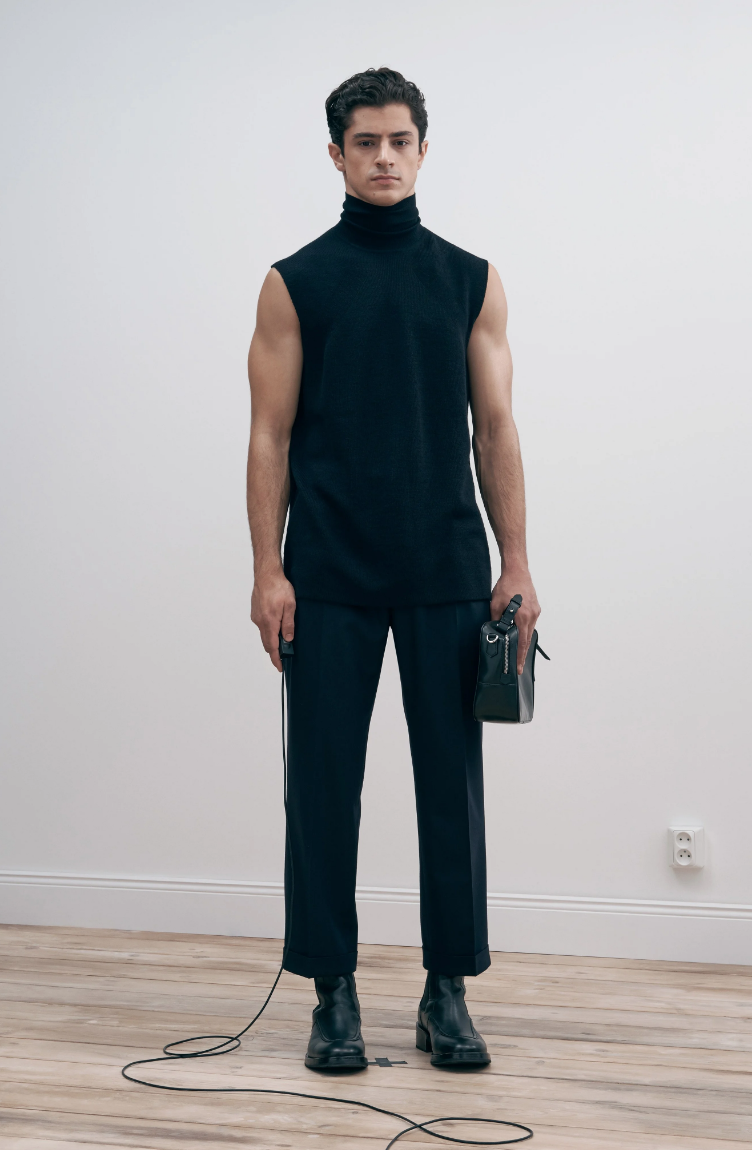
Burberry Pre-Fall 2020

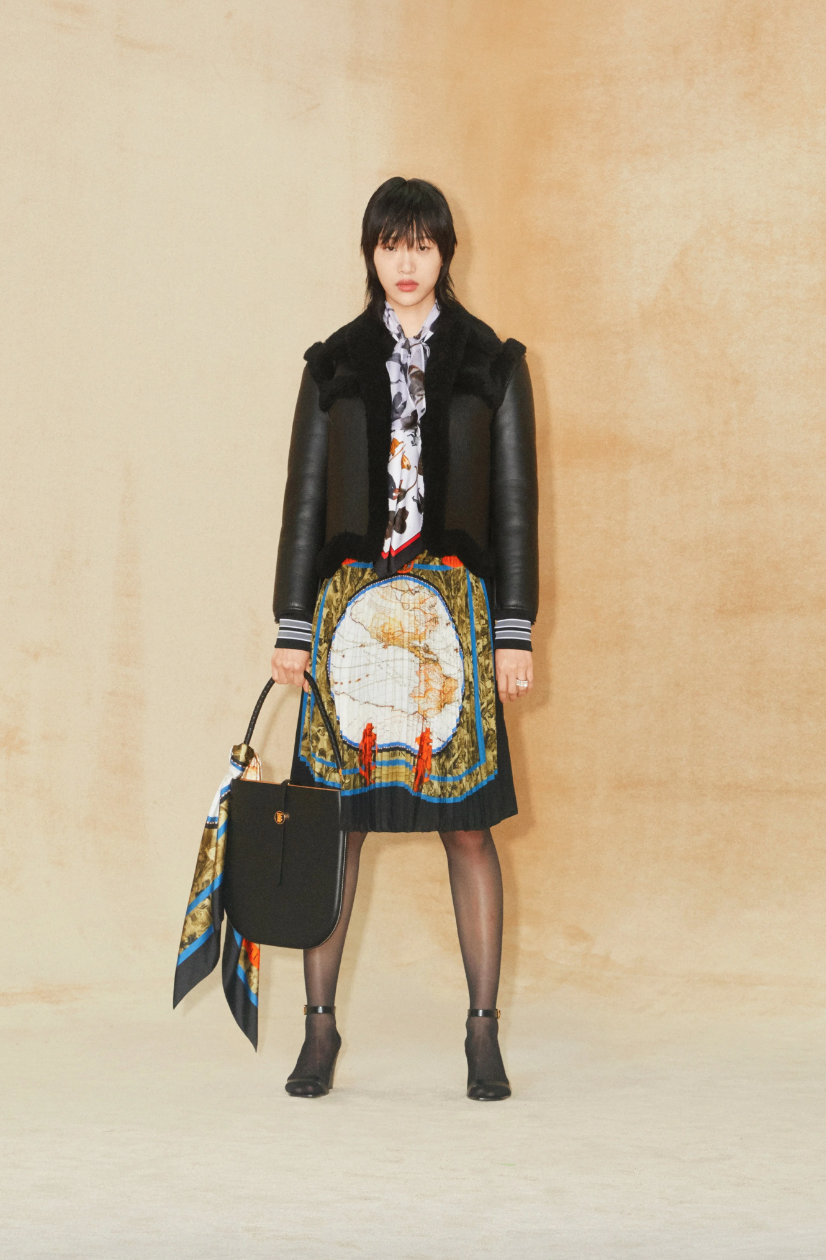
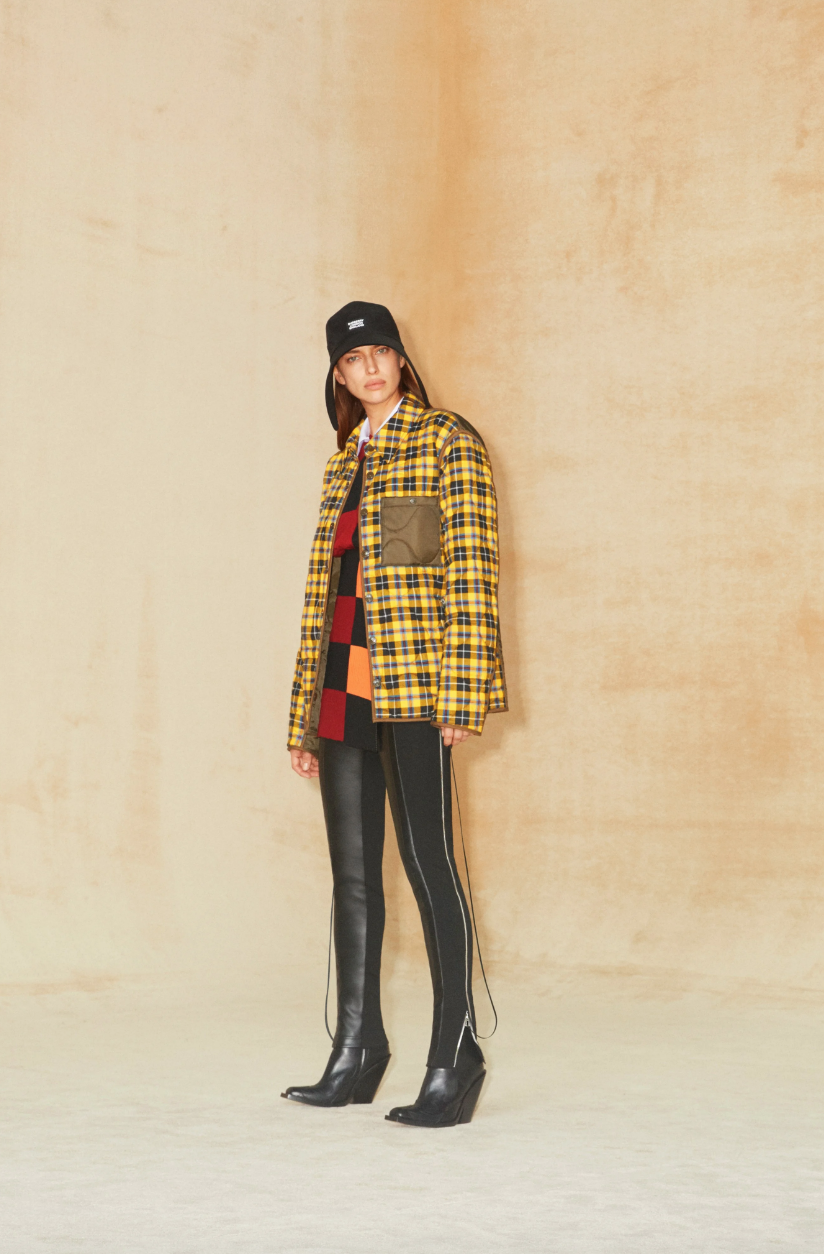
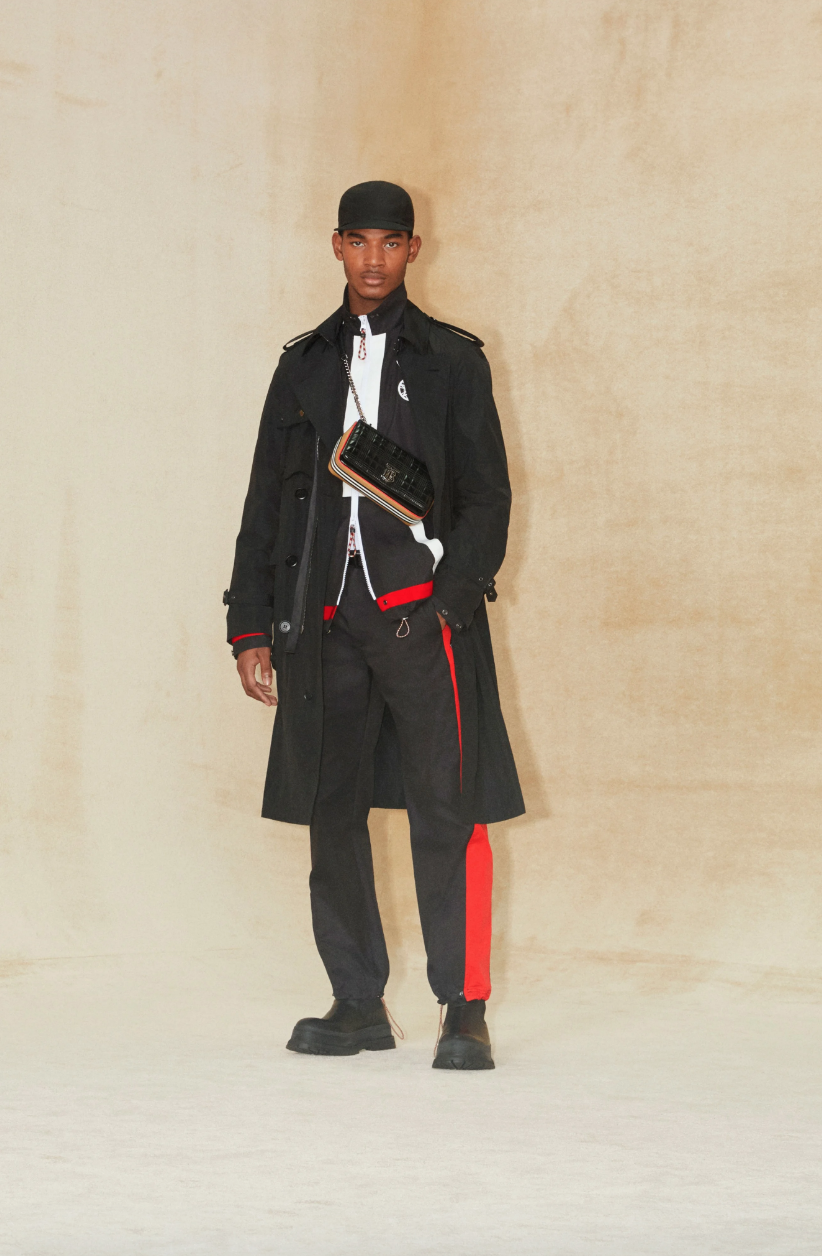
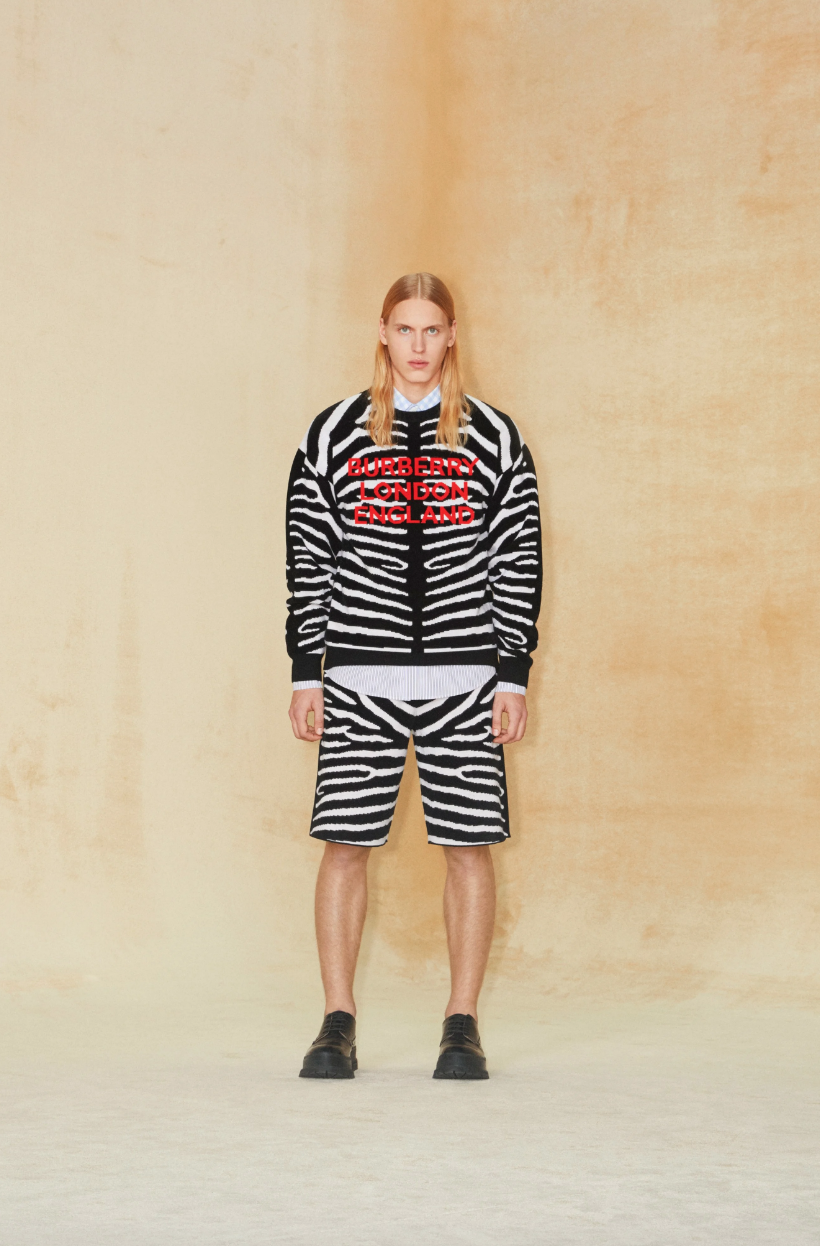
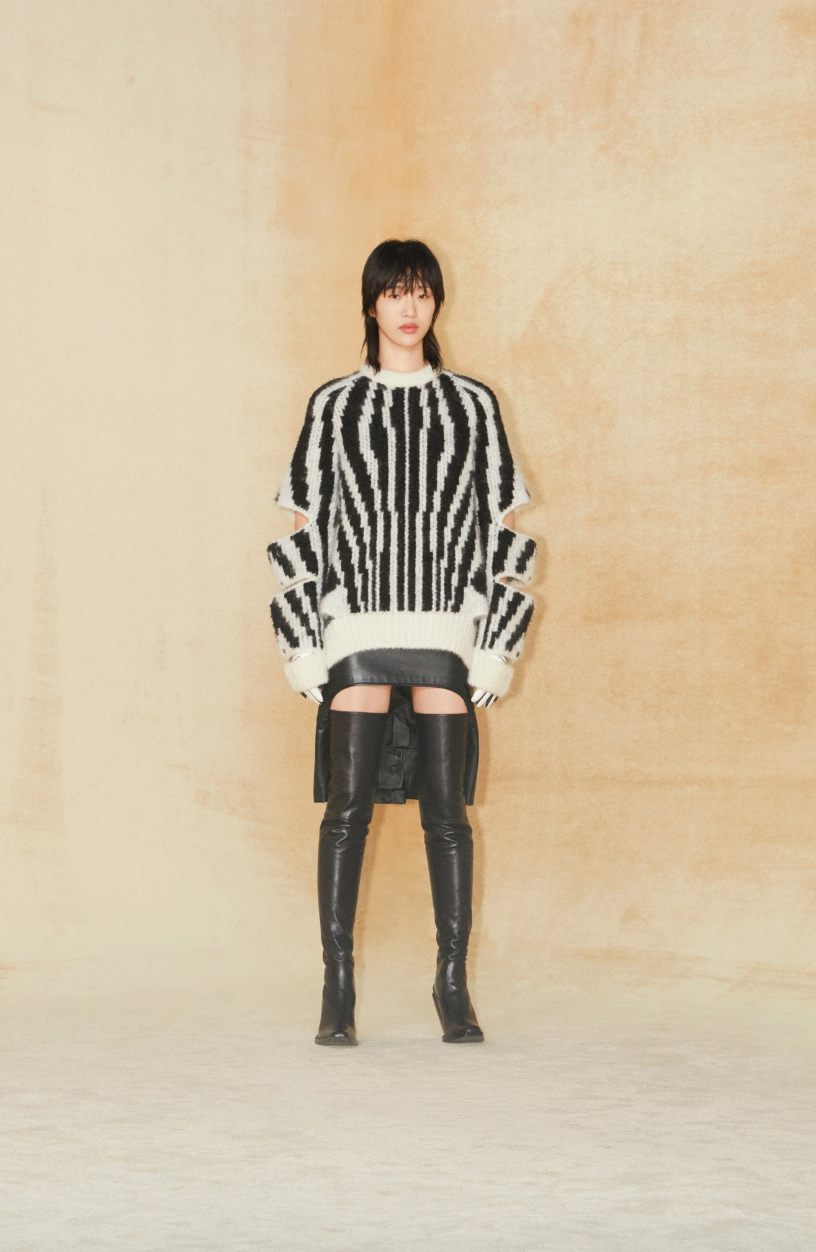
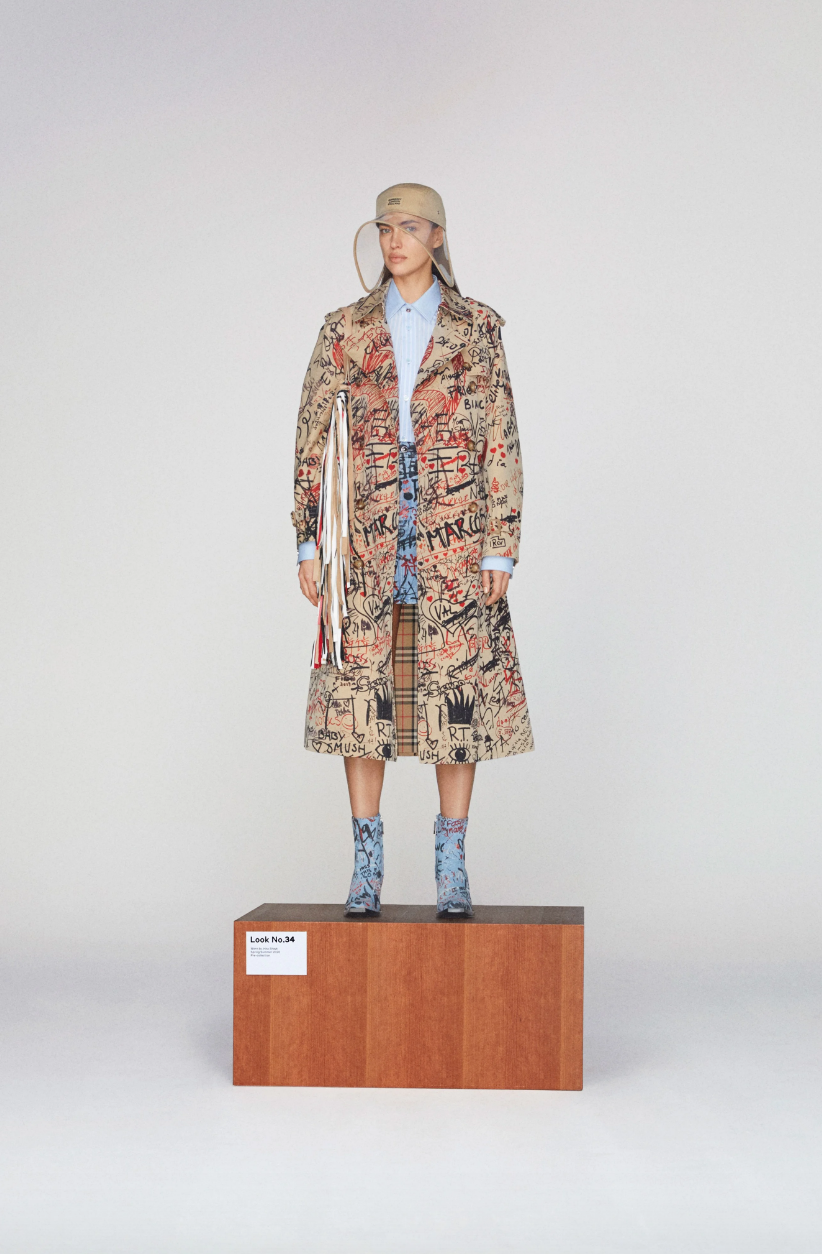
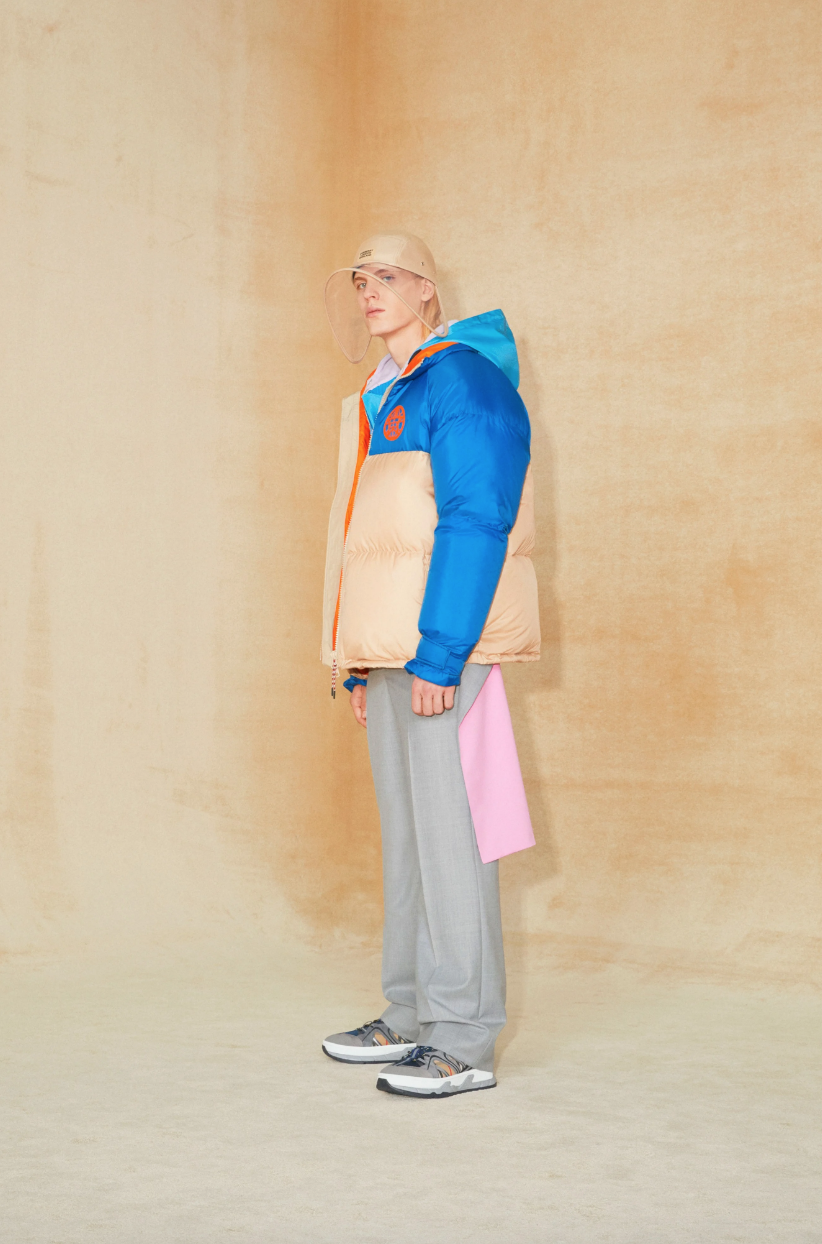
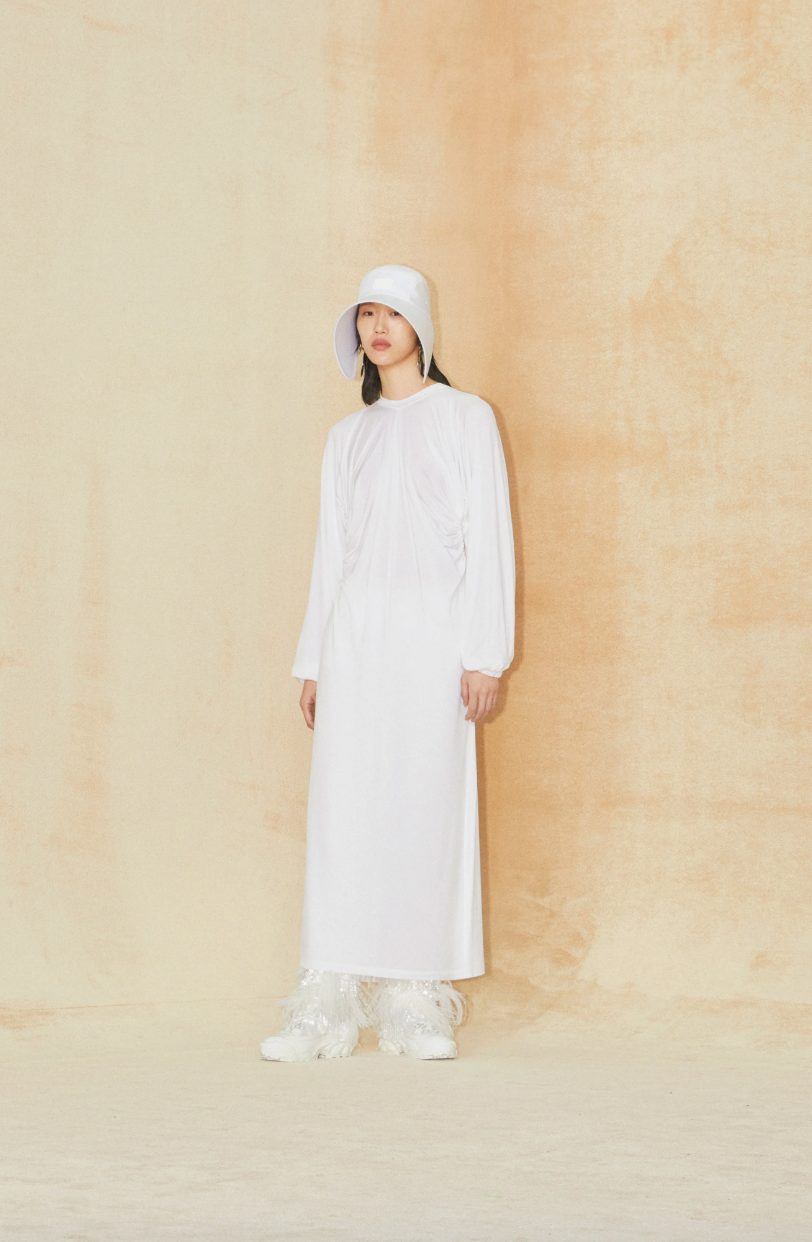
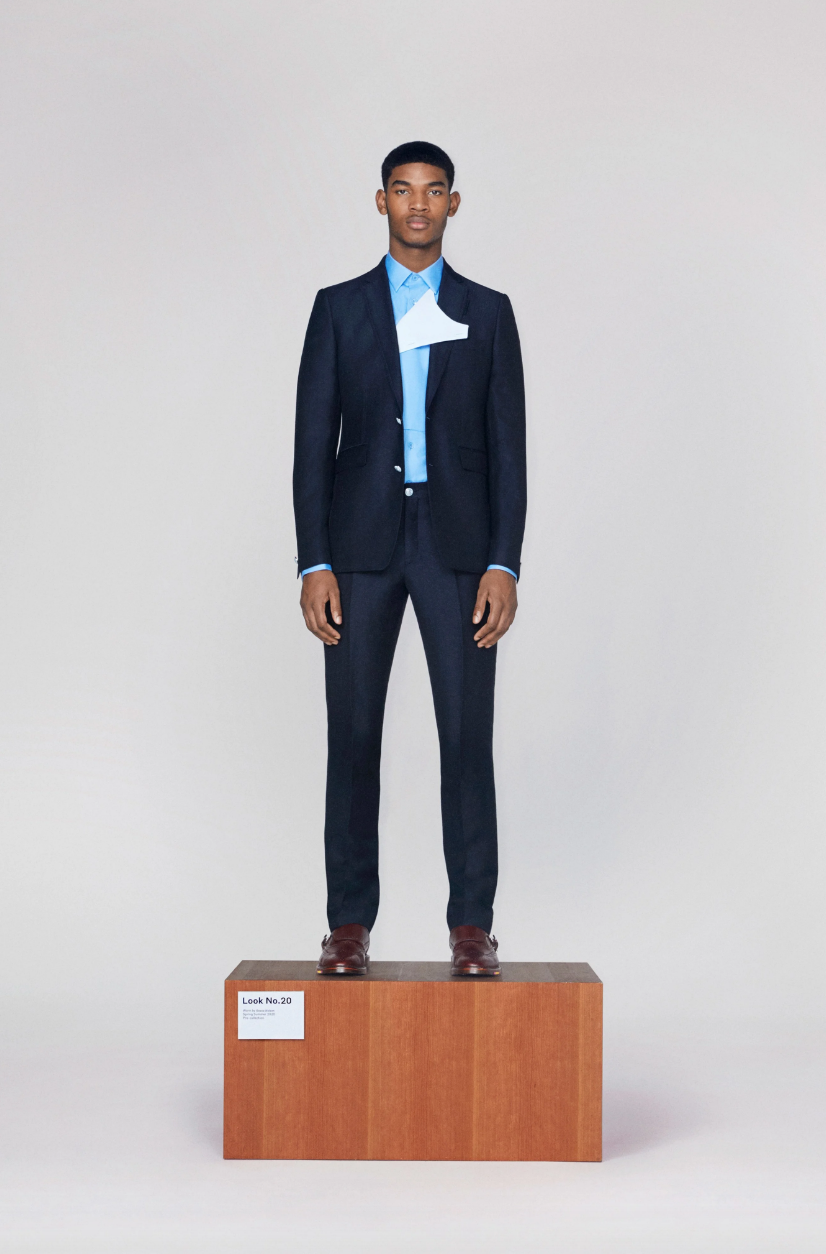
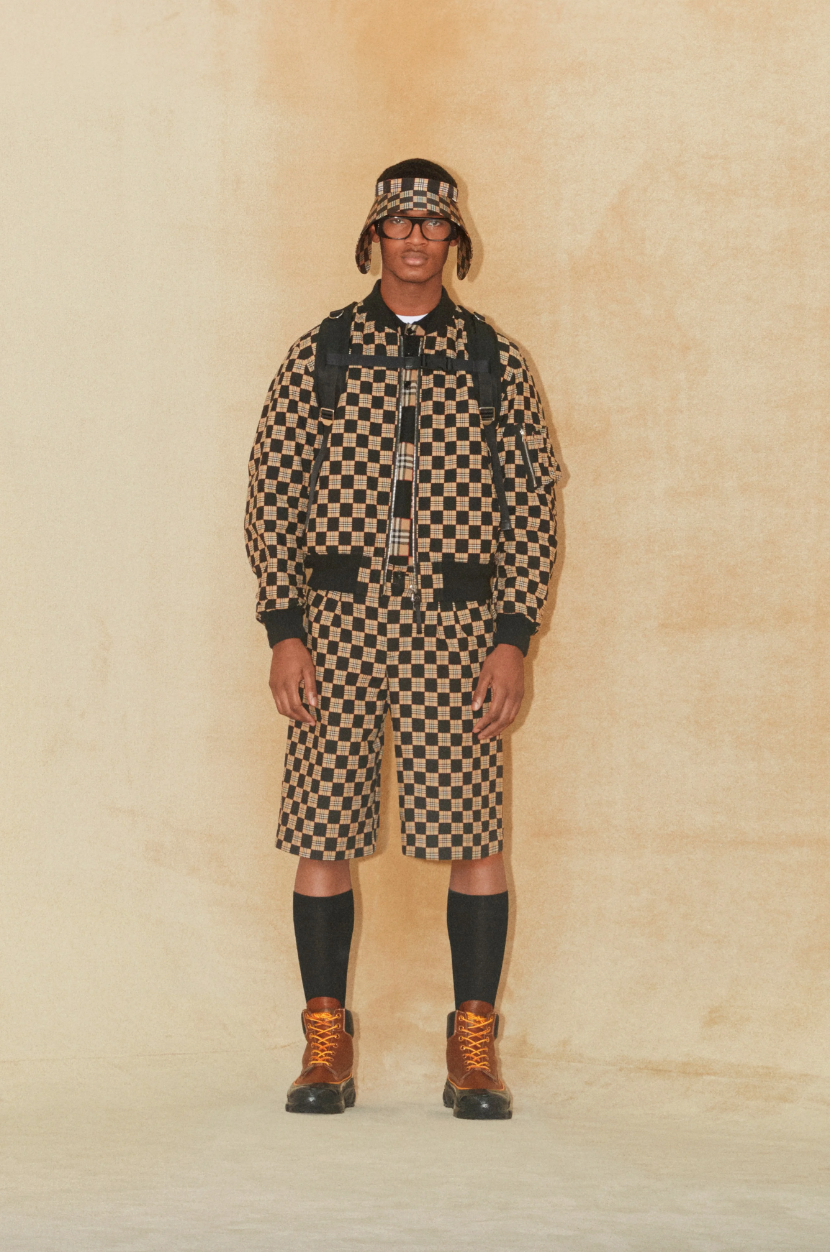
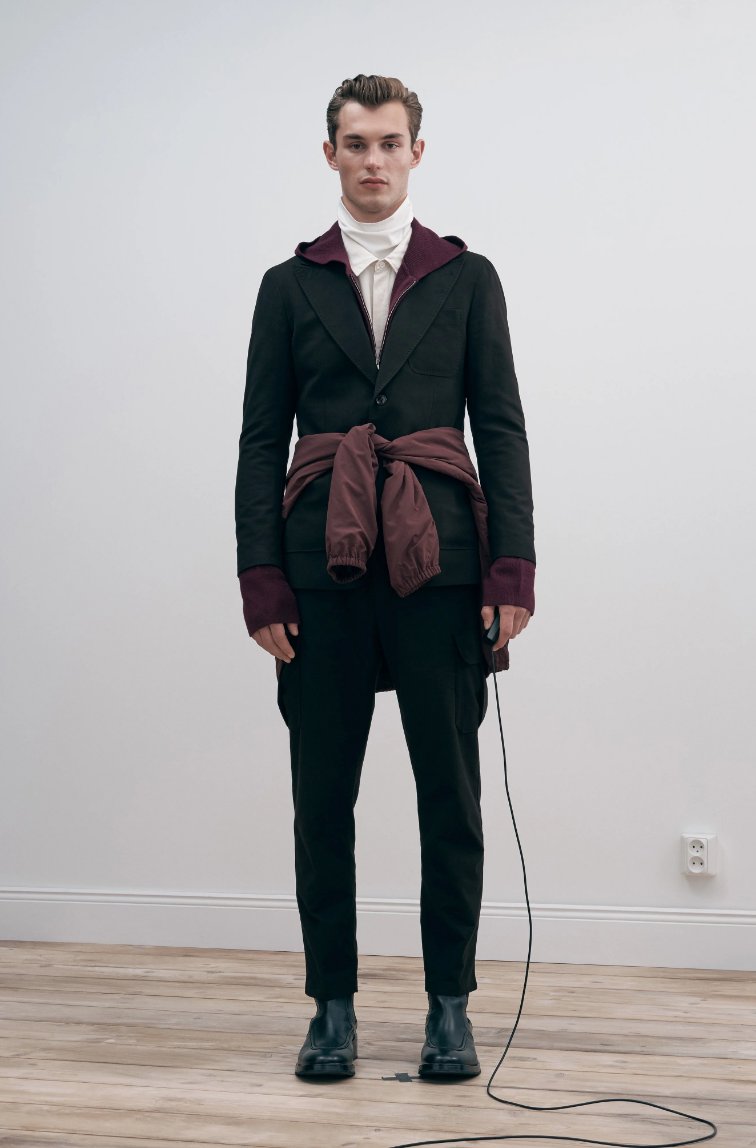
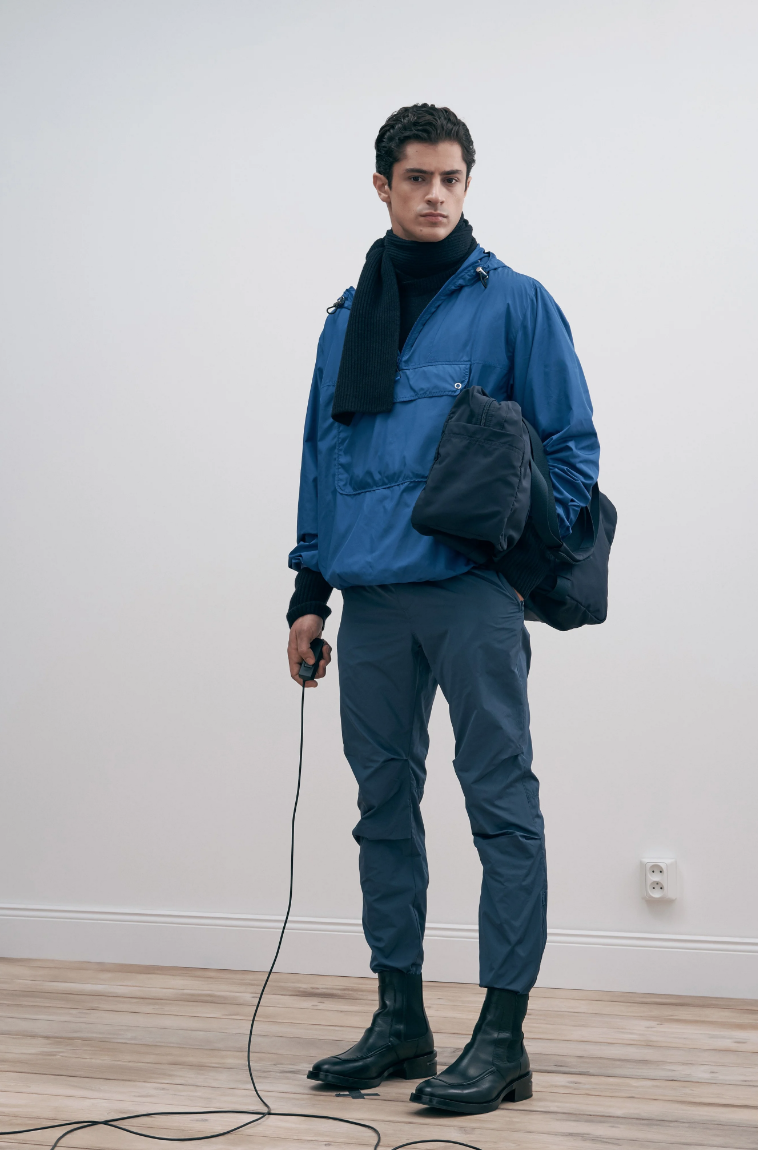
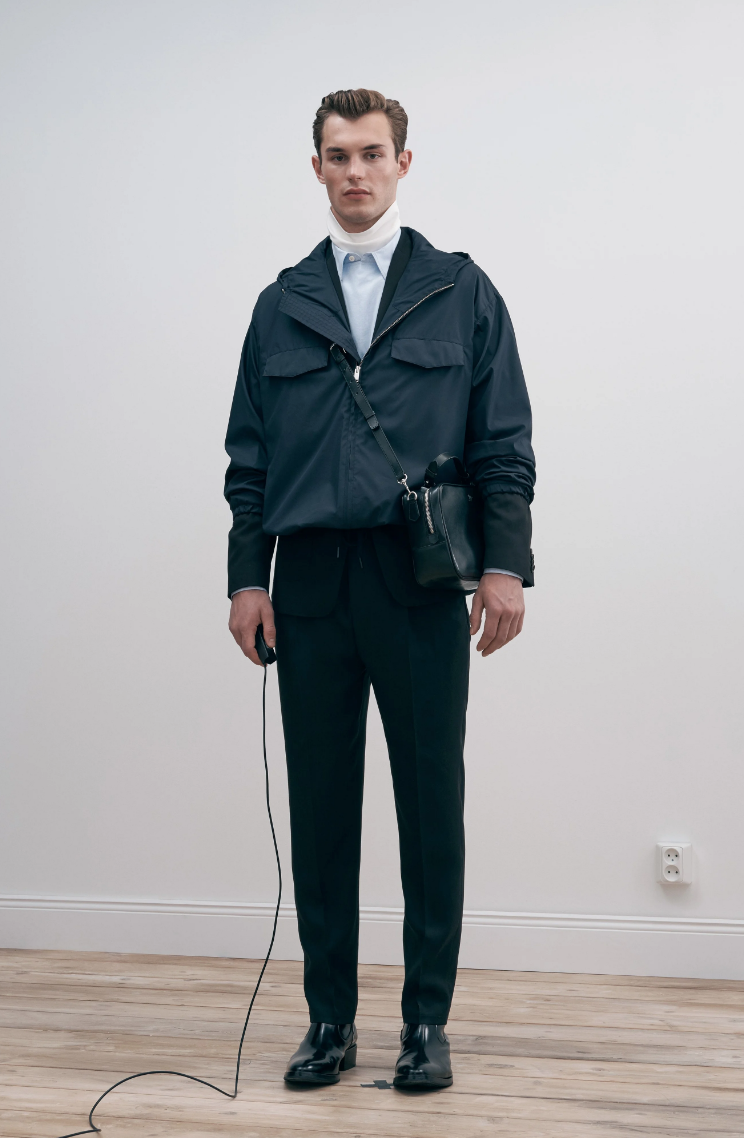
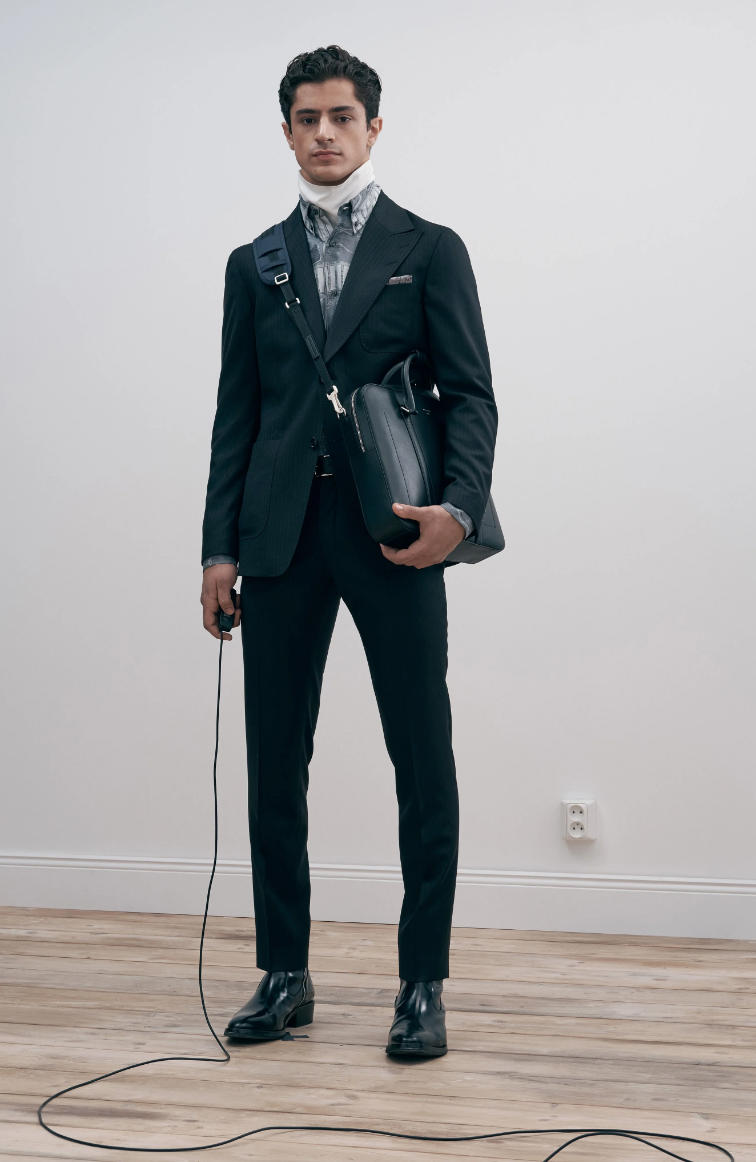
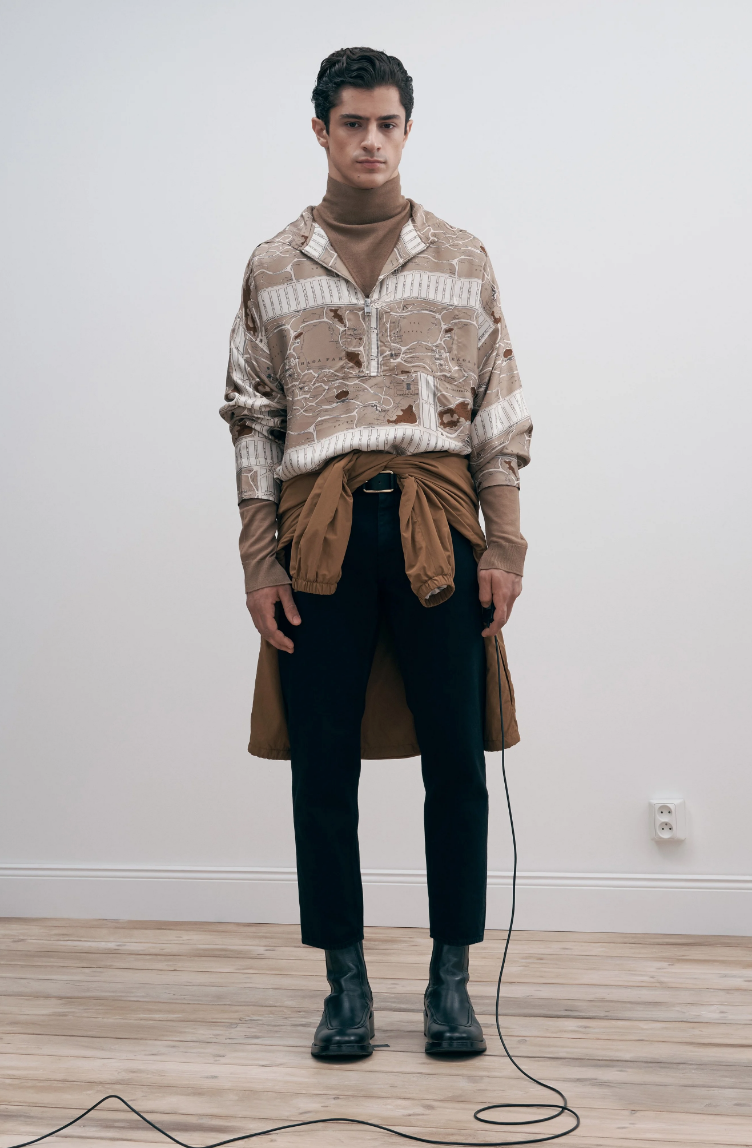
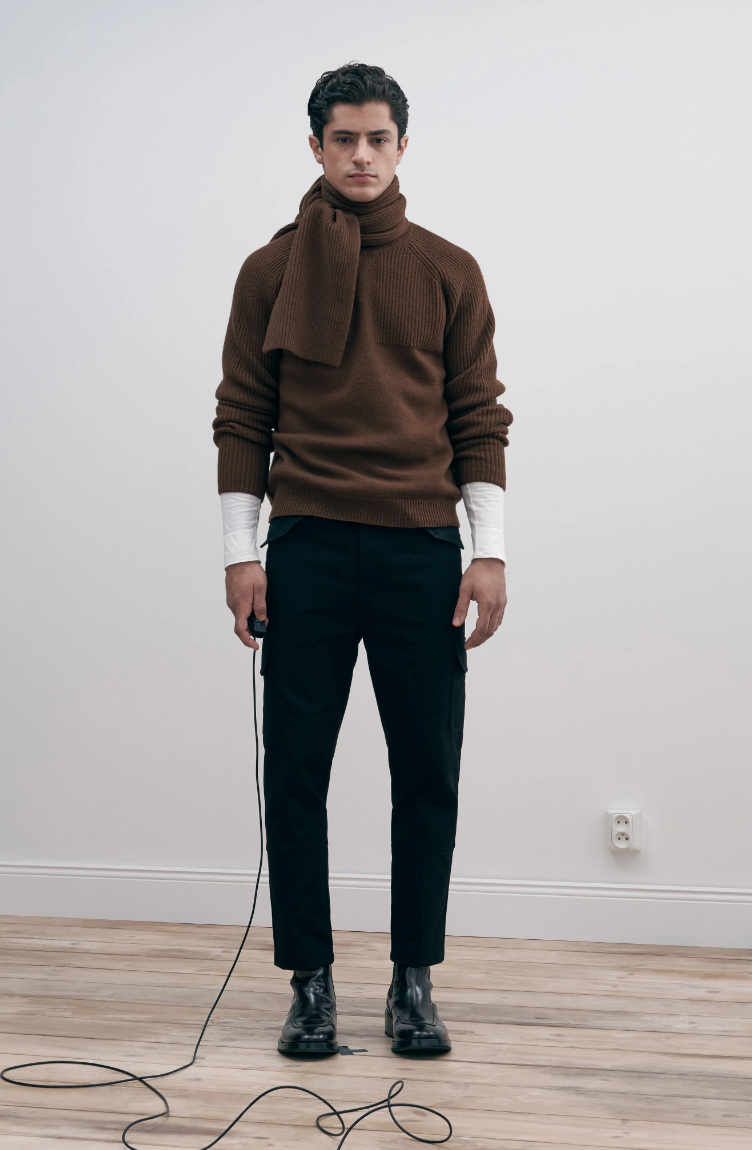
The main points of the Burberry women’s and men’s pre-fall are as difficult to encompass as is Riccardo Tisci’s task of covering the fashion consciousness of the globe. Perhaps that’s why he thought to include the motif of an old navigational map, which is printed on silk head squares and variously pleated, draped, and patch-worked. It’s a collection that isn’t anchored in any one idea; it travels between disparate tropes, representing the biggest British fashion brand to all generations, for all times and occasions.

Not that you can’t see who’s captain. Tisci’s eye for the elegant and sexy, his far-from-earthy, English-classic countrywear, his aspirational streetwear, and a Kim Kardashian West moment are all logged in this journey around Burberry world. (KKW already wore the beige jeans with a boned corset top in look 14. The skin-tight chestnut leather boot-chaps are actually built in, with pointy stiletto booties completing the sprayed-on illusion.)

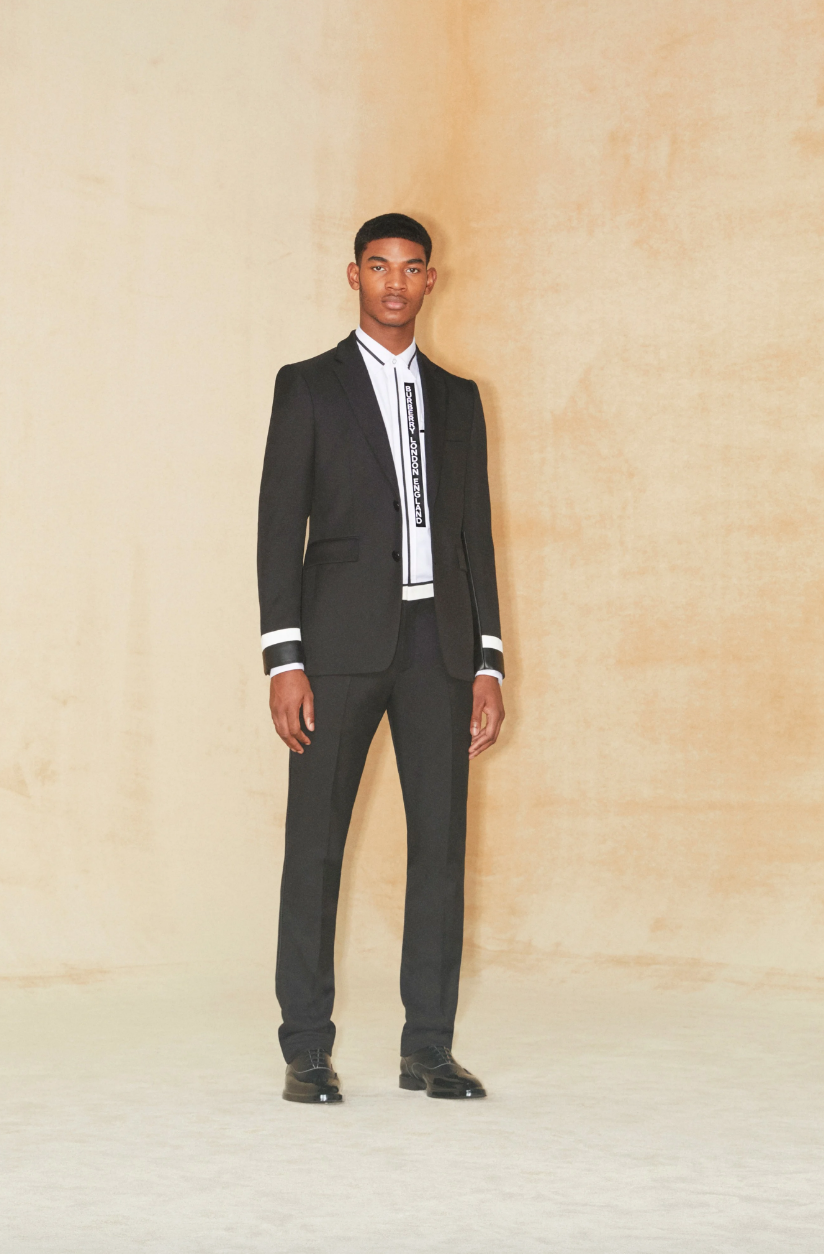
Tisci always promised to expand eveningwear when he came to Burberry—he brought knowledge of the territory with him. Burberry evening suits are now a uniform go-to for men on red carpets, while the women’s nighttime is a fully calibrated repertoire ranging from a drop-dead backless goddess silver streak with a snaky train to a bubblegum pink plissé knee-length dress with slashed medieval sleeves, through to ingenuous black tailoring. Women looking for trouser alternatives for the awards season will doubtless leap on the standout opportunities of the graphic cutaway cape coat with a gold chain belt, and the sophisticated yet cool layering of a silk-fringed coat, tabard, and narrow trousers.
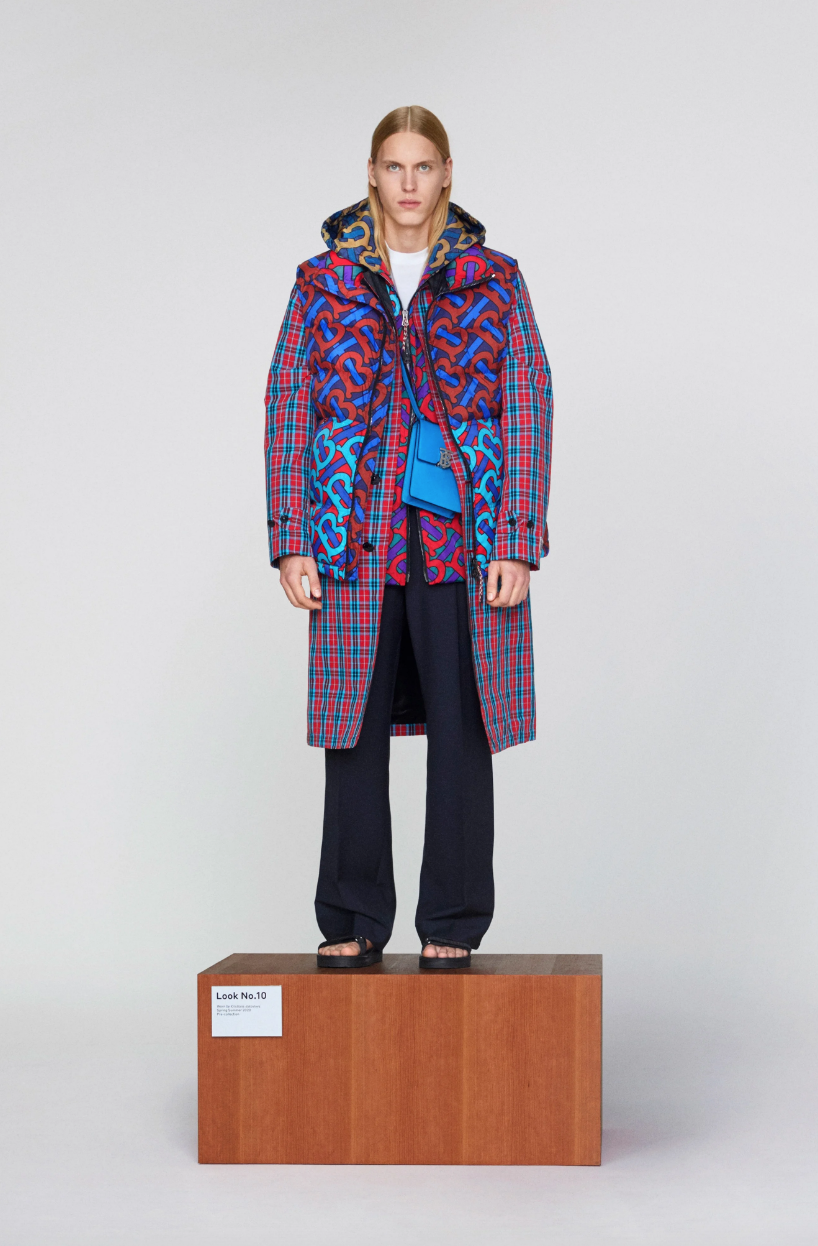
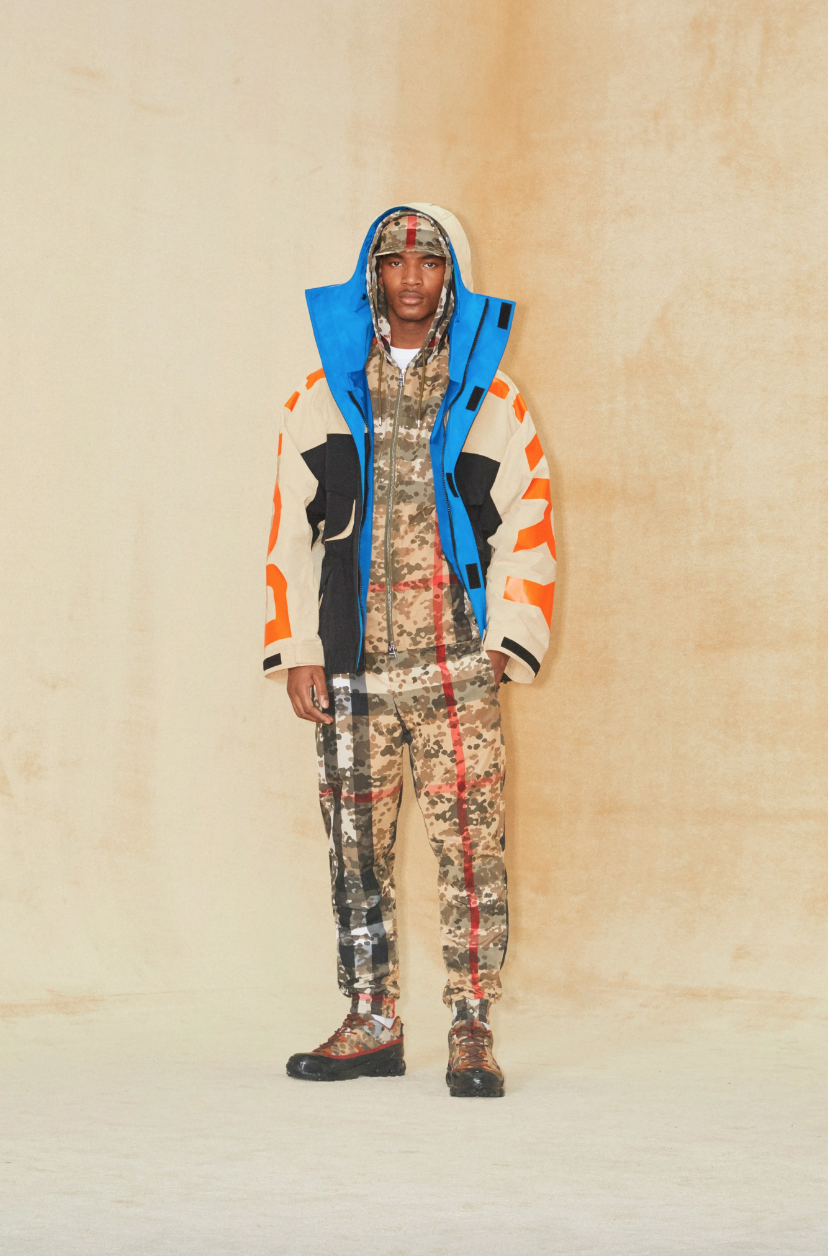
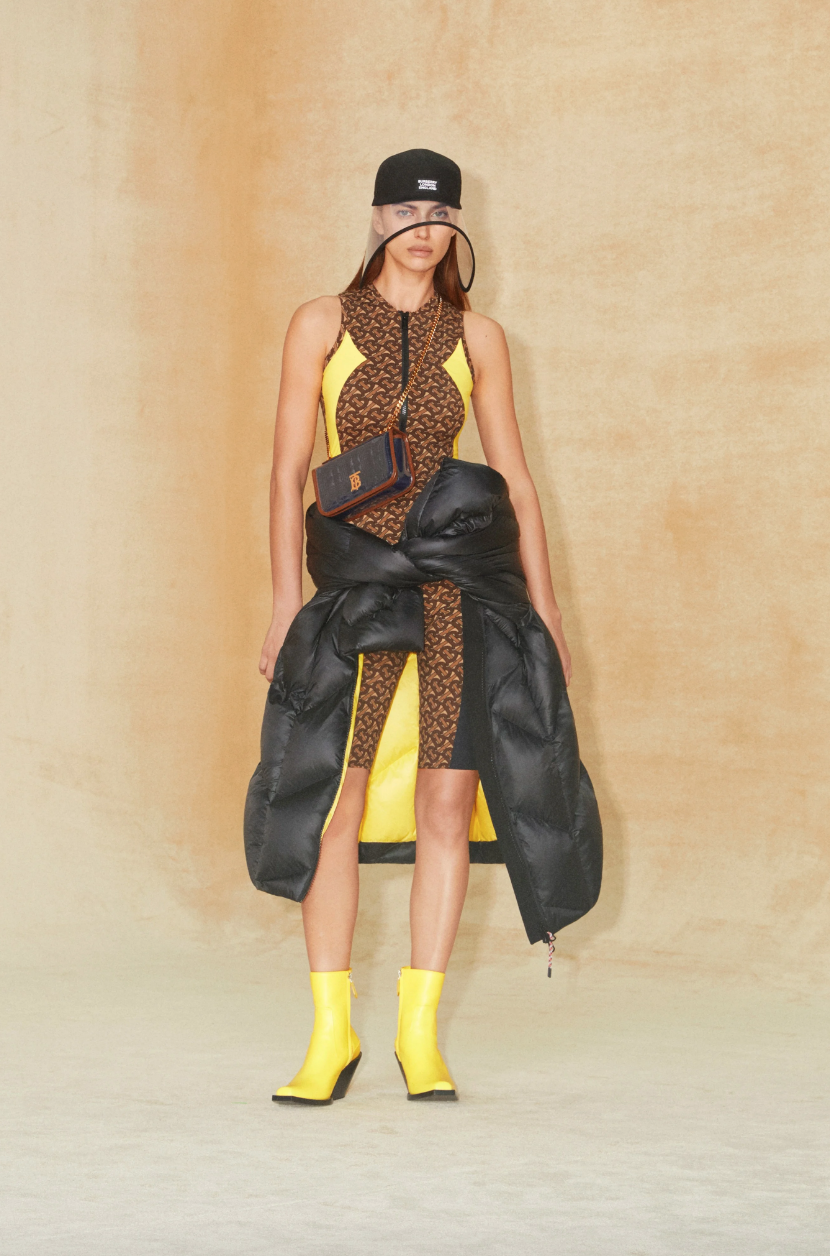
Branding for Burberry? Logos are threaded through, for those who care to carry the obvious house identifiers. The recognizable, rounded, retro TB designed by Peter Saville comes as a gilt buckle on handbags, printed on a vibrant padded gilet with a matching checked coat, and appears all over the place in linings. Otherwise BURBERRY is exploded in giant type on nylon parka sleeves.

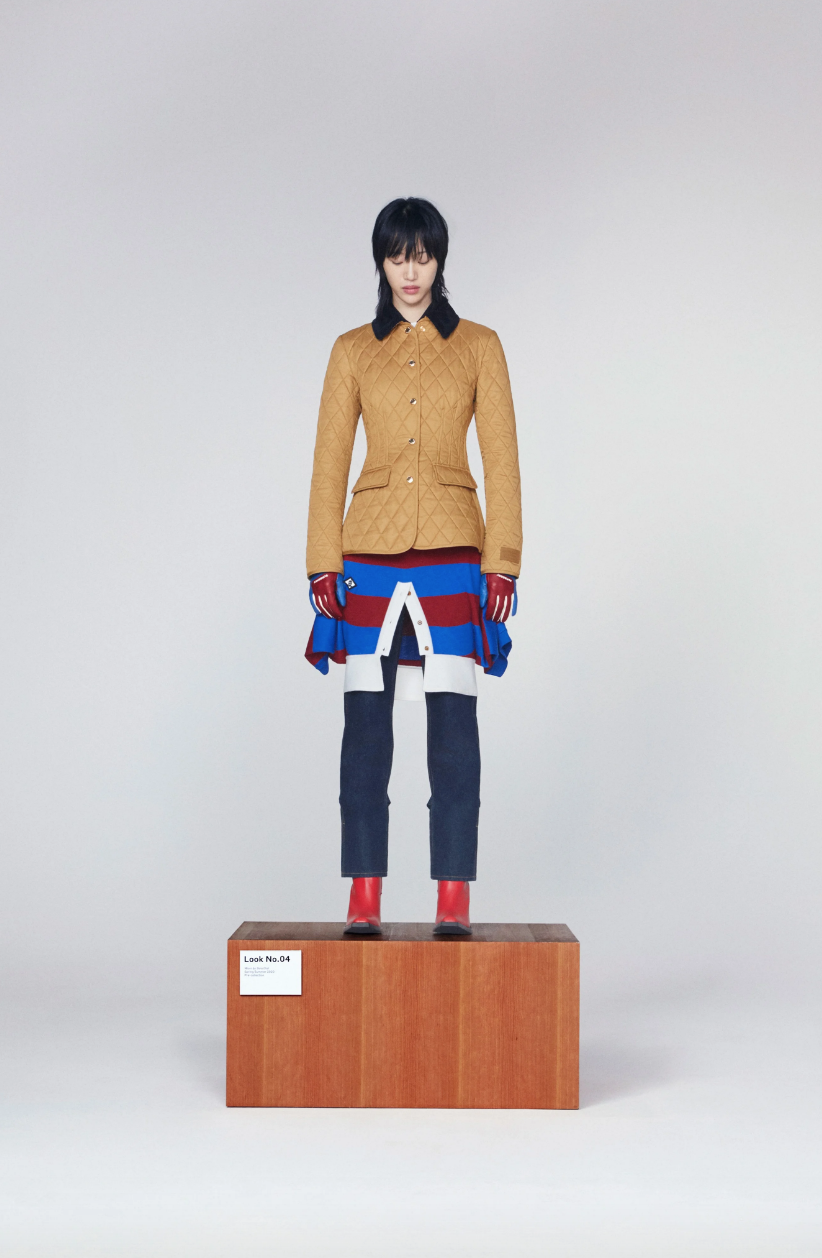
The Burberry check is less in evidence this season, but Tisci’s translations of country fare very much are. With fashion in the mood for tweediness, his orange-lined checked poncho with a tunic trouser suit underneath looks highly viable for women who’d never go on a shooting weekend, but also for members of international country house society. Otherwise, Tisci’s sweeping view of demographics brings a Euro spin to what he does with quilting—turning a trad-boxy template glam on a jacket with a torso-clinching knitted insert and pairing it with a pencil skirt.

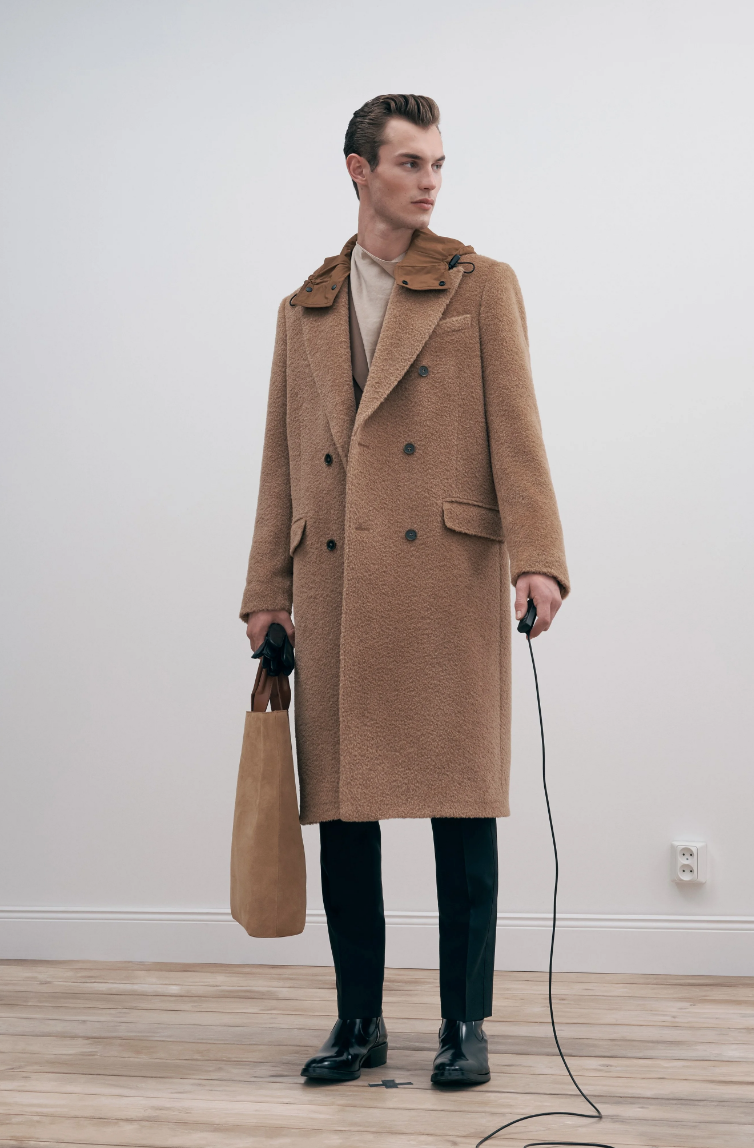
Men’s tradition is well served by a beige car coat that comes with a chocolate brown puffer lining, worn over a blue-and-white striped banker shirt with TB woven into it. There is something very Italian about that—the kind of Italian-ness that British men envy and are happy to buy for themselves.

For men too there’s a small section of Econyl outerwear, the branded synthetic fiber, which is regenerated from waste such as fishing nets, carpet, and fabric scraps. It’s one Burberry contribution to the new circular economy. At a moment when the climate crisis is at the top of everyone’s minds, resetting luxury to align with fossil-fuel-saving resources like this can’t happen fast enough.

Source: Vogue

FASHIONADO
Tiger of Sweden Fall 2020 Menswear Collection

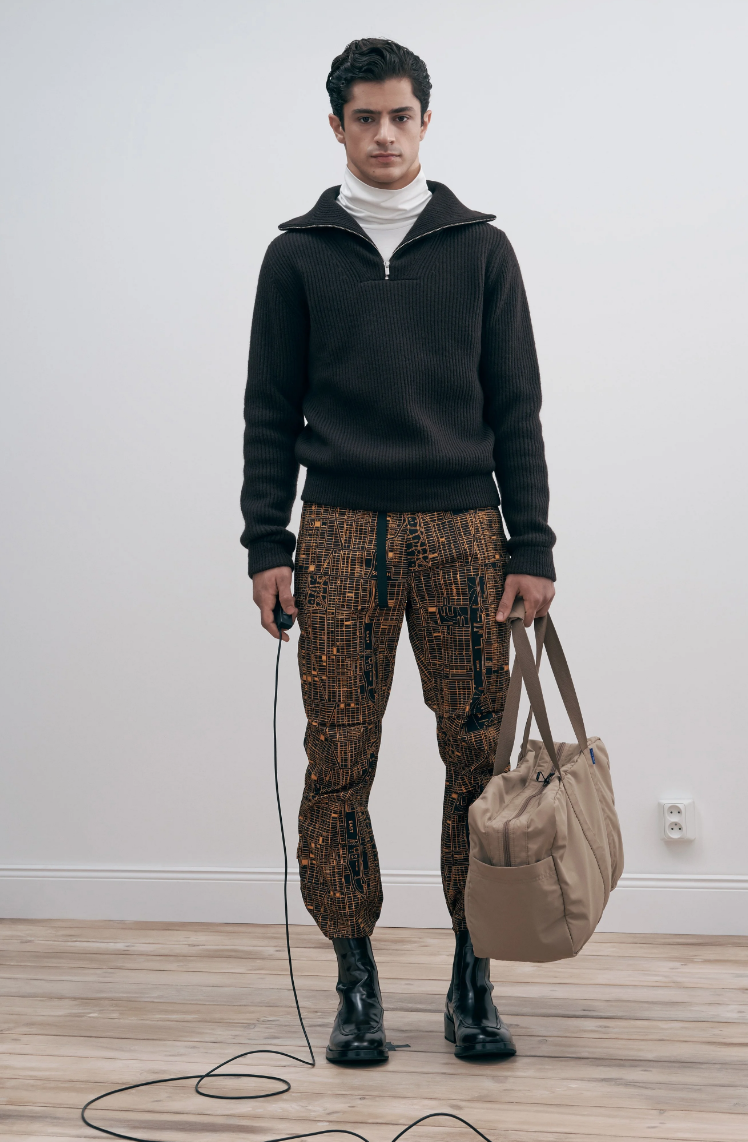
It’s a wonder he waited this long. For fall 2020 Christoffer Lundman turned Tiger’s Eye to that greatest of Swedish icons, Greta Garbo. True to his extremely thorough process, he commissioned a multi-authored book about his inspiration. This season’s took in Garbo’s early life, her Mata Hari–fueled emergence as a global object of focus, and then her fascinating elusive refusal to be subject to it: “I want to be alone.”

Really fascinating were the images of Garbo in 1971 practicing yoga on her balcony or walking to and from her handsome car while in her Klosters exile: These were shot by Ture Sjölander, the Swedish multimedia artist with whom she collaborated to seemingly promote her image as someone who rejected having an image to promote. Reportedly she proposed that Sjolander shoot a series of paparazzi-style pictures because “people seem to like them.” Later the images of Garbo included an altogether less-wanted portfolio: shots of her on the streets of New York City by Ted Leyson, a photographer who stalked the star for a decade. These proved more uncomfortable making, considering they lead to a simultaneous admiration for Garbo’s style and the non-consensual nature of the images’ creation.

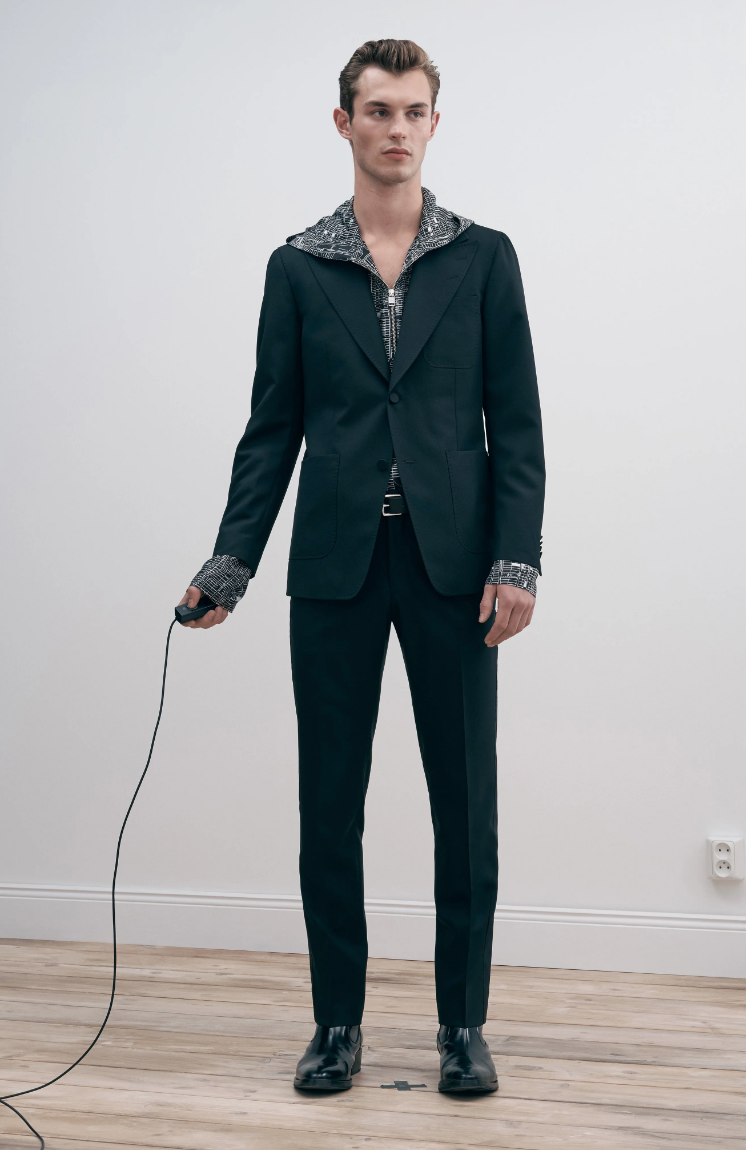
And so the circle wheeled to the collection itself, which was shuttered by its own models as a statement about self image and control of it. The garments serviced self-possession too. From Scandi practical pack-a-macs to foulard shirts printed with Sweden-ized maps of New York City, these were handsome pieces in which to frame yourself. Shirting and jackets featured extra folds of fabric at the neckline to defend unwanted pap shots. The overall atmosphere shared the discreet unassuming masculinity of many of the outfits Garbo was—after her Mata Hari days at least—pictured in.

Source: Vogue

FASHIONADO

London Fashion Week: Men's FW20 Streetstyle

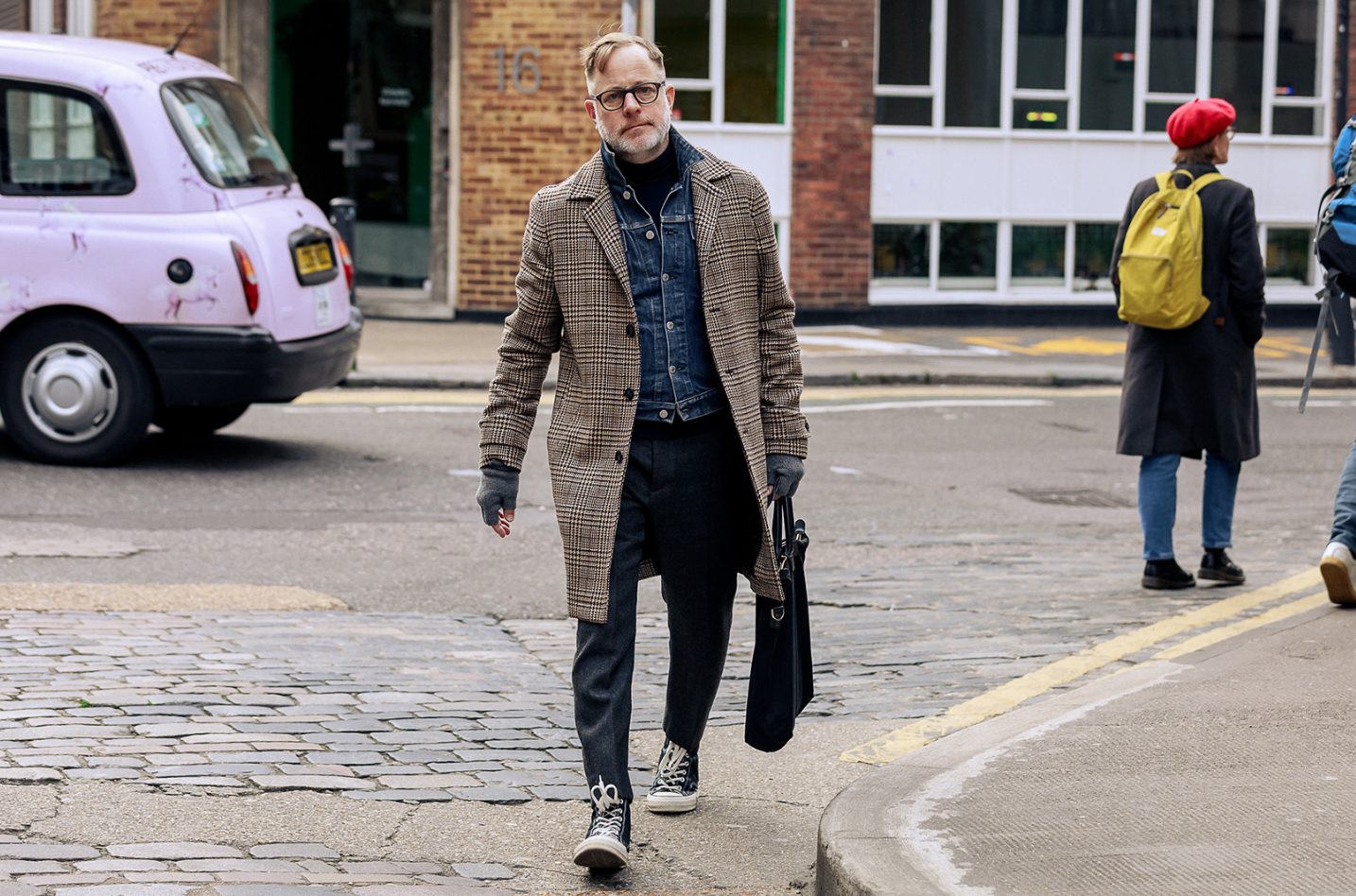
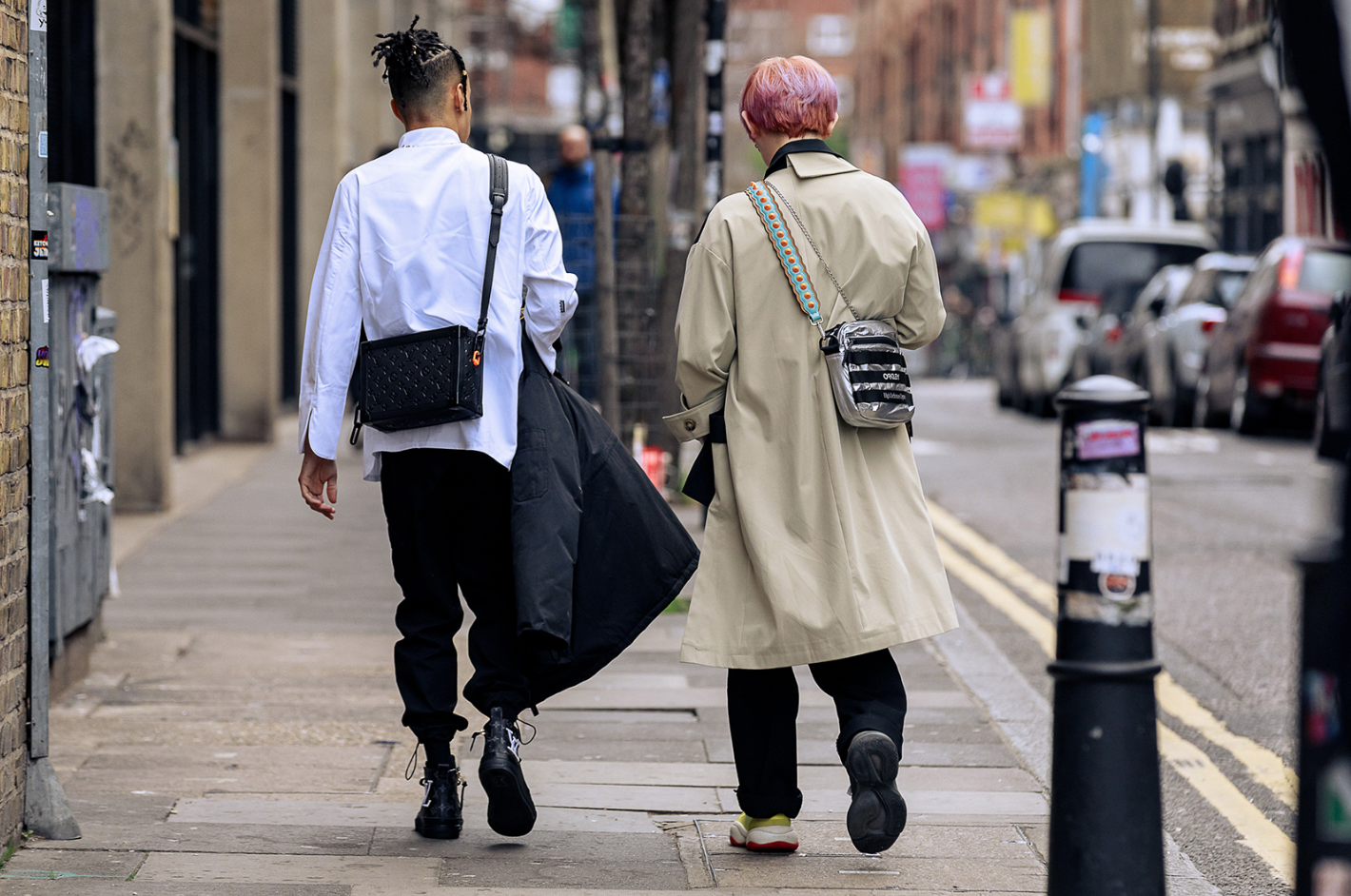
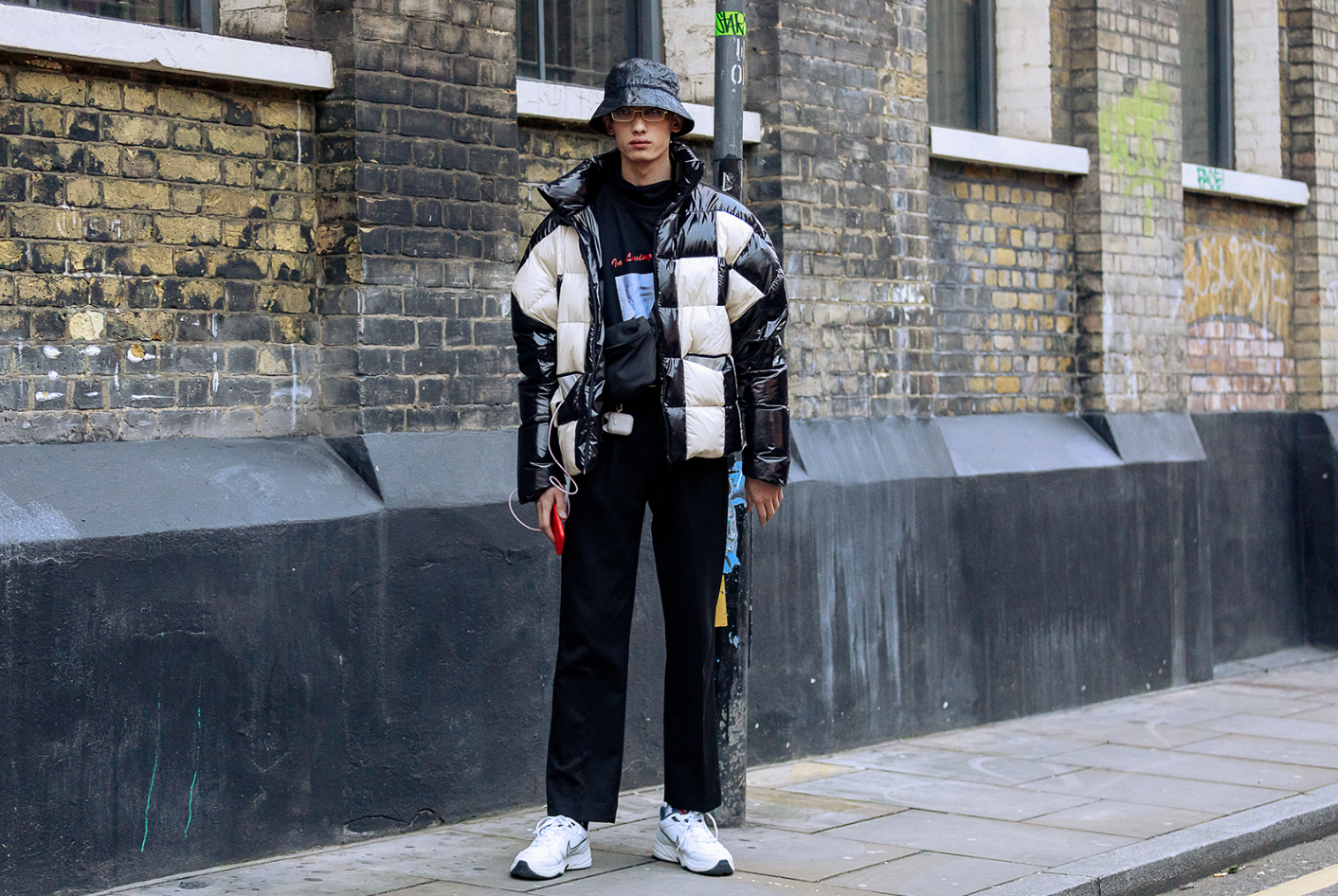
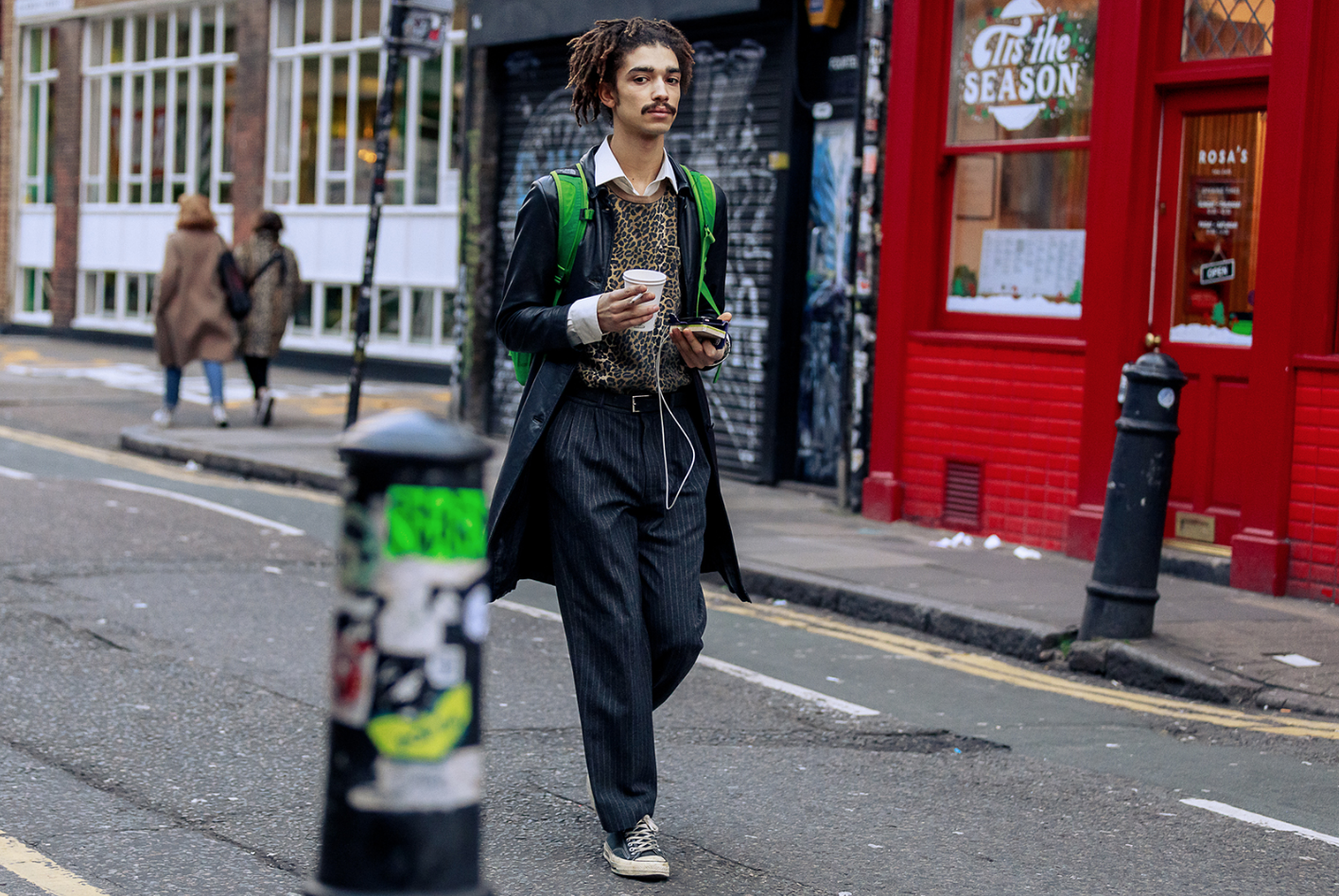
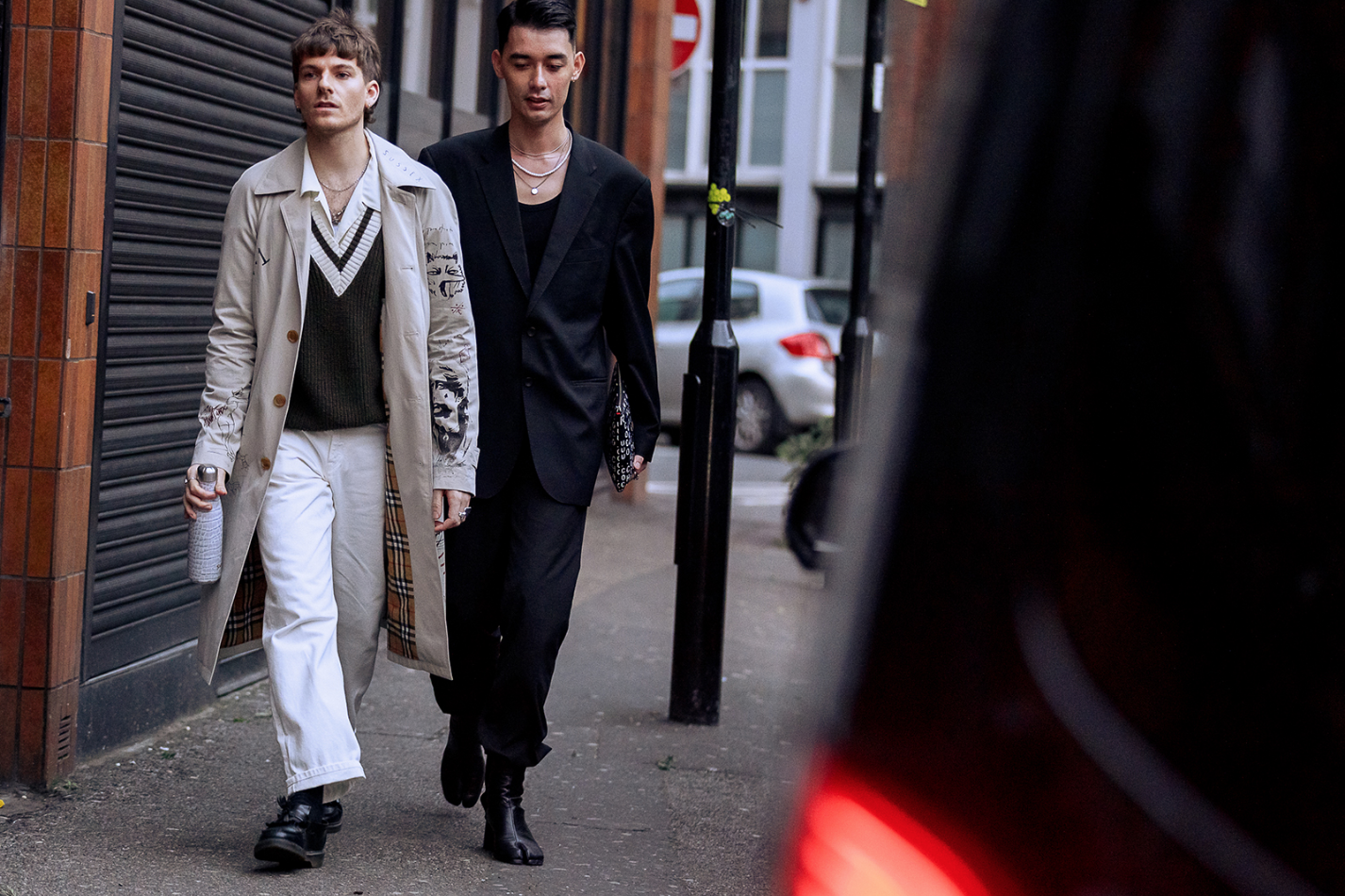
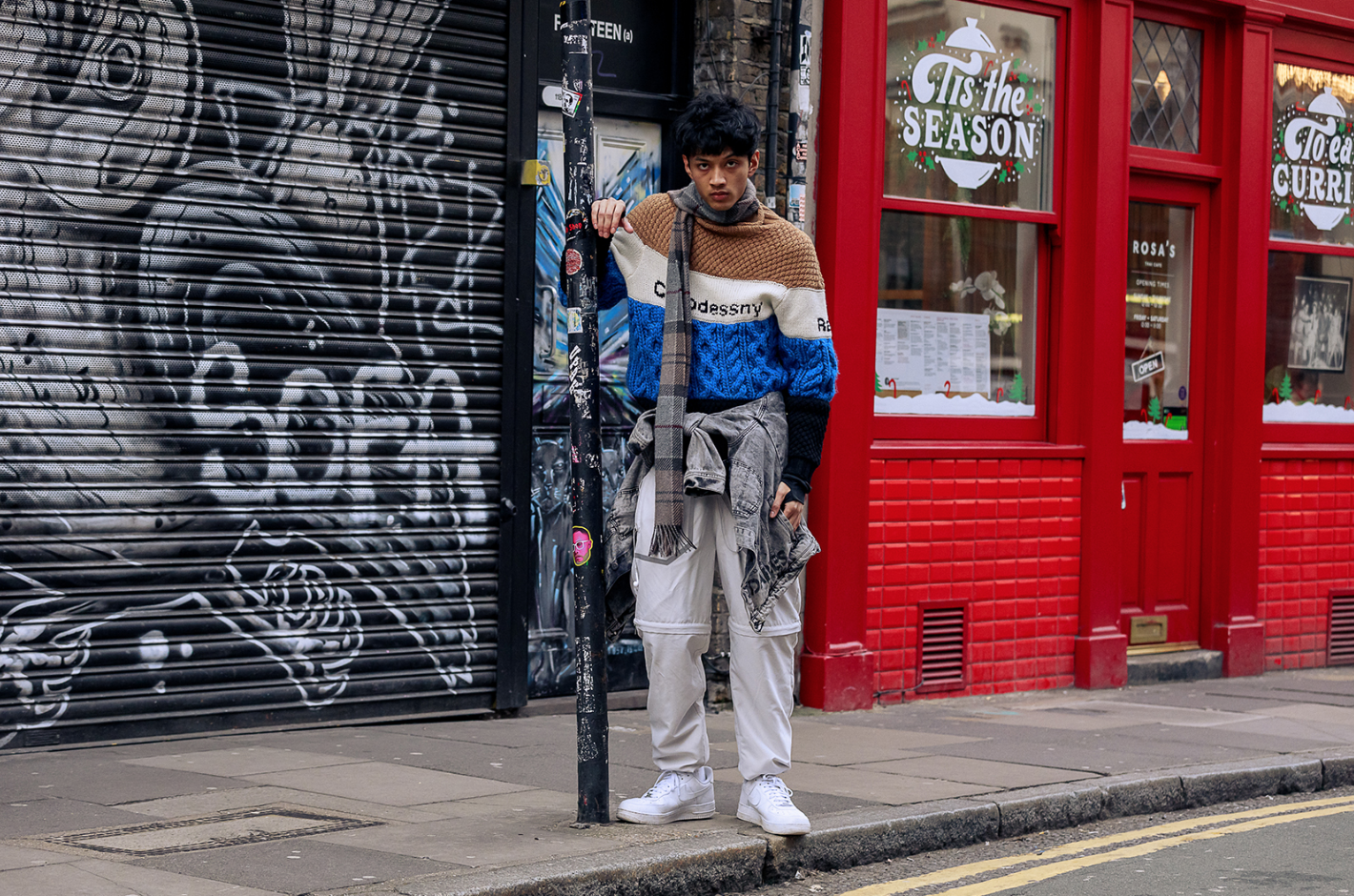
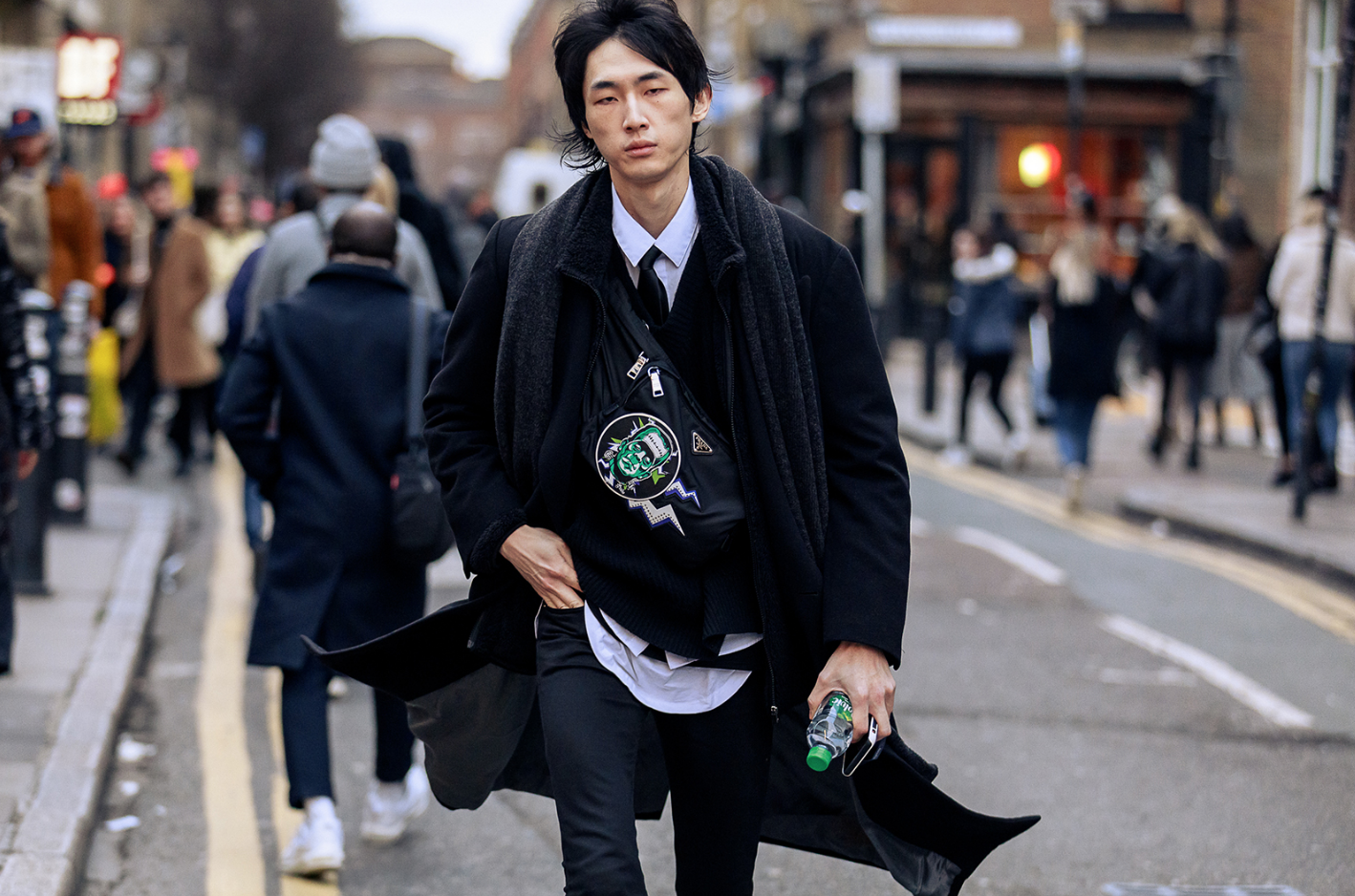
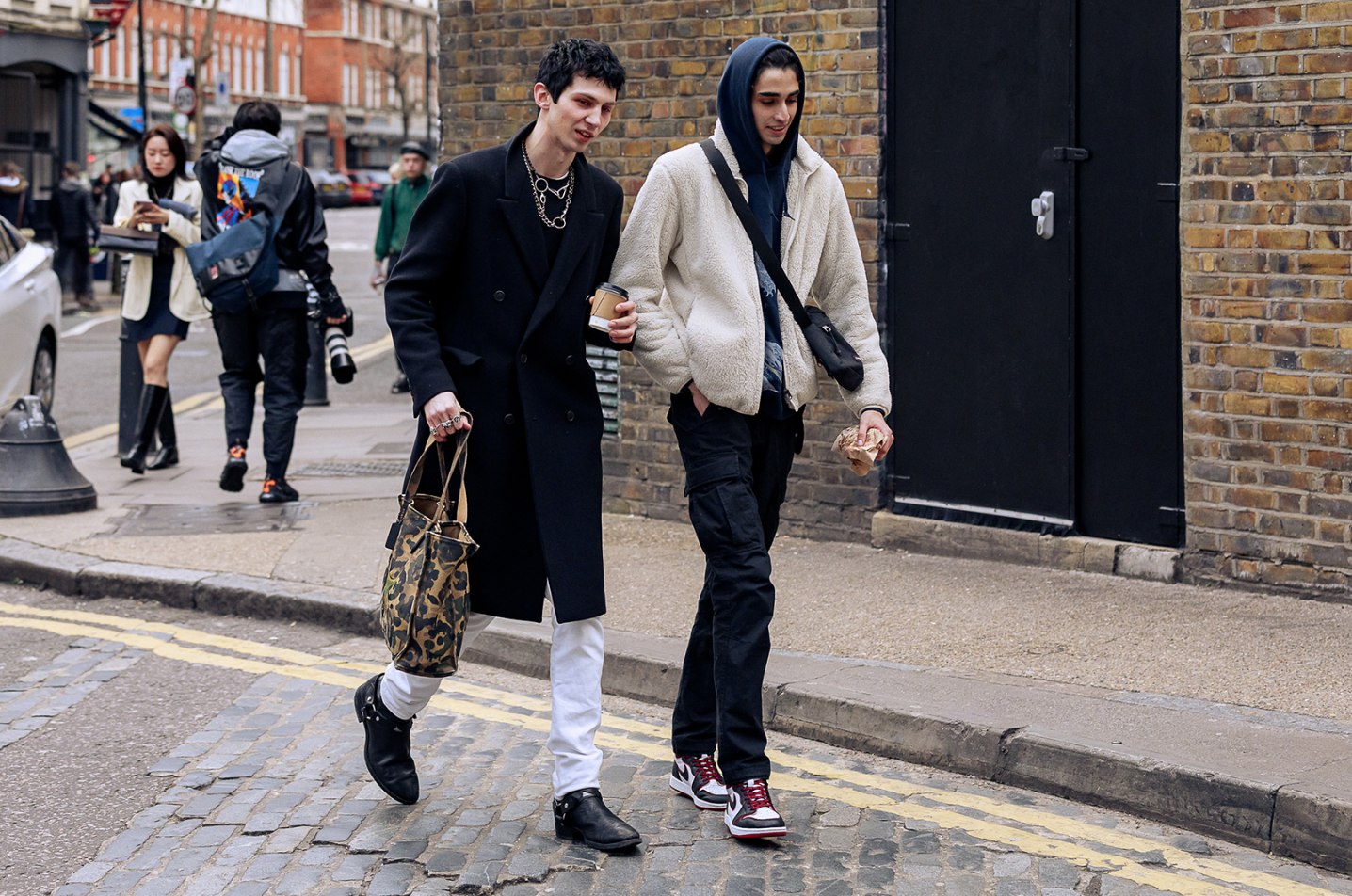
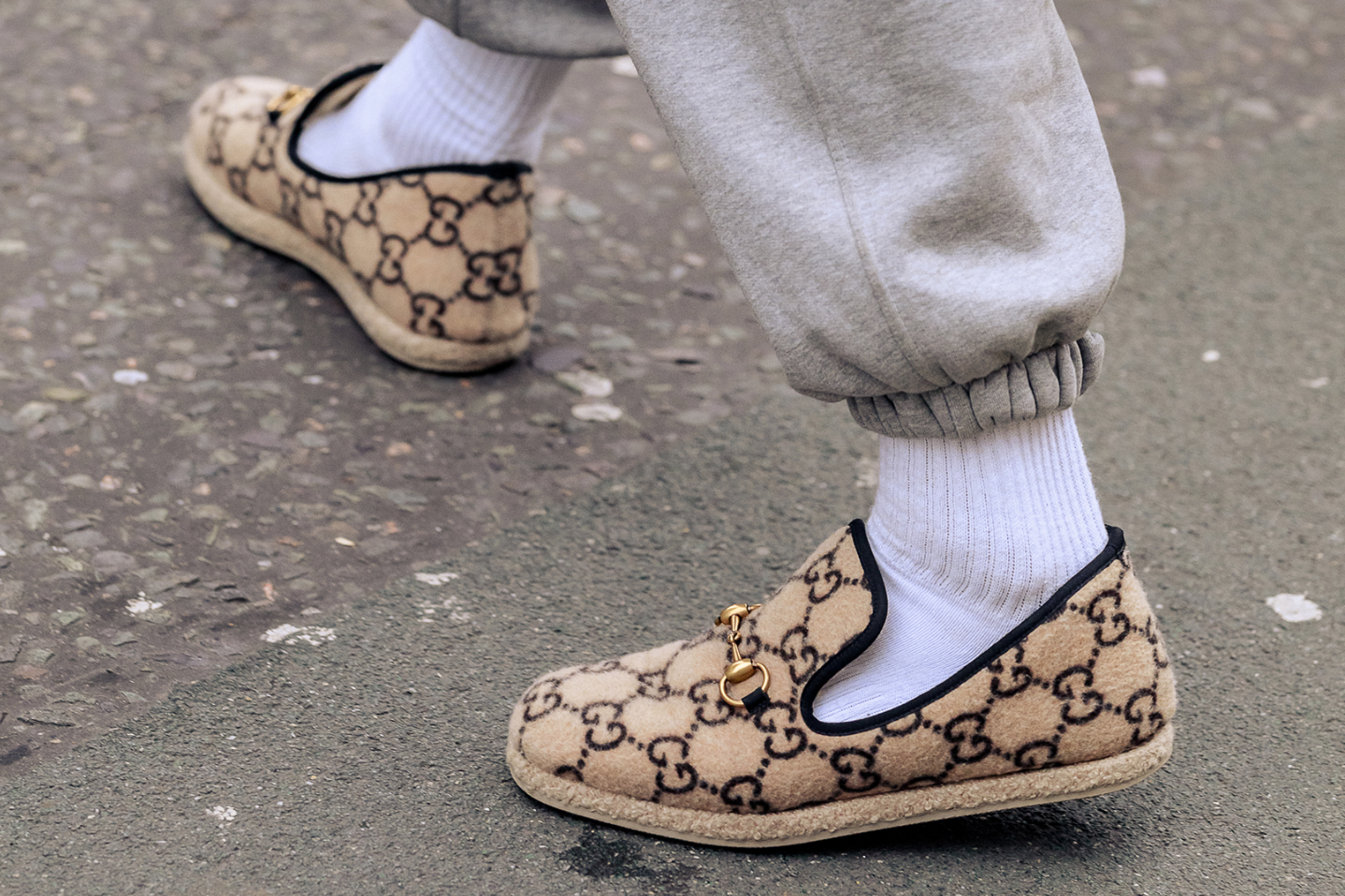
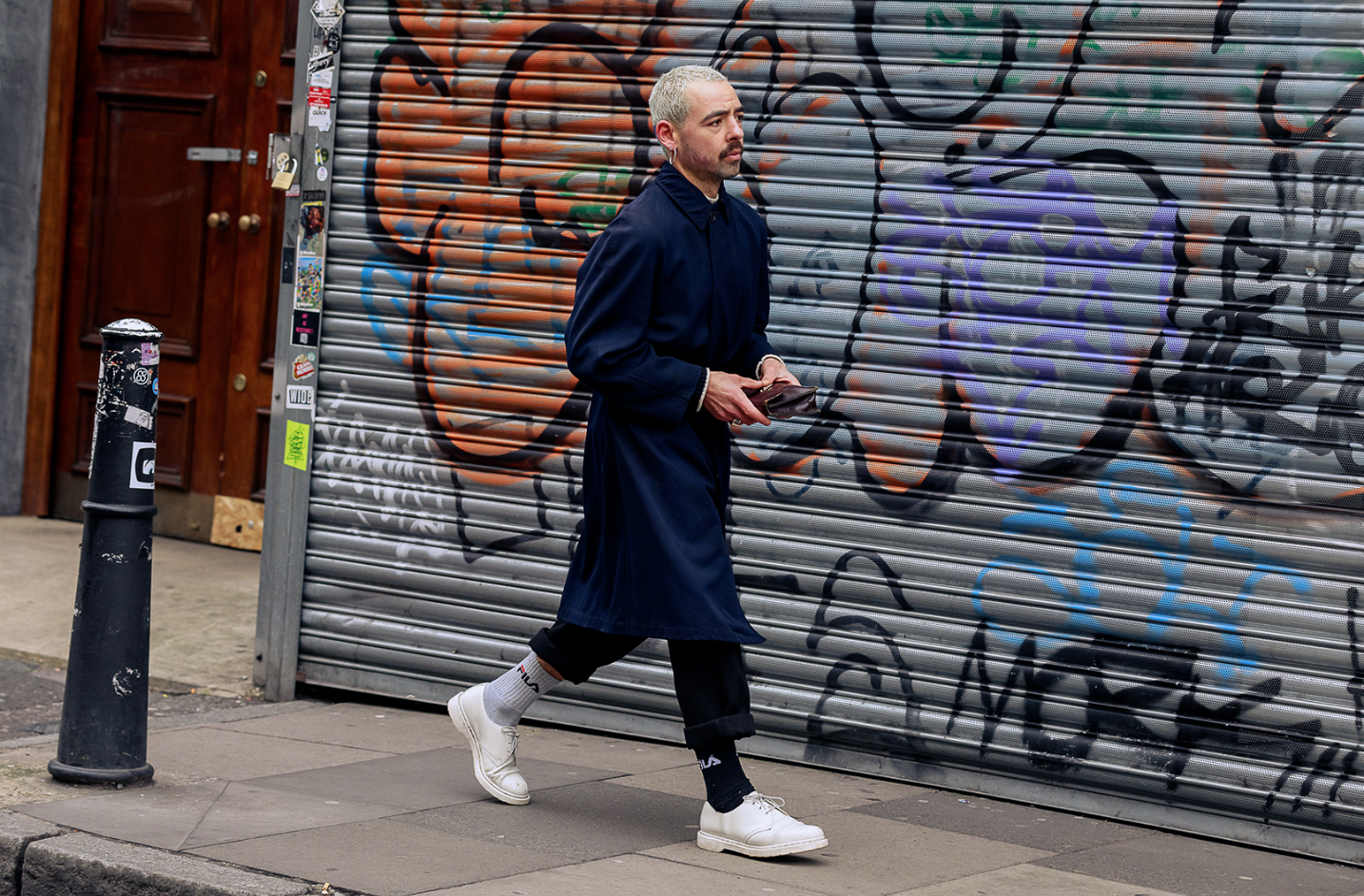
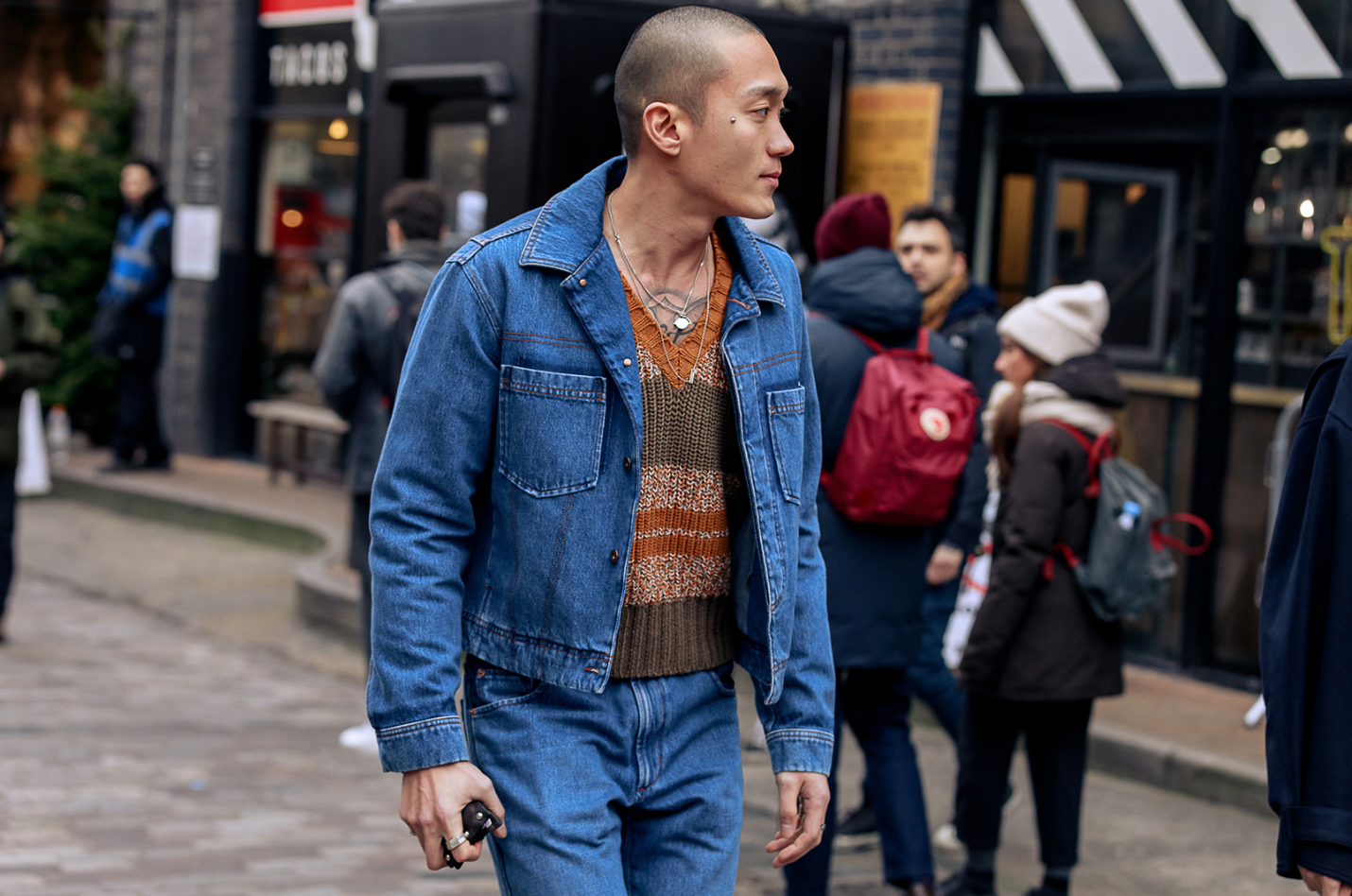
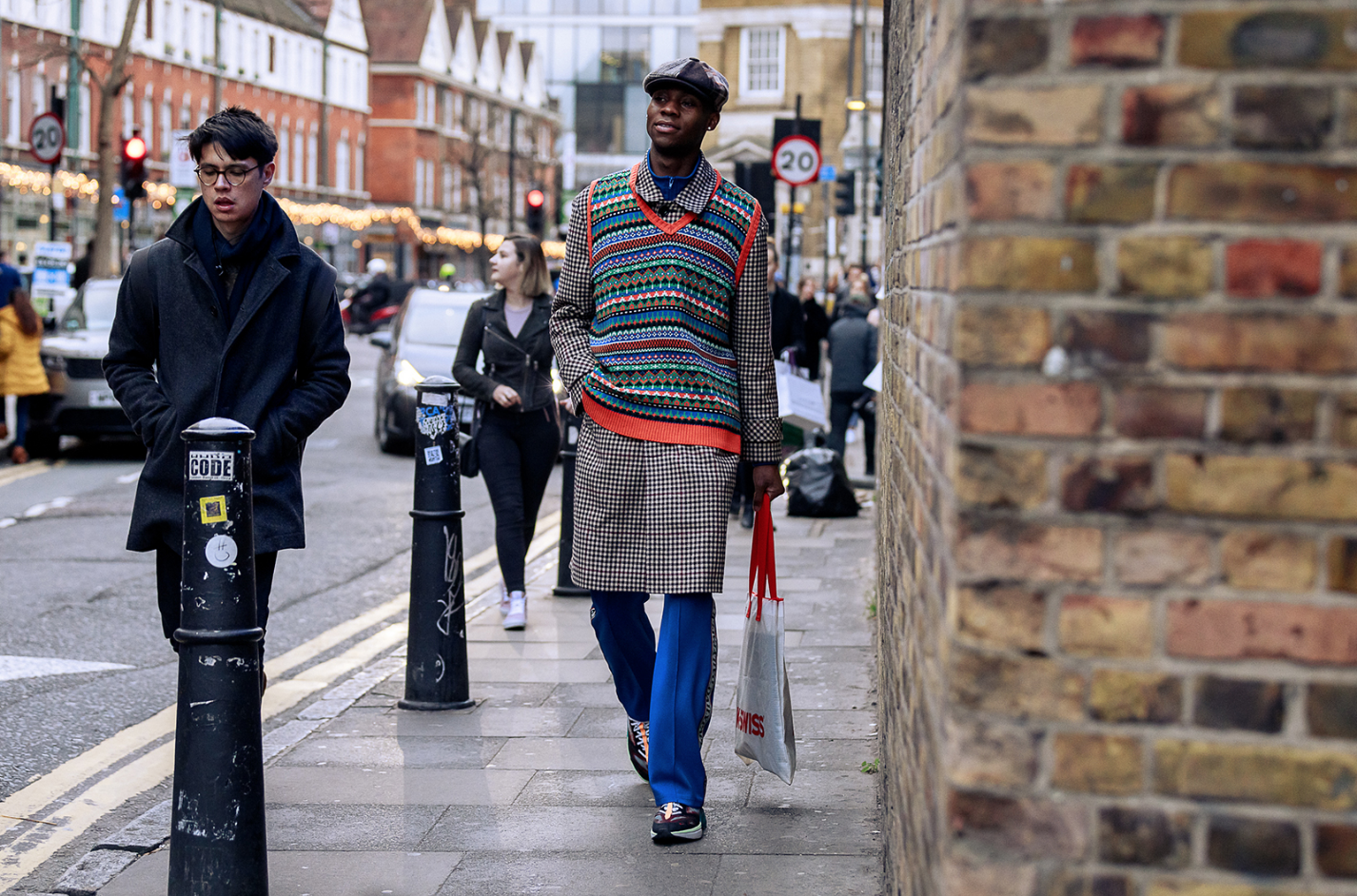
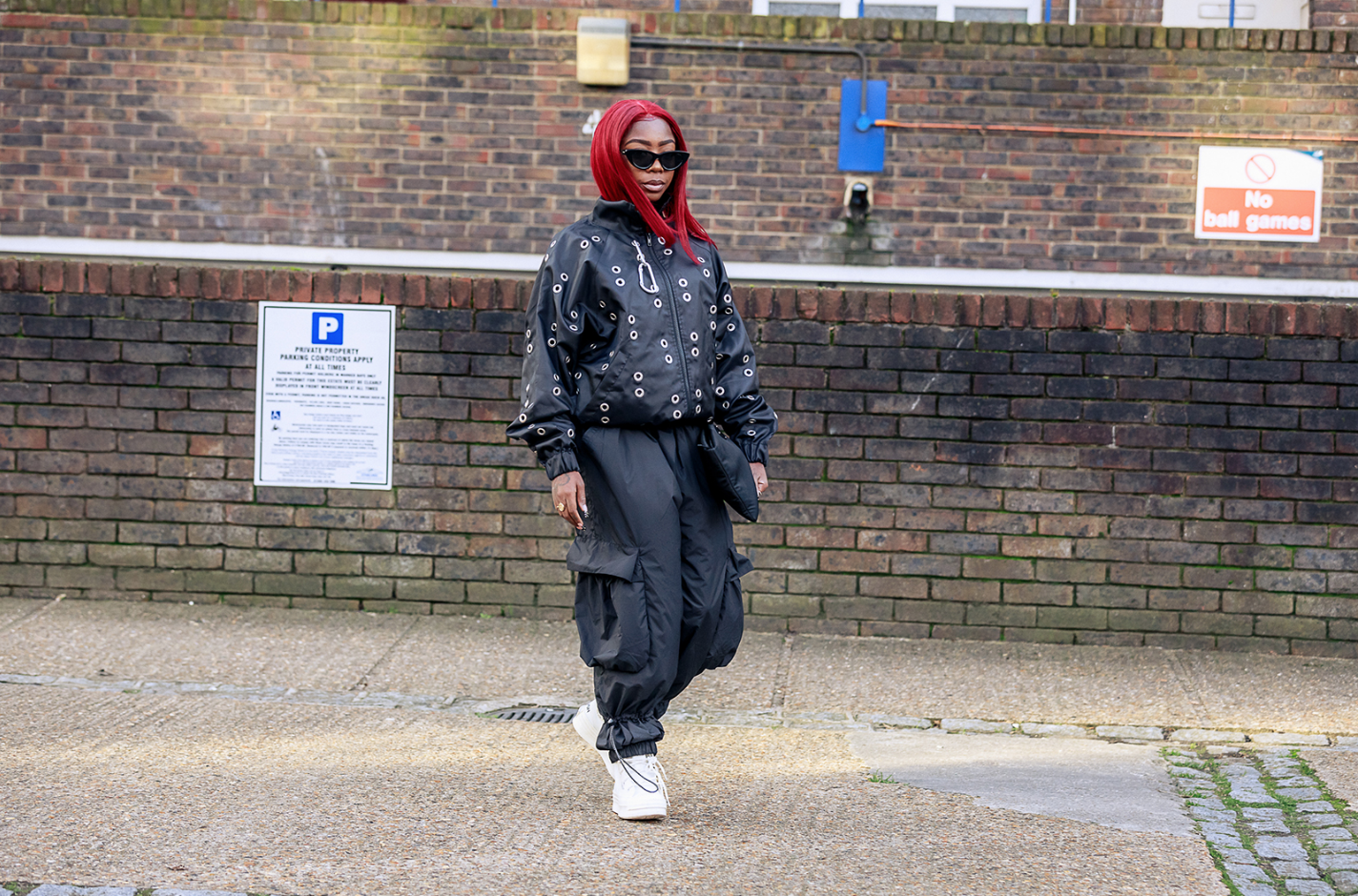
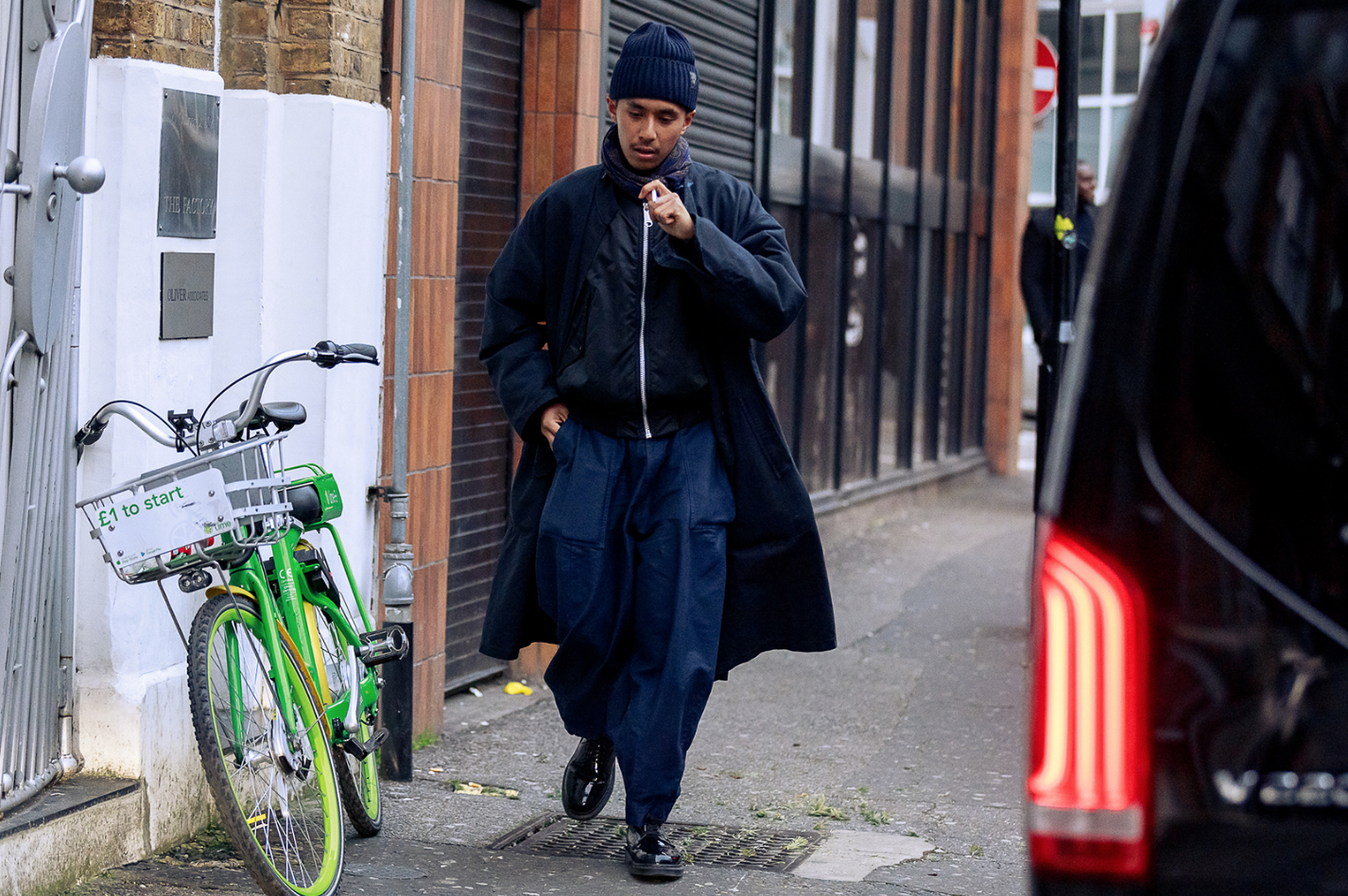
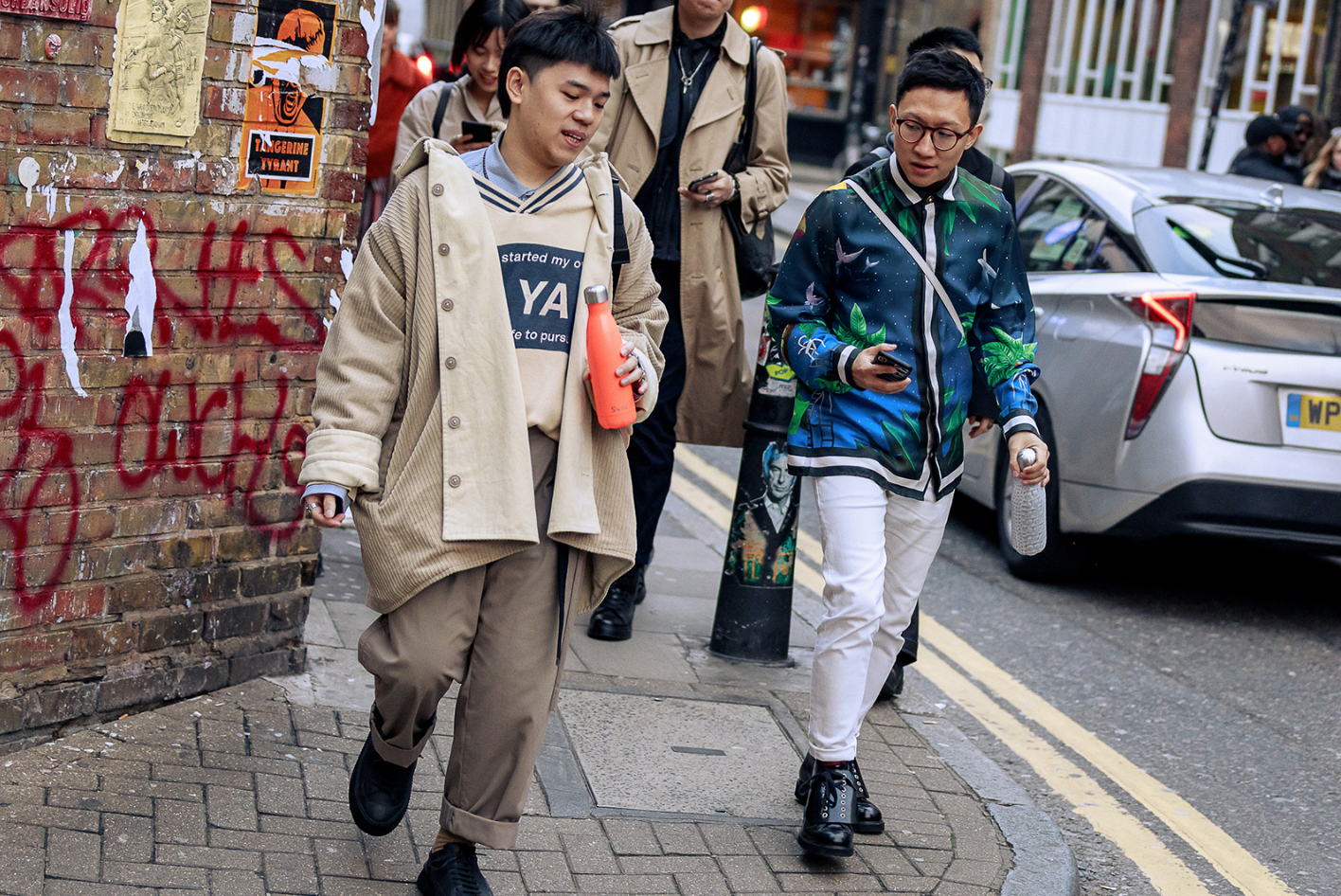
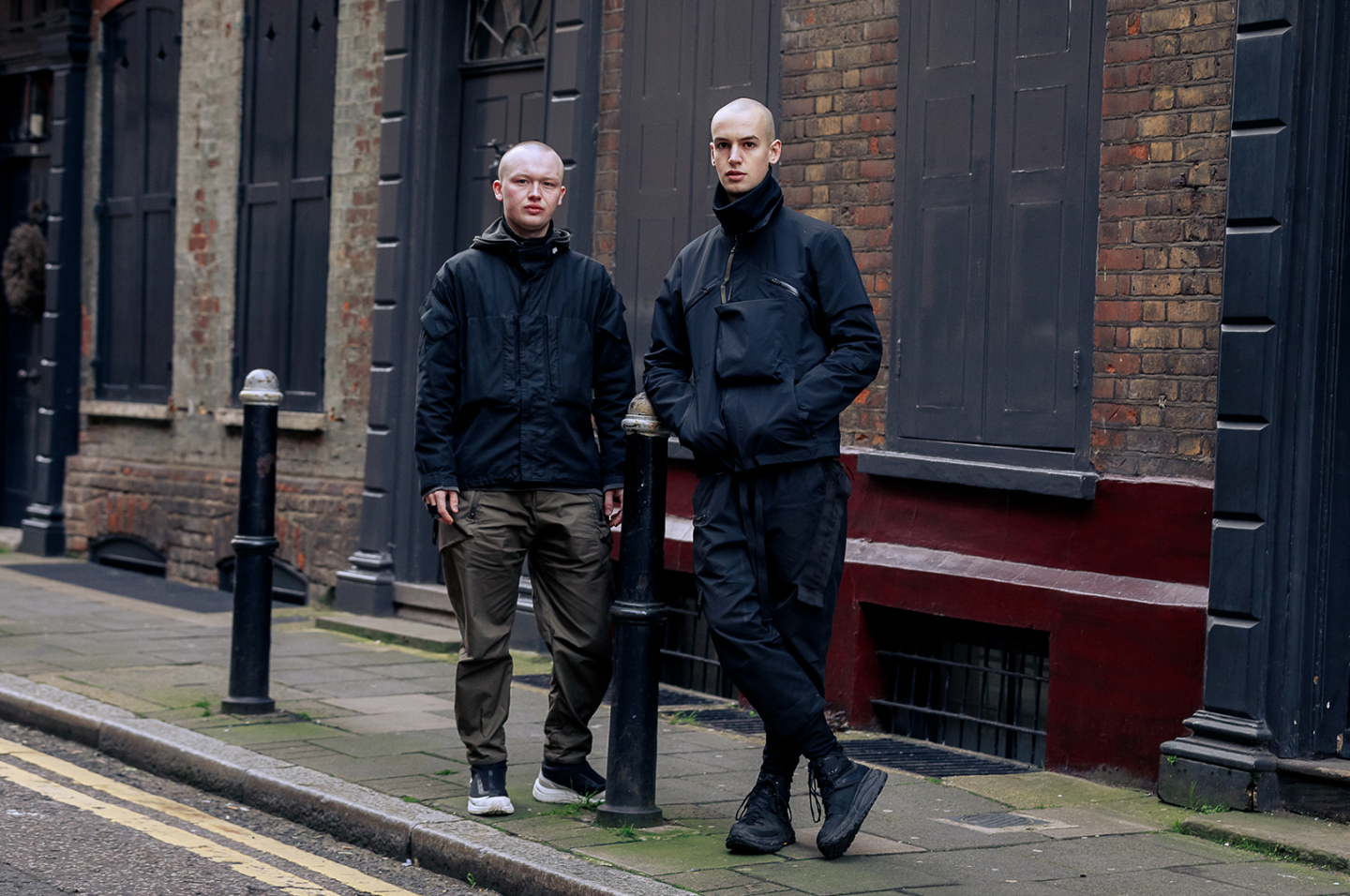
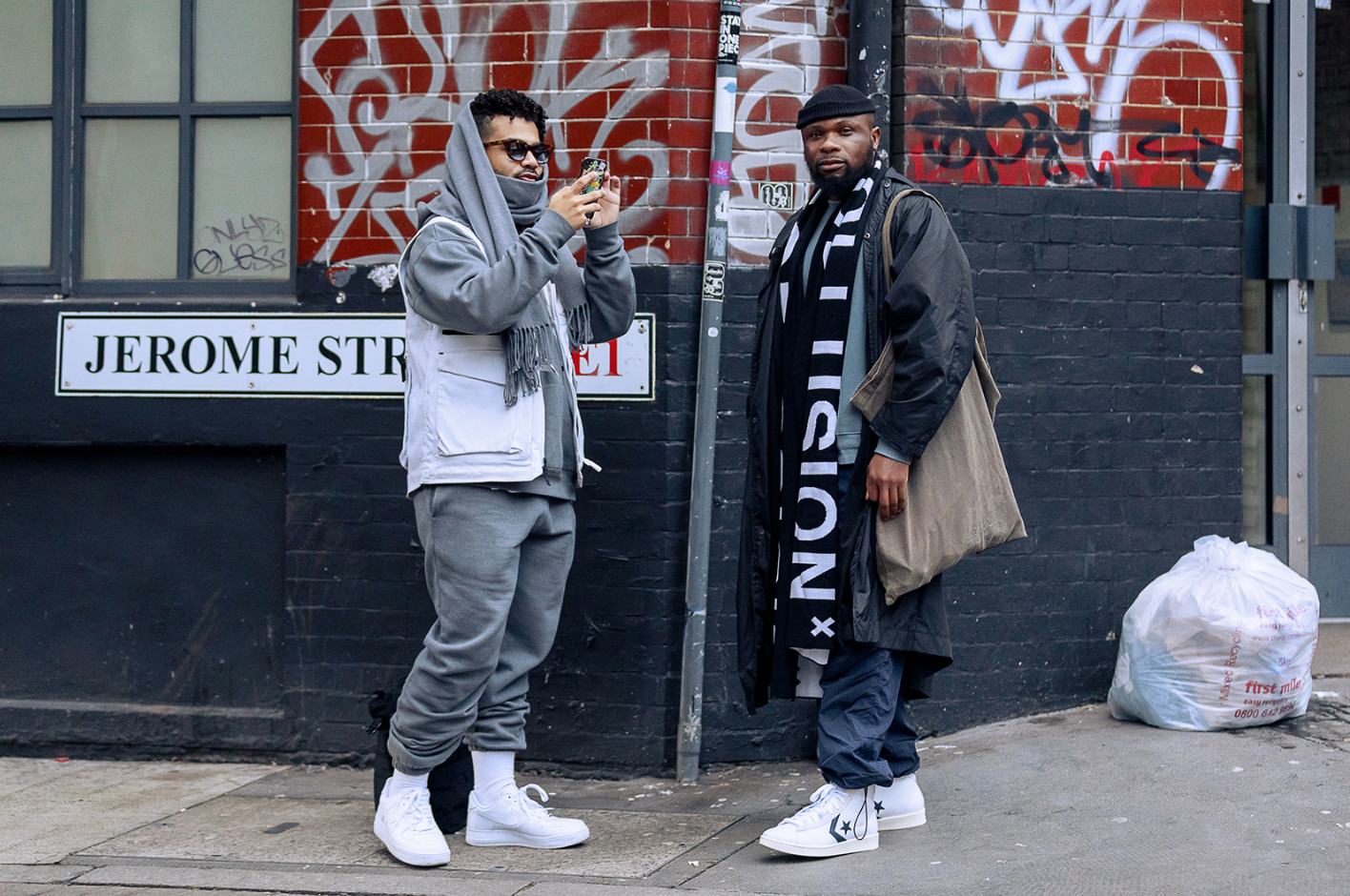
London Fashion Week: Men’s recently kicked off the the Fall/Winter 2020 season with a schedule featuring Wales BonnerMartine Rose and Paria Farzaneh. As well as the collection’s on show, the fashion week attendees also stepped out in a range of eye-catching prints, bold outerwear and statement accessories.

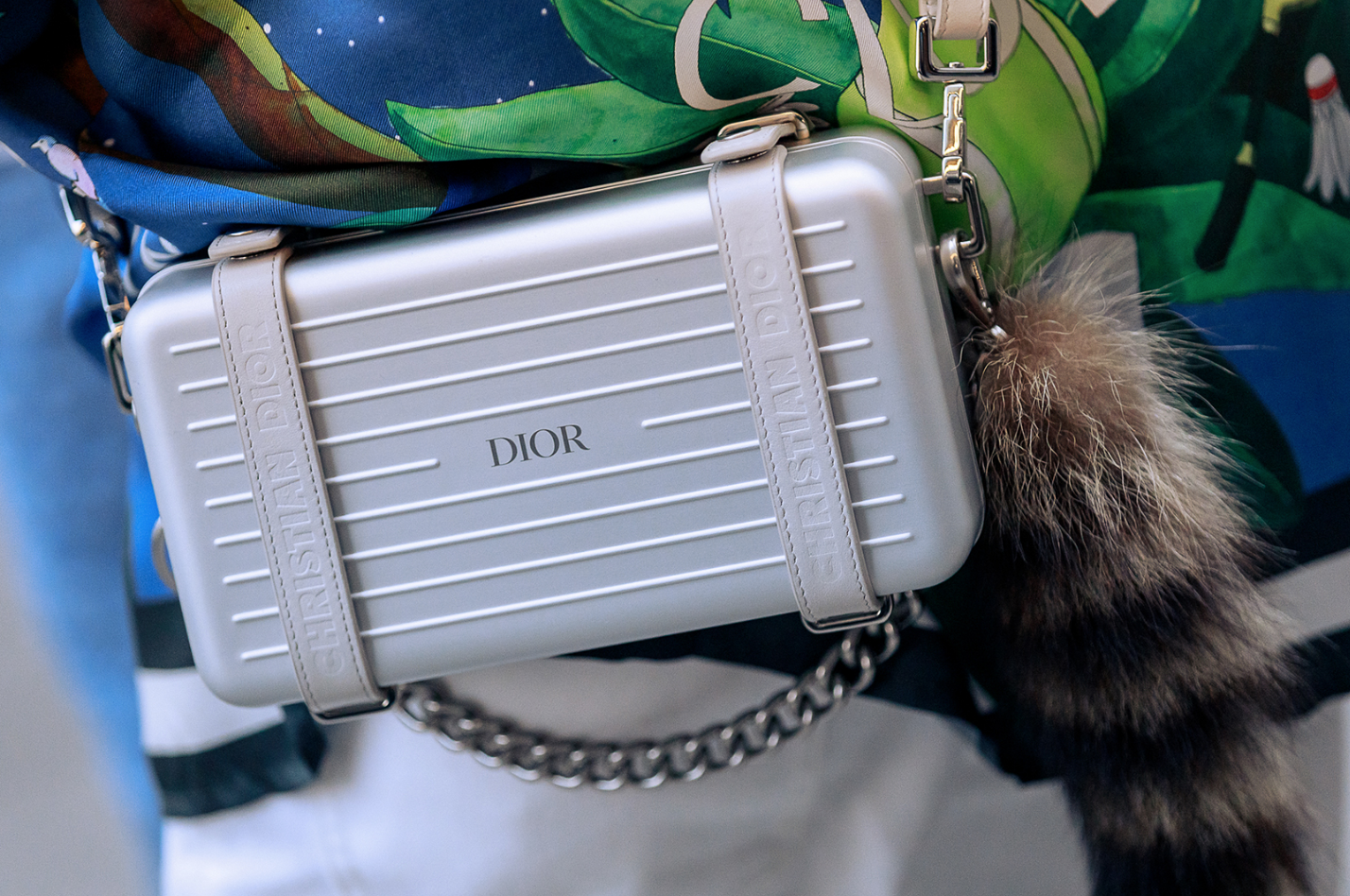
Bracing for the cold January weather, key outerwear pieces included items from Burberry, Prada and Junya Watanabe, while stand-out accessories from the streetstyle crowd included the Telfar shopping bag, a Louis Vuitton trunk bag and Dior’s Rimowa collaboration.

Additionally, the FW20 season also featured a focus on tailoring from attendees, with oversized blazers, formal footwear and ties all appearing alongside the usual streetstyle staples.

Source: HYPEBEAST

FASHIONADO

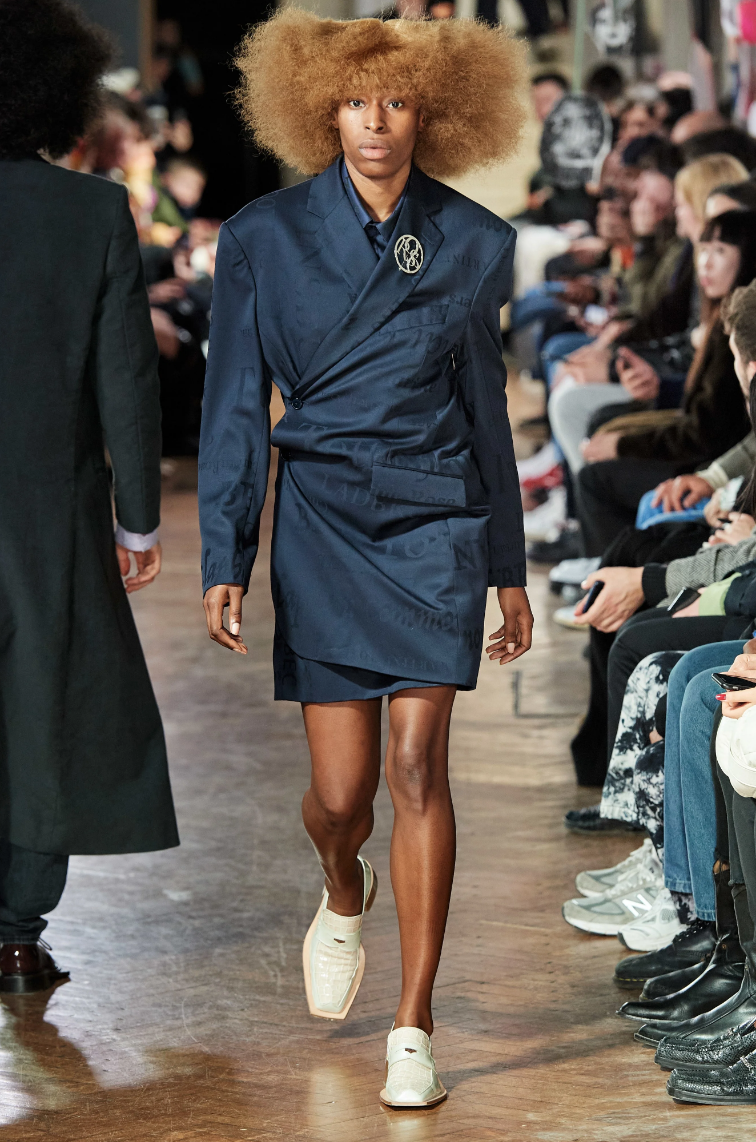
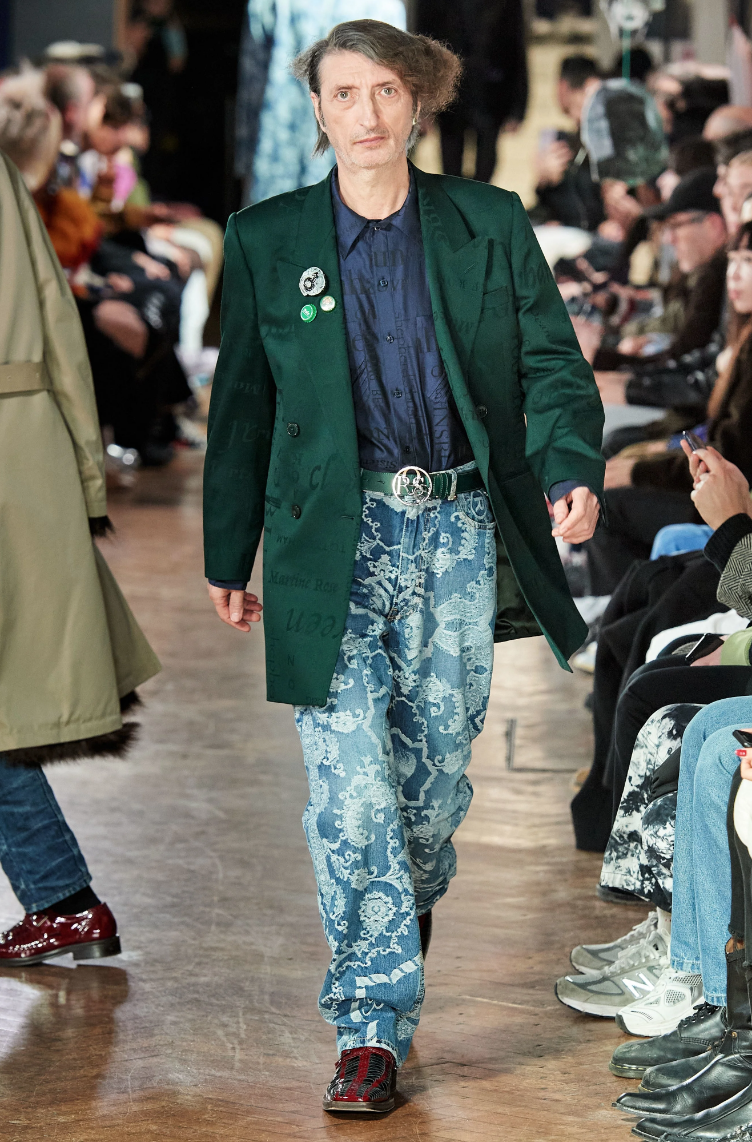
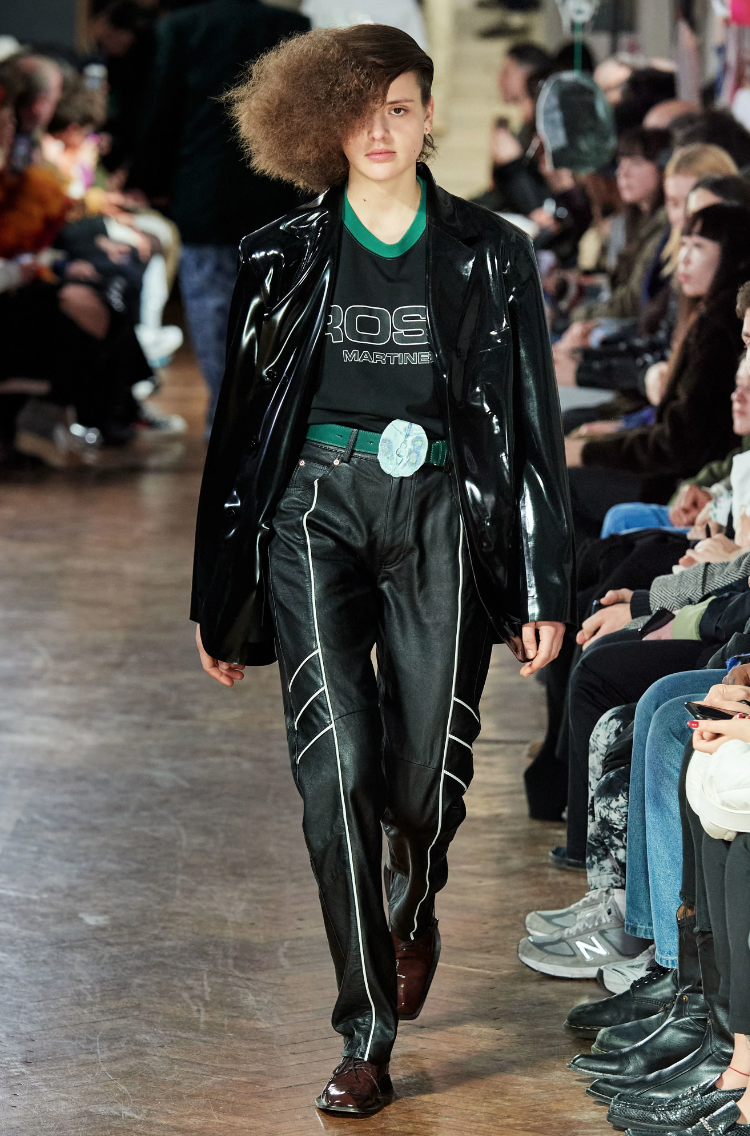
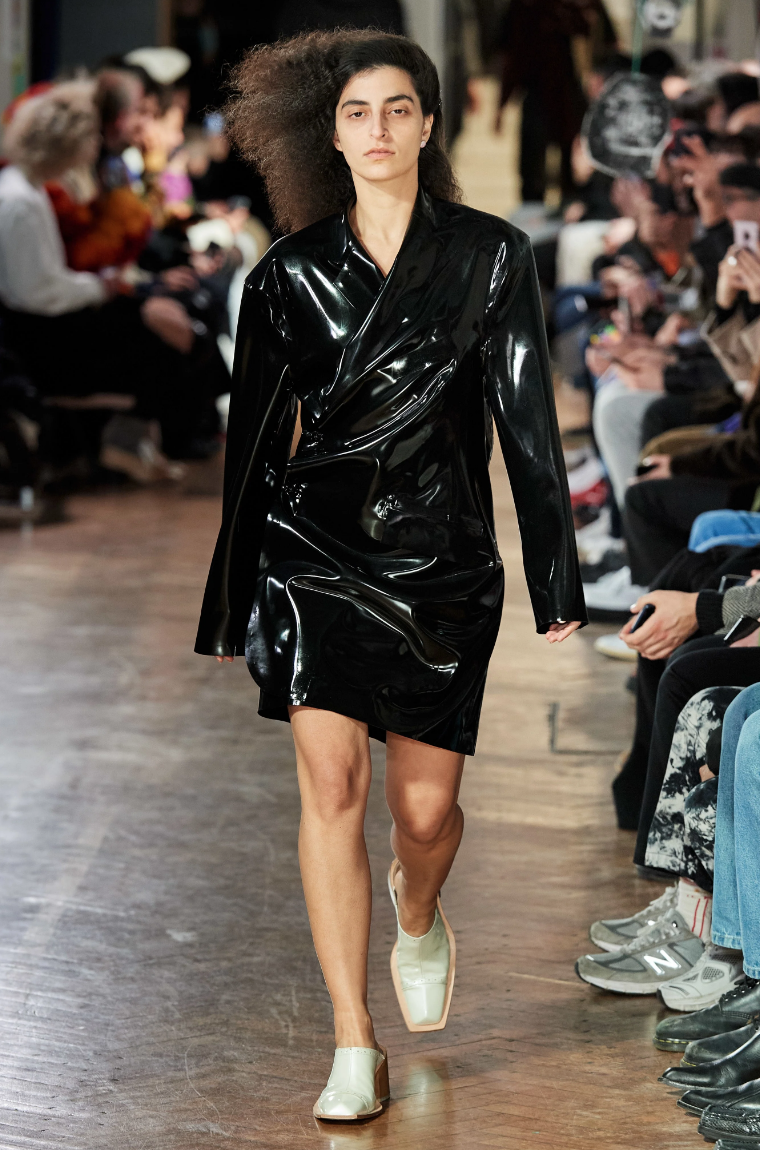
Martine Rose Fall 2020 Menswear

Martine Rose Fall 2020 Fashionado

“This is my daughter’s school, and it’s really great and optimistic. I just wanted everyone to feel that,” said Martine Rose. “Kids, young people, education are our future and we should invest in them. Primary schools are magical. The teachers are here, there’s a lot of people with kids—it’s another community, isn’t it?”

People still talk of the open-air show that Rose put on in a neighborhood square in Chalk Farm for summer 2019; it really was one of those atmospheres that make misty-eyed memories. She was one of the first designers to sit a fashion audience among local residents. Warm, friendly, inclusive vibes, without being saccharine, are what she’s very good at fostering. This time, we were sitting in the hall of the public school that Rose’s four-year-old attends, surrounded by children’s art, banners commemorating the anniversary of the women’s suffrage movement, and boards asking kids, “What kind of leader will you be?” It created that same sort of local family vibe, to start with.

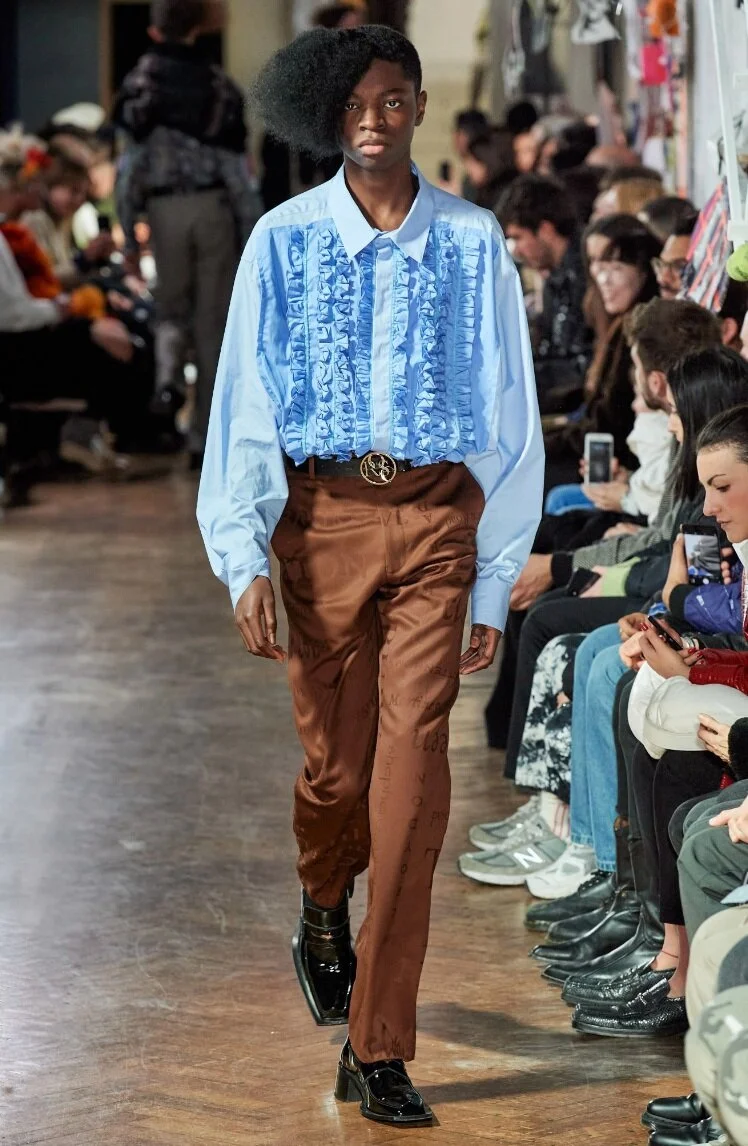
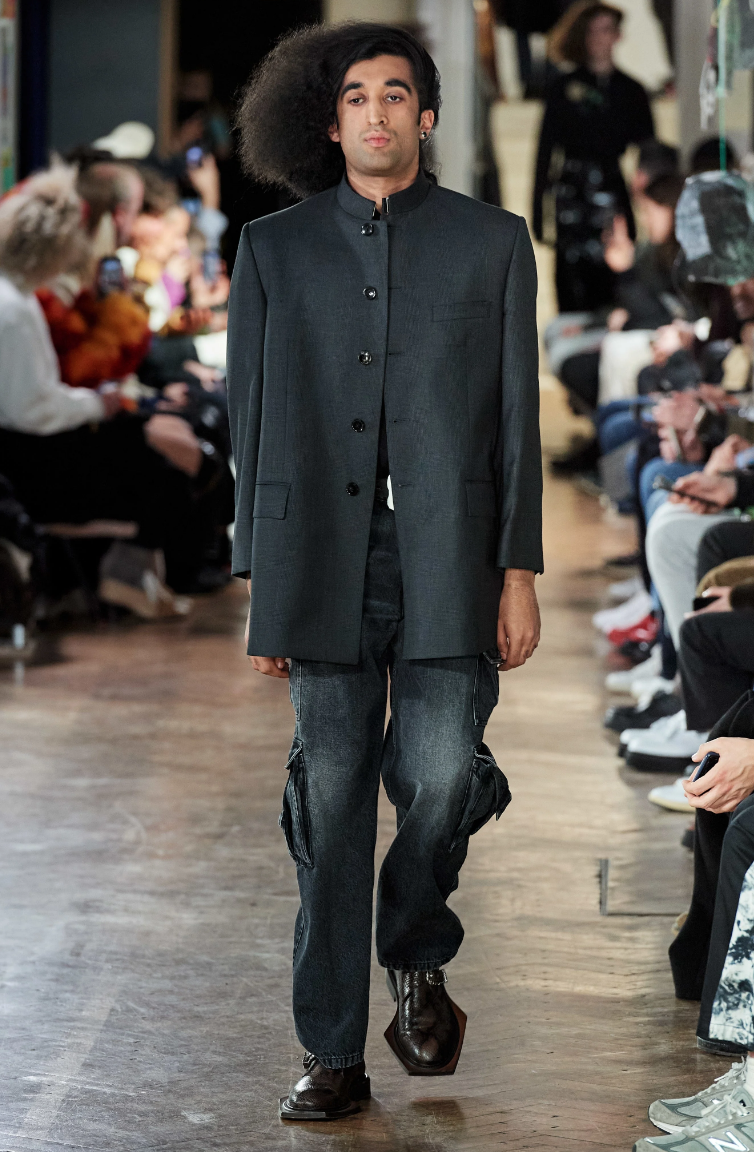
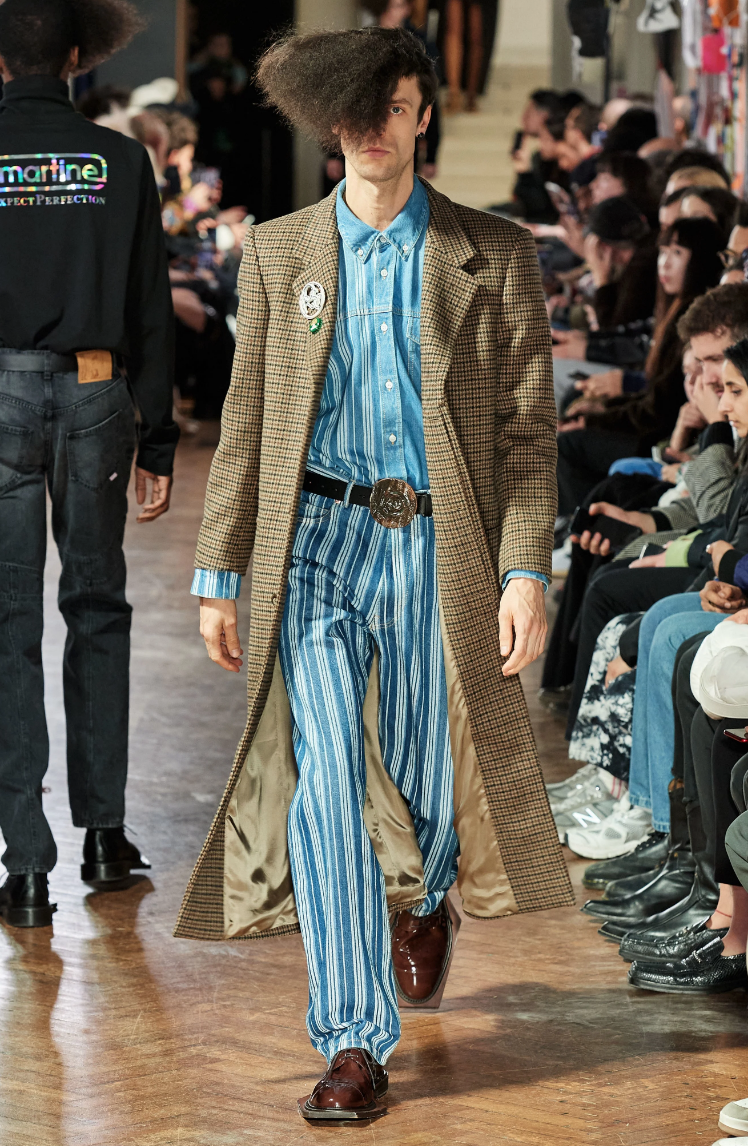
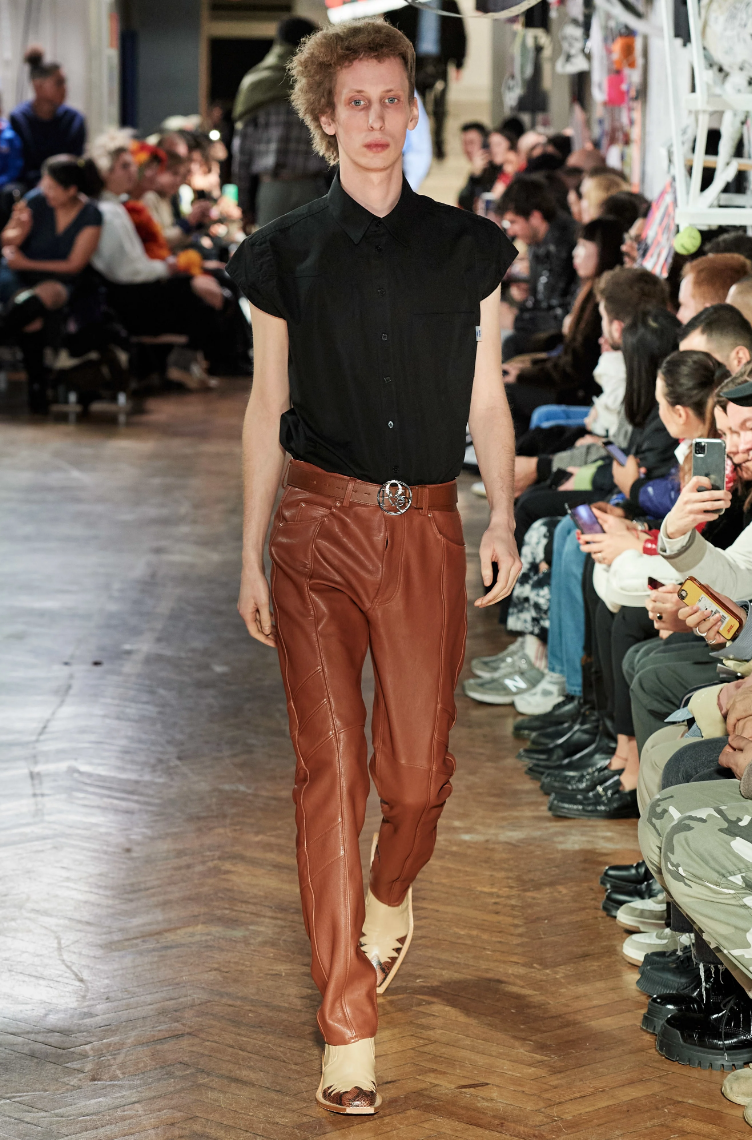
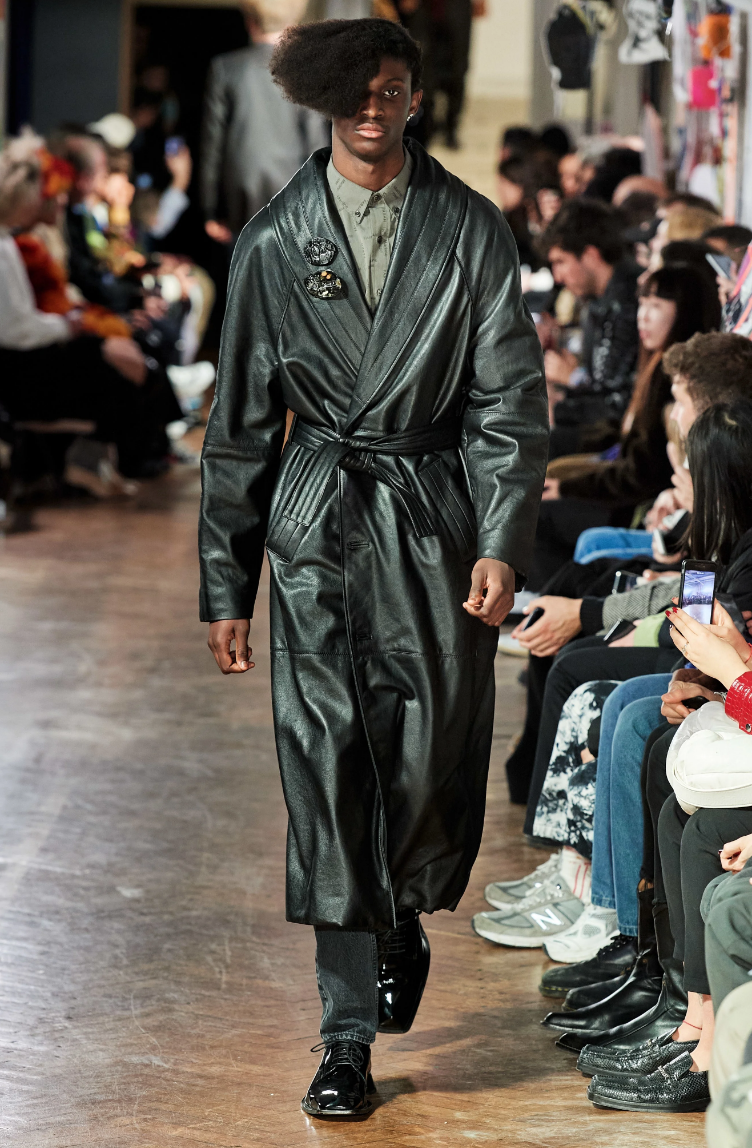
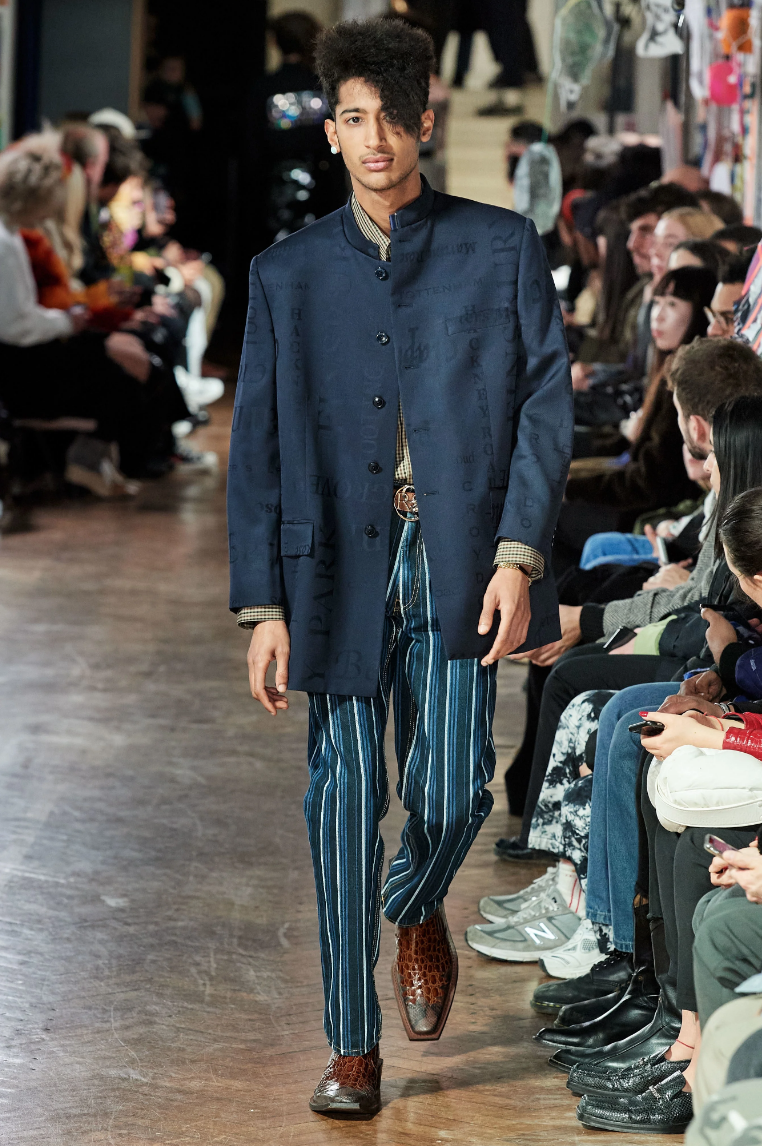
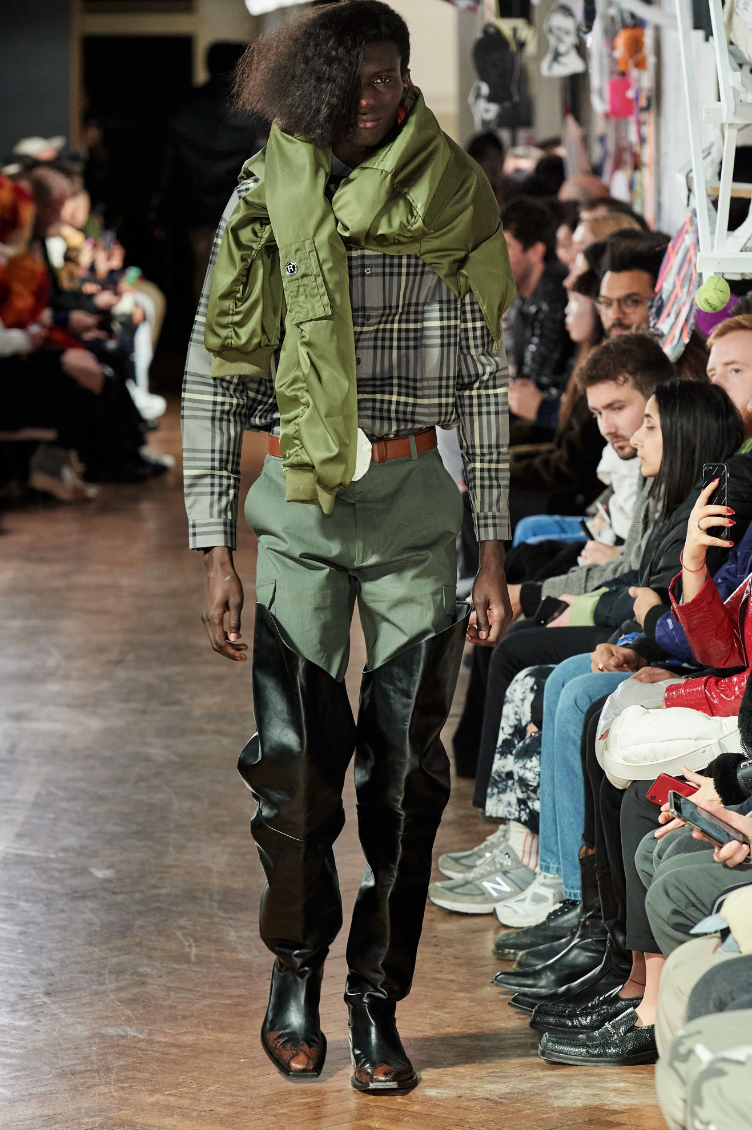
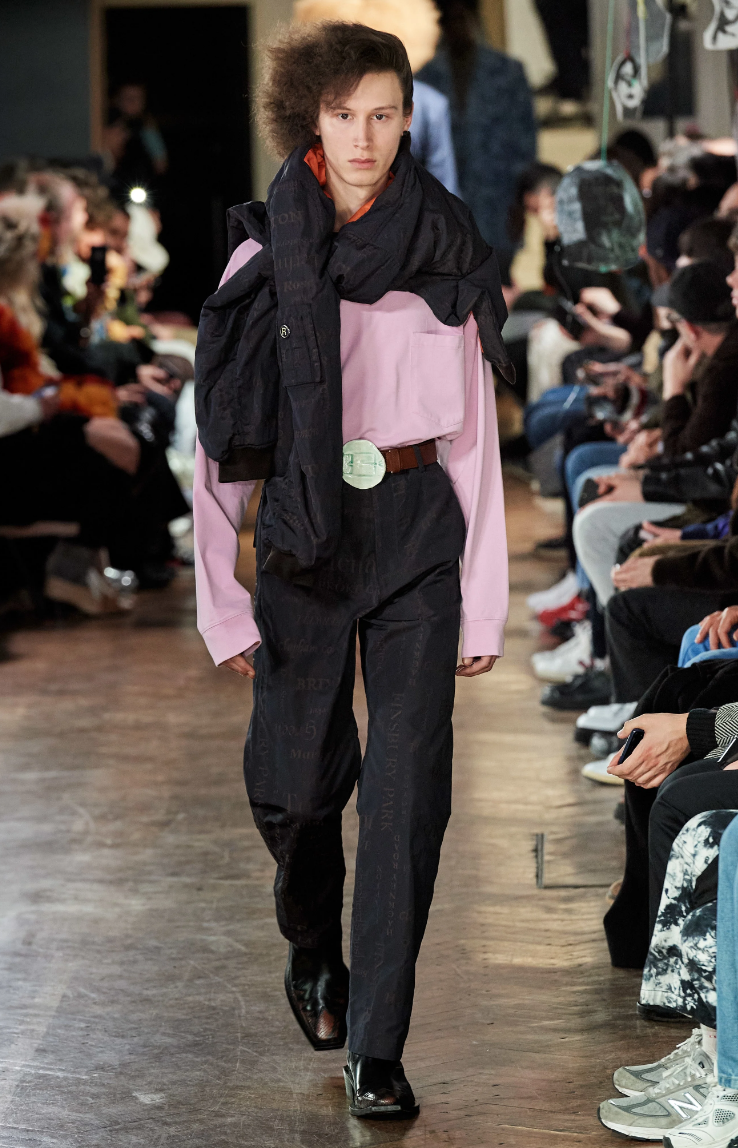
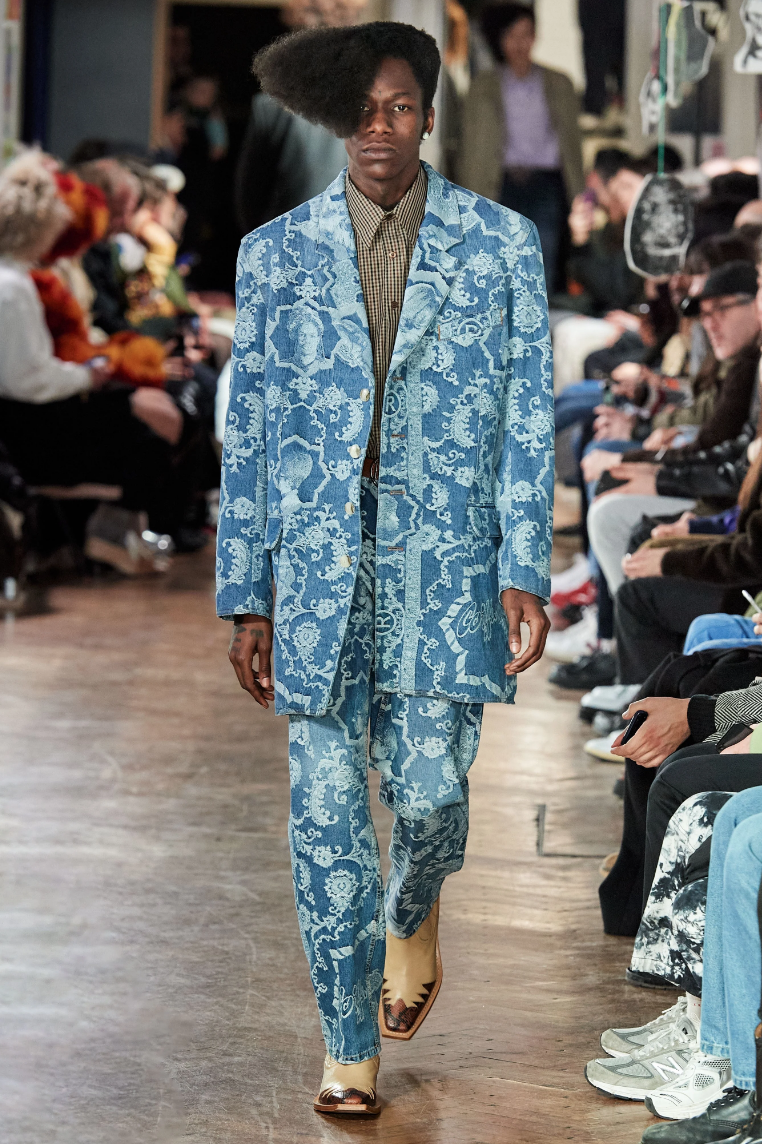
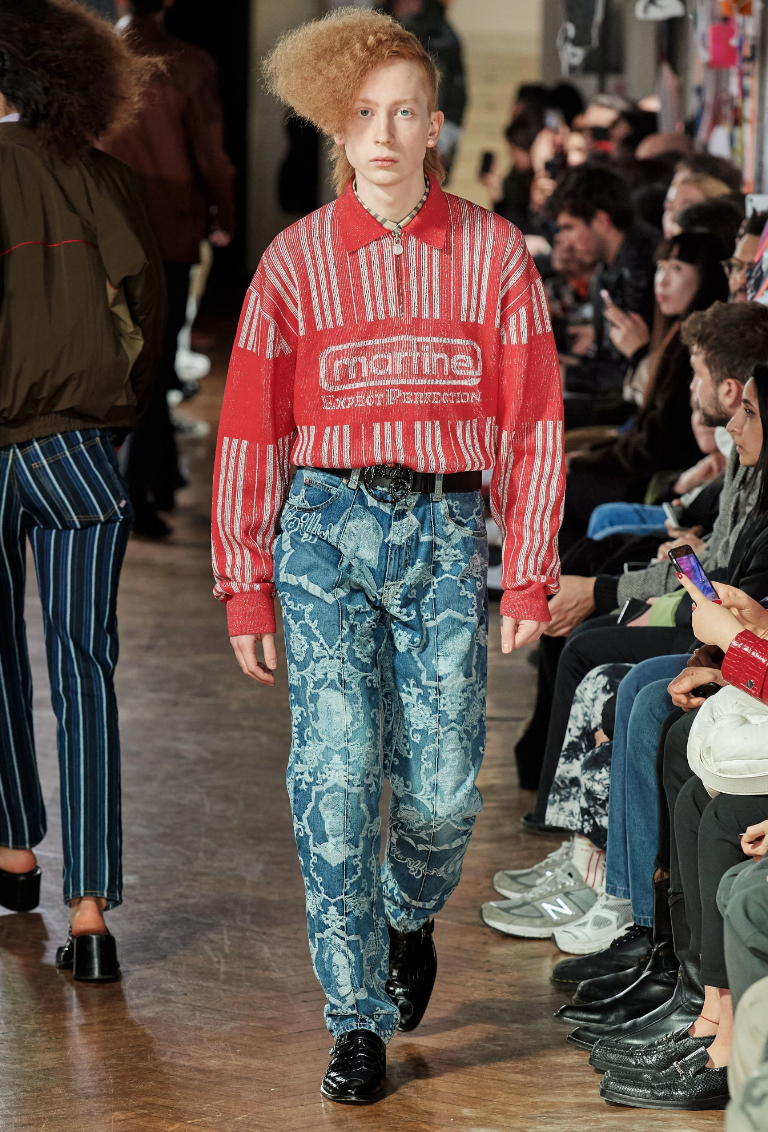
As a character, Rose is a strange mix of unpretentiousness and self-belief. One of her favorite games is playing with logos and slogans. “Martine Rose Expect Excellence” read one. The words “Tottenham, Croydon, Clapham Junction, Tooting” were woven into jacquards on her big, lairy tailored jackets, name-checking all the areas in London that Rose and her family have lived and worked in. She’s actually a champion of the ordinary and the bizarre—and her talent in fashion is that she doesn’t make any distinctions between them, or between what’s considered beautiful or ugly. “The inspirations are always the same. It’s always about outsiders,” she said.

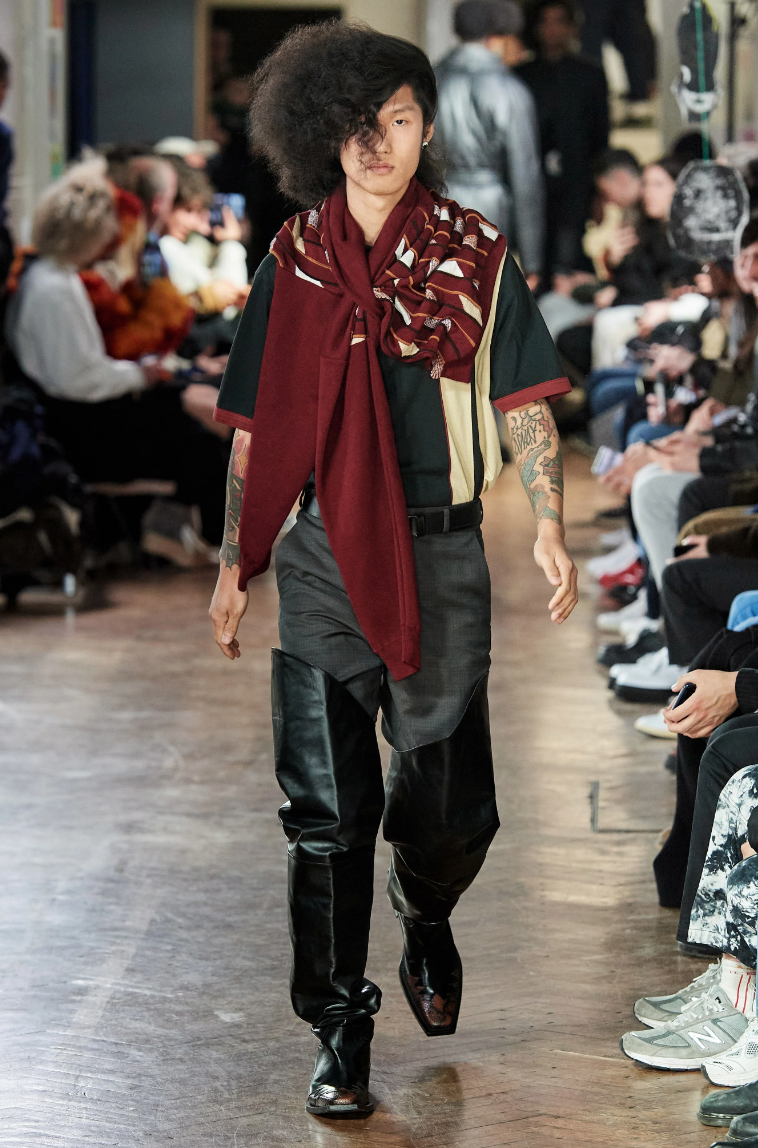
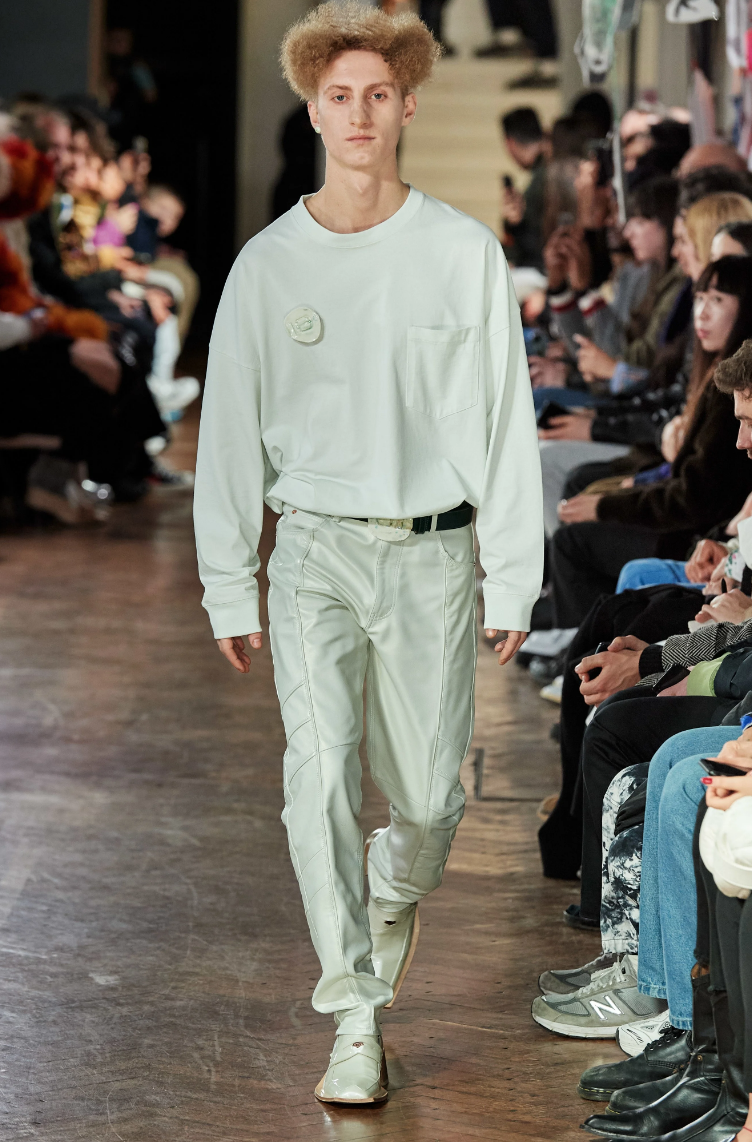
Nor does she particularly comply with seasons, or doing something completely new every time she has a show, which is according to when she feels like it. Her street-cast crew were indeed her avatars of oddness, from the side-swiped frizzes on the top of their heads, to the margins of extra sole beneath their feet, in collab with Six London, according to show credits.

In between, Rose clothed her neighborhood heroes in pieces she said she’s reprised from her archive, “with a bit of friction” from something sexy. Black latex made an appearance as she cut a signature wrap-fastened jacket as an elongated coat-dress, and put kilt buckles on a tight, shiny pencil skirt. Womenswear? No, she hasn’t really done that before. Rose may be a responsible, education-promoting mom of two in her 40s these days, but it was no stretch to imagine her in these bits and pieces back in the day when she was dressing up to club in the ’90s.

Those who buy Martine Rose are, similarly, believers in the offbeat and the slyly subversive, as well as others of the romantic persuasion that there is or ought to be an underground way of dressing. (Whether that’s actually been killed off in the age of constant self-documentation by Instagram is a moot point.) If she intends it or not, her black leather western waders are a dead cert for a street-style pose-parade outside some show at a men’s fashion week in the not very distant future.

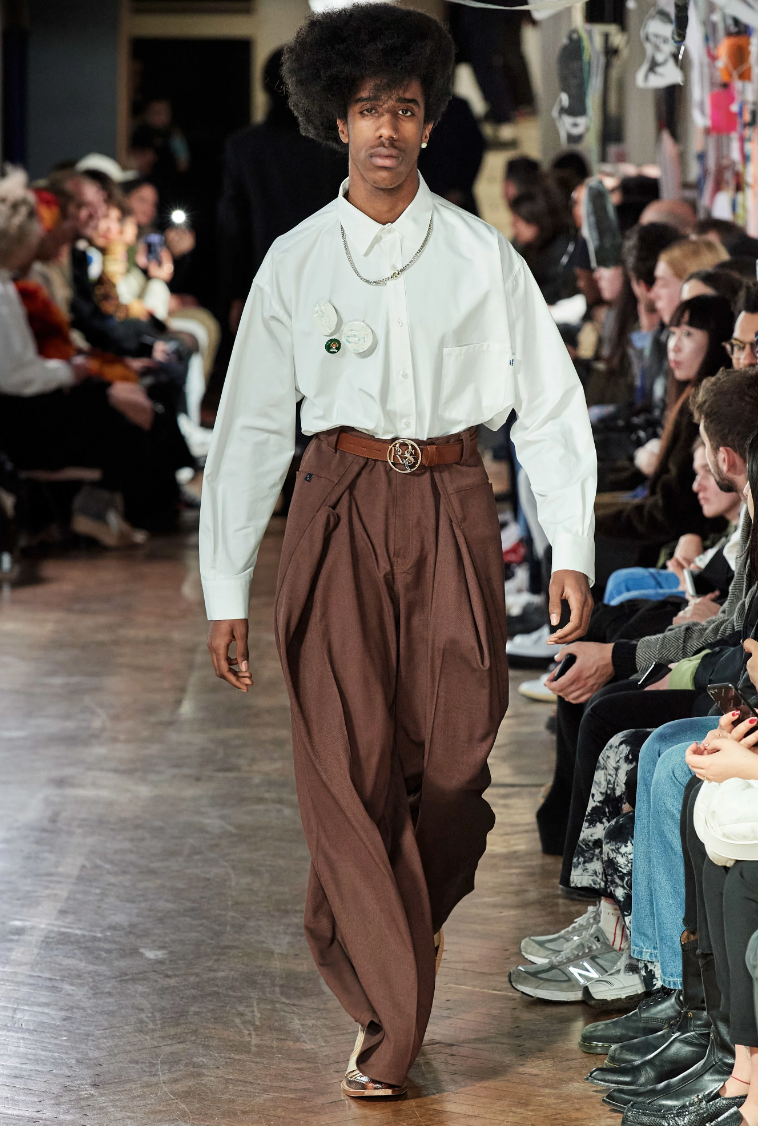
There is a lot to appeal to the male fashion geek too: Those who are in the know understand what the Farah brand meant to the Jamaican community peacocks of style in the ’70s and ’80s, including pants with perma-creases, as worn by Rose’s uncle, “but this time expanded to XXXL proportions.” Messing with heads and proportions is also a Martine Rose specialty. The way she belts trousers hitch-up high with a spoof circular metal R-logo buckle, for instance. Ditto with her interpretation of the Casuals’ habit of knotting sweaters around their necks on the way to soccer terraces and pubs in the ’80s; she’s melded the shape to become scarves.

Others may be attracted to Martine Rose pieces because they are just cool and simple to wear; men who don’t want to be carrying a massive brand overstatement around with them. The checked coats fit that practical bill; so do her frill-front shirts. Geek fact: When she started out on her own over a decade ago, Martine Rose tested the waters with a small line of shirts. The waters said that a tide of in-people, designers, stylists, and editors wanted to get their hands on them. Which is how, little by little, Martine Rose became one of the most influential designers’ designers, while remaining exactly who she is, becoming a doting mom, and proudly showing off the neighborhood she comes from. Cheers to all of that, Martine.

Source: Vogue

FASHIONADO
Brioni Fall 2020 Menswear Collection

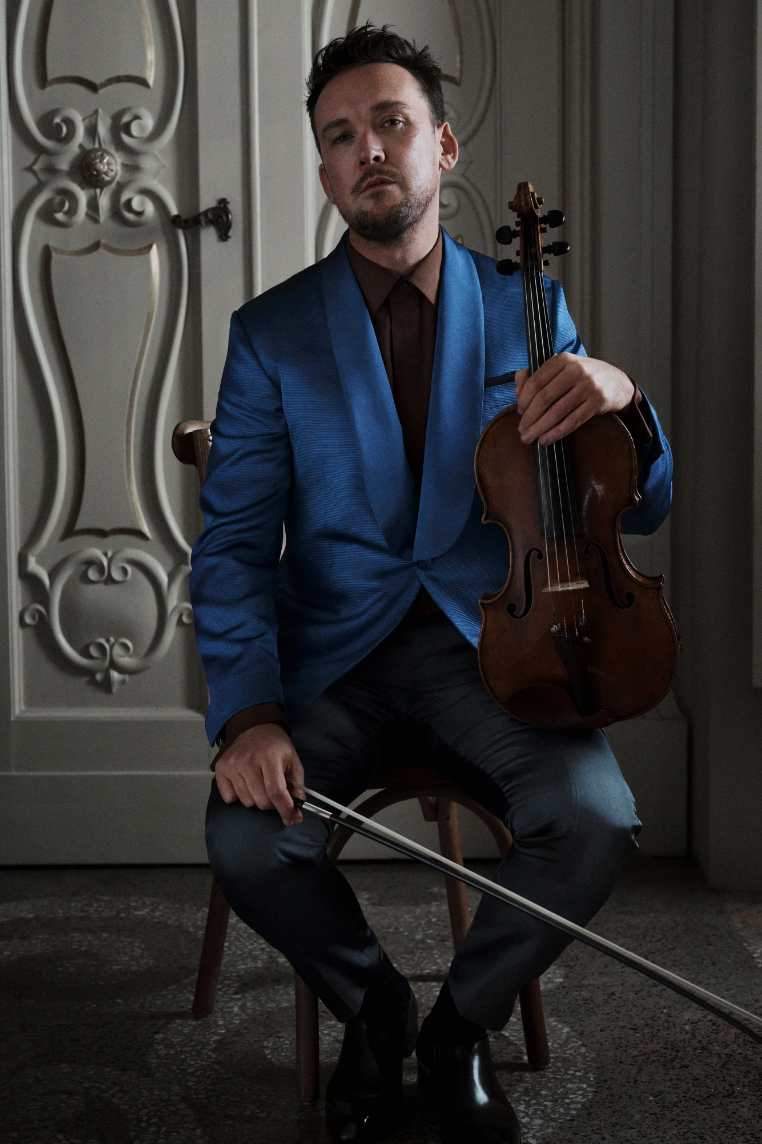
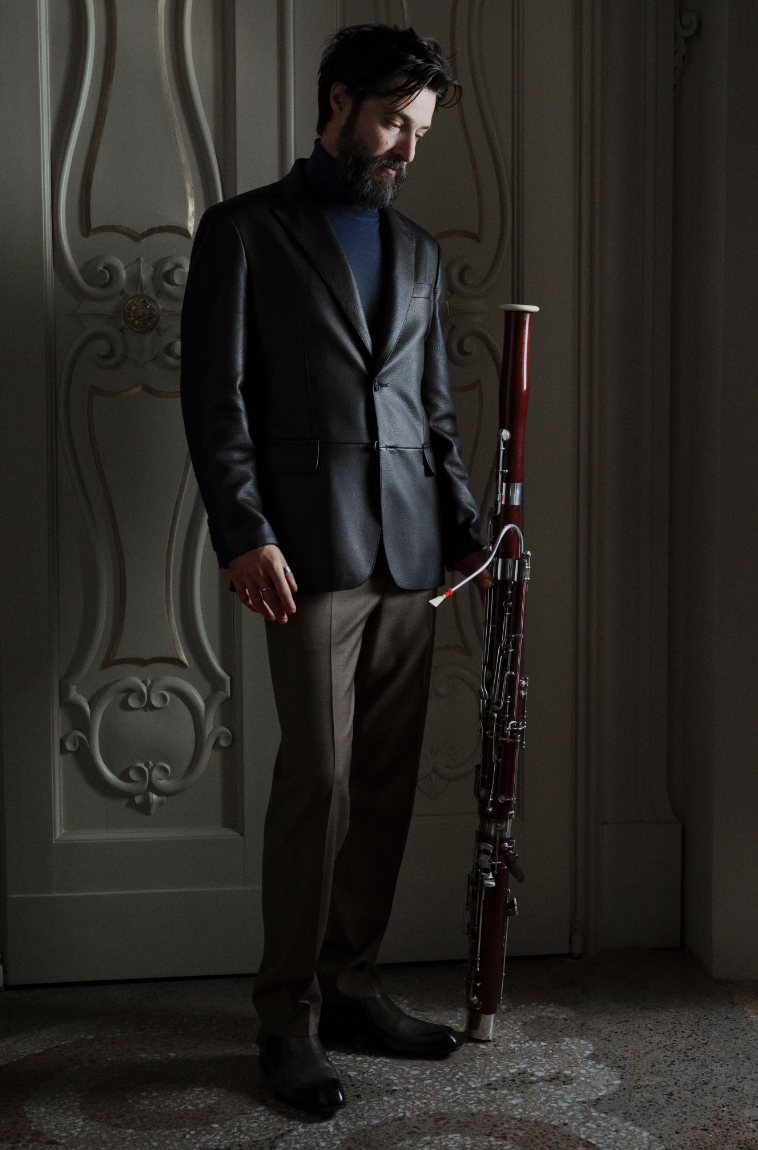
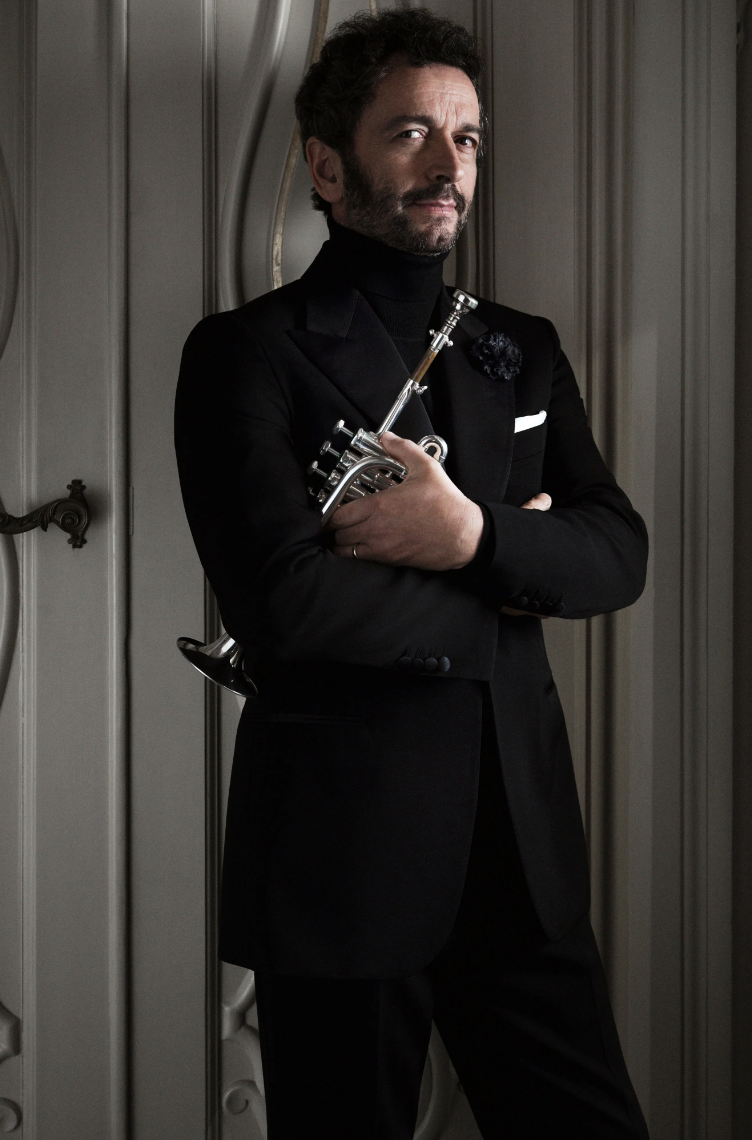
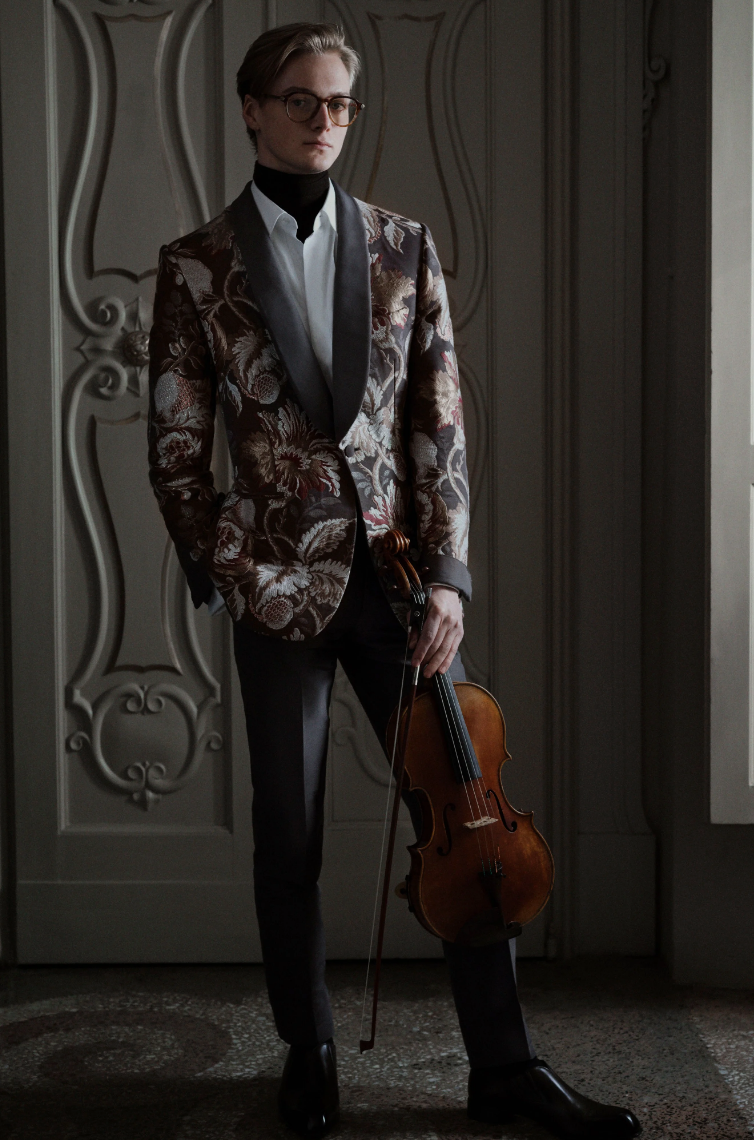
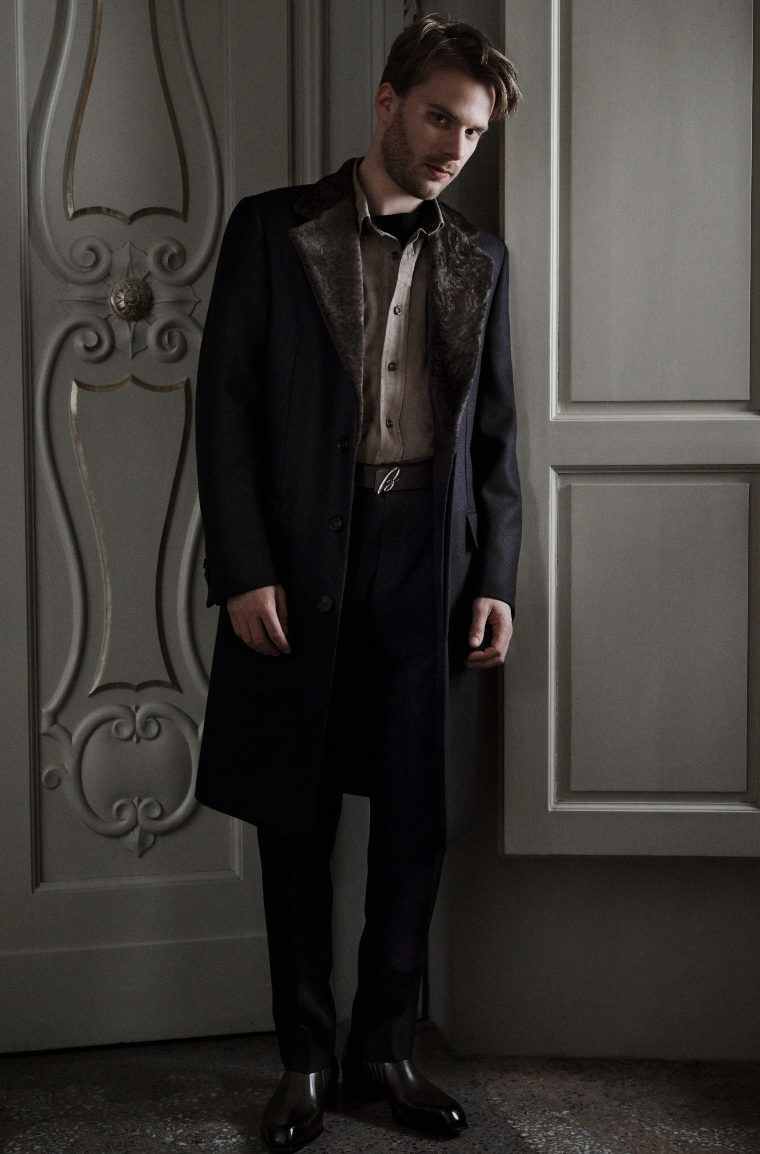
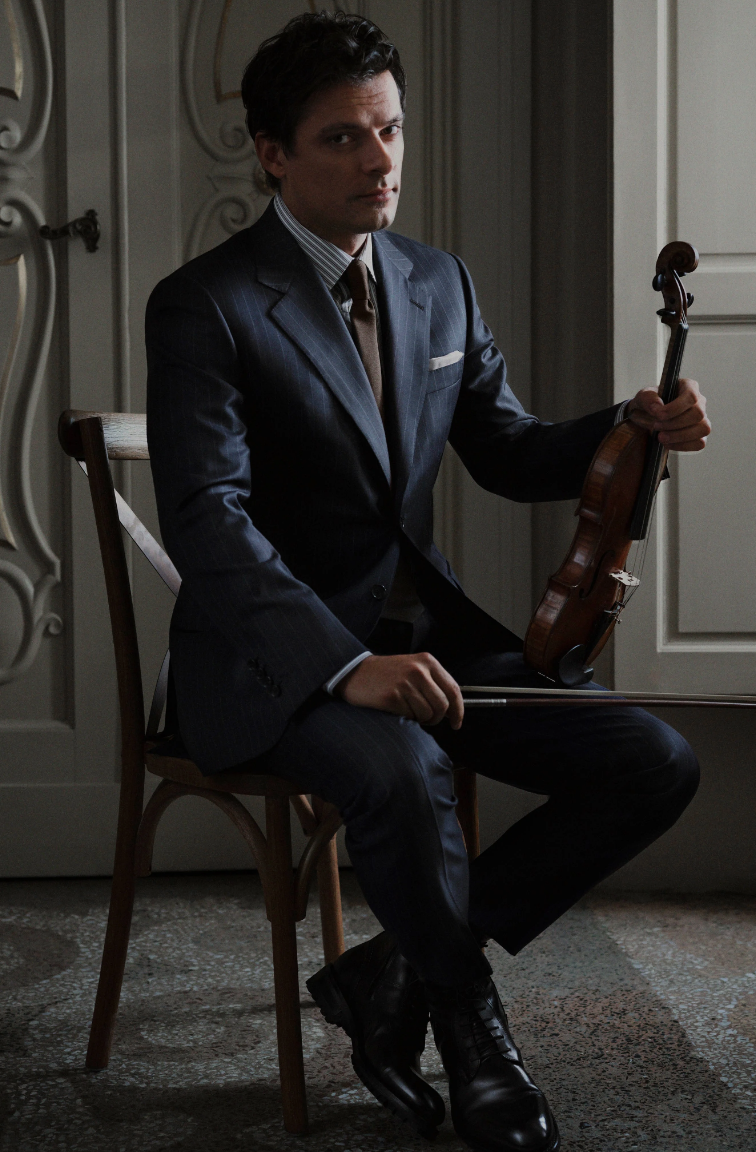
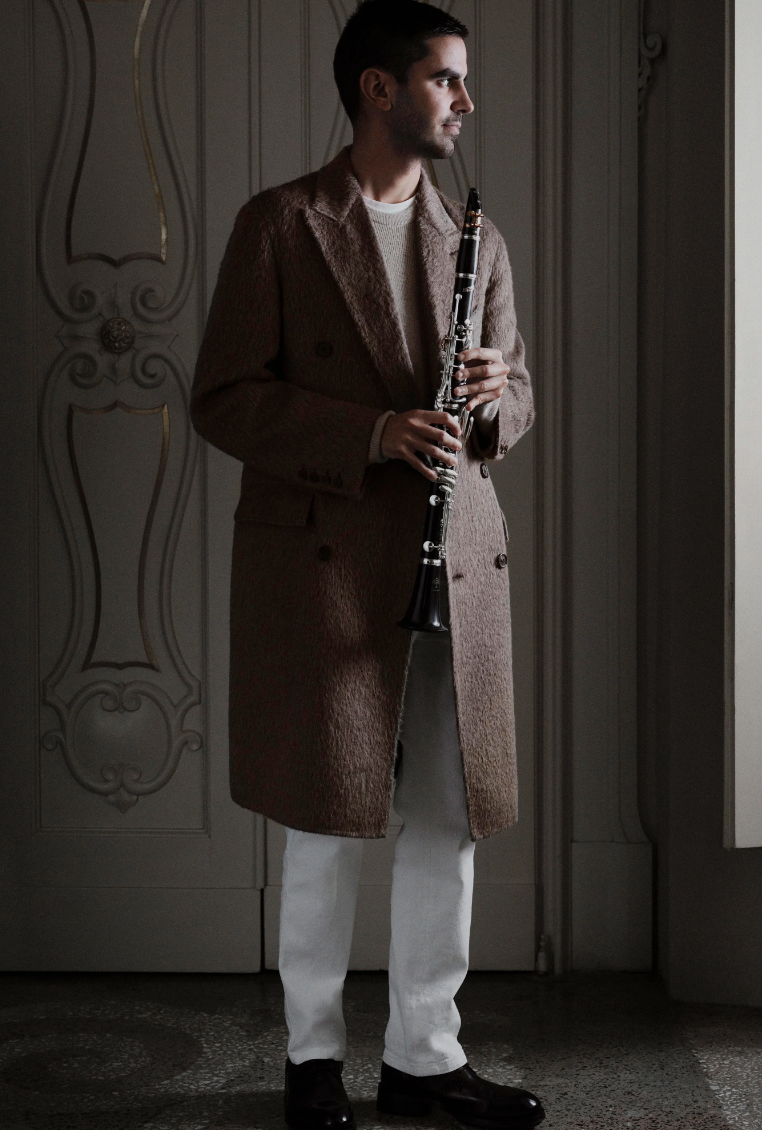
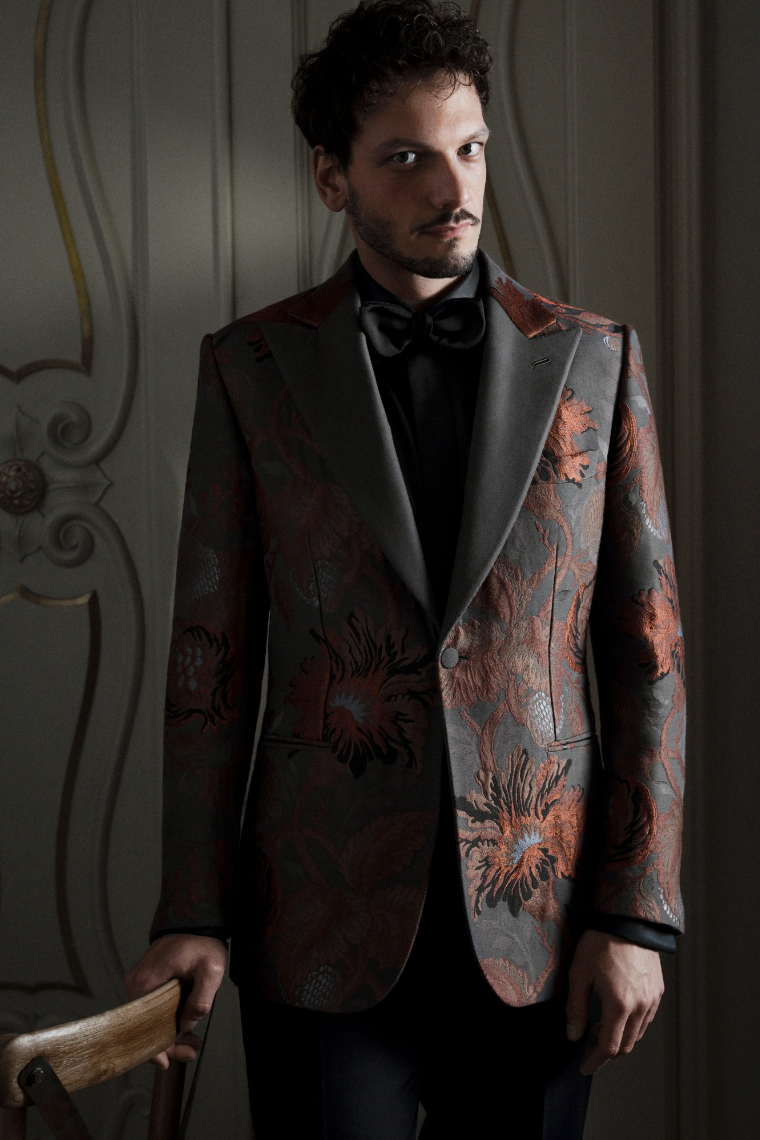
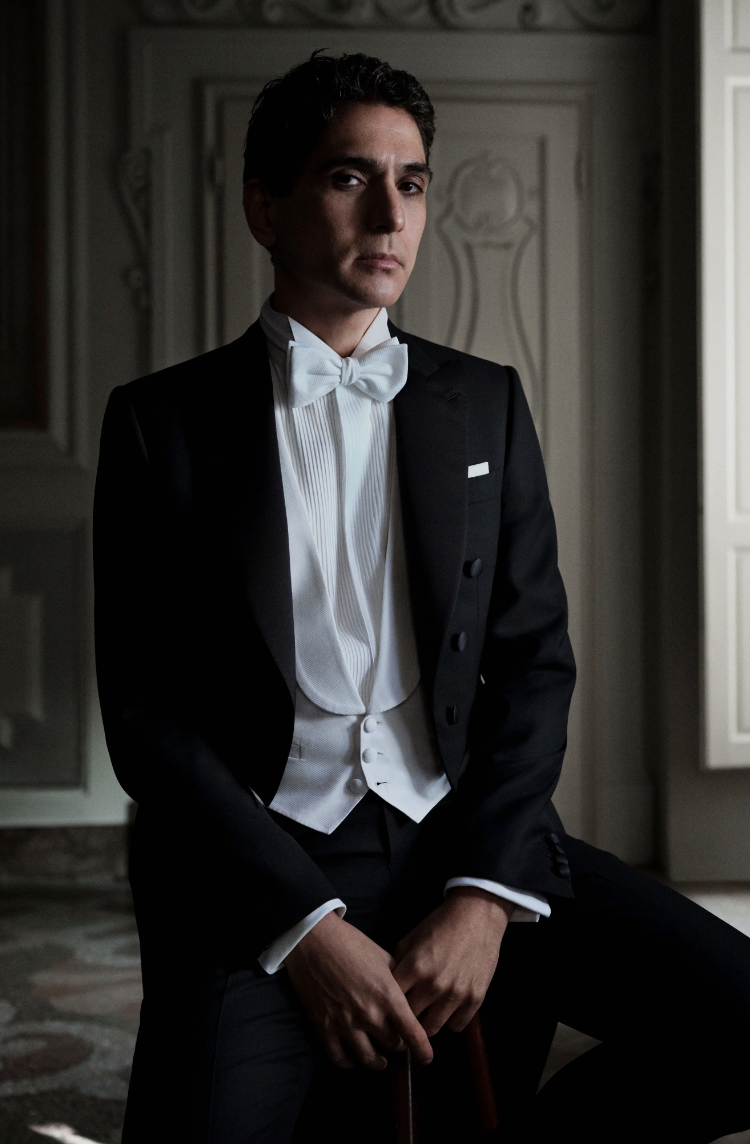
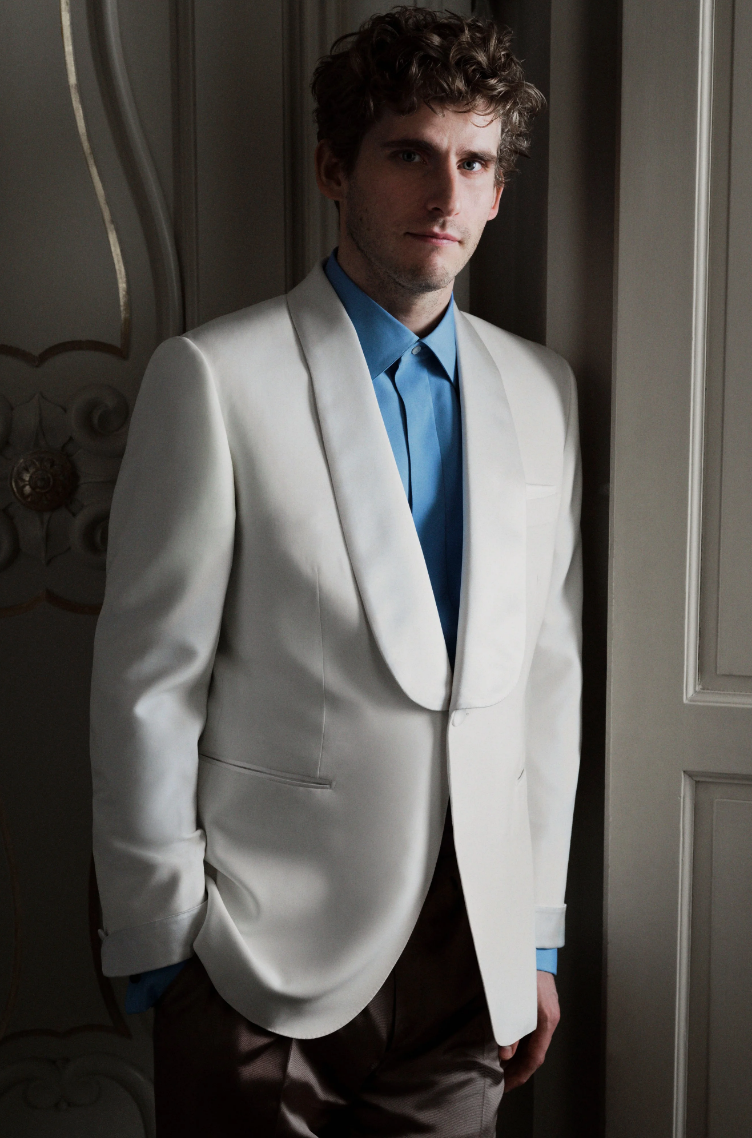
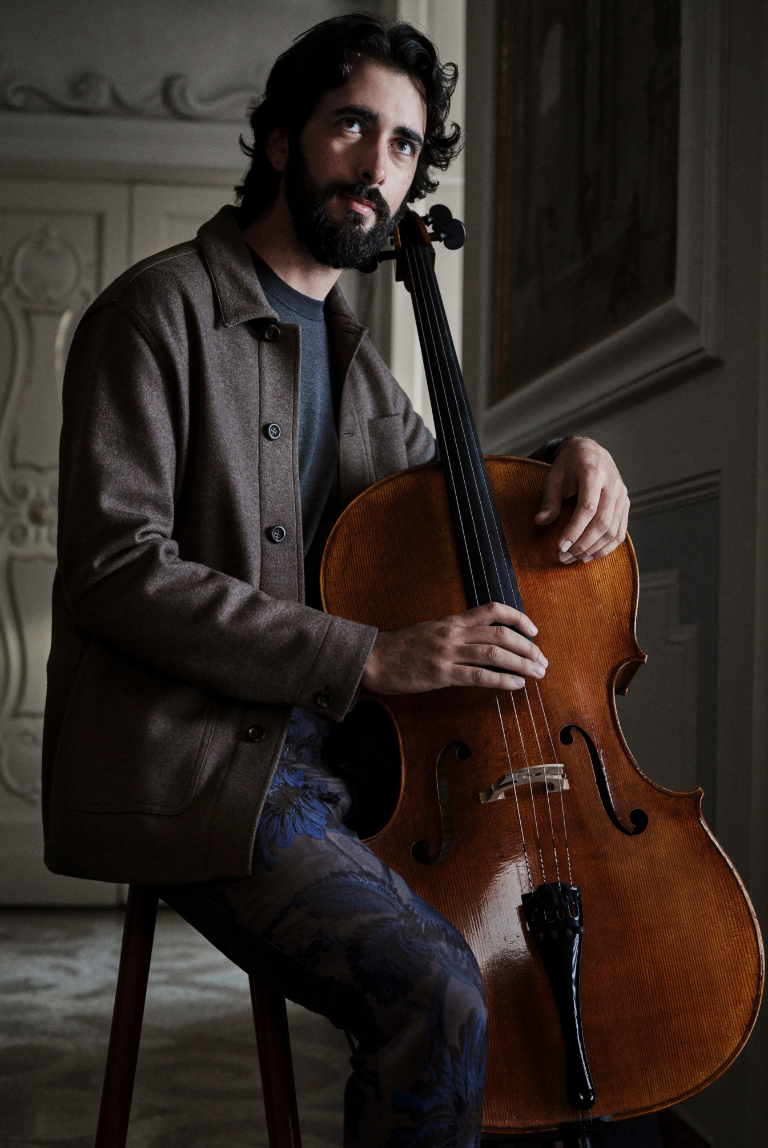
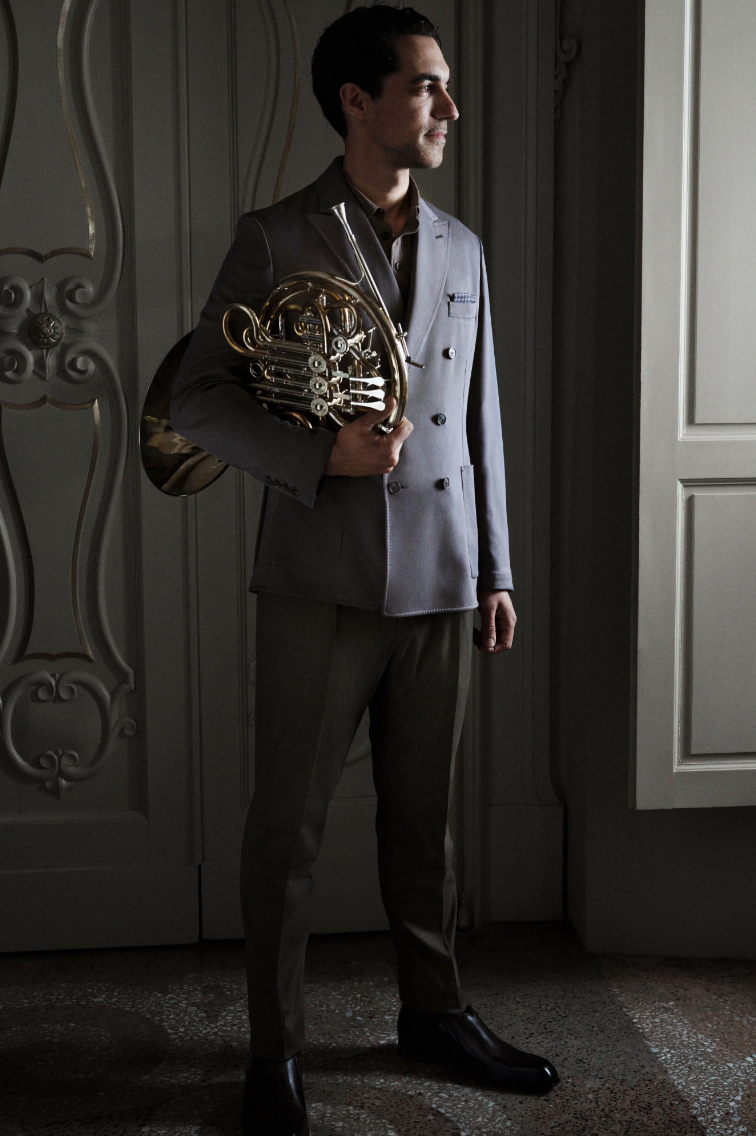
The 15th-century salons and ballroom of the Palazzo Gerini were so darkened at this Pitti presentation—the chandeliers were switched off and draped with tattered muslin, and the only light sources were artificial candles clustered in corners—that at first you could barely see the marbled floors, the lush paintings, the Gabbiani frescoes, and certainly not the Brioni clothes. But as your eyes slowly adjusted to the dimness, what was clear as day was the music. Brioni’s design director Norbert Stumpfl and the evening’s mise-en-scène manager Olivier Saillard had between them recruited some of the world’s finest male classical musicians, dressed them in Brioni, and then left them to it.

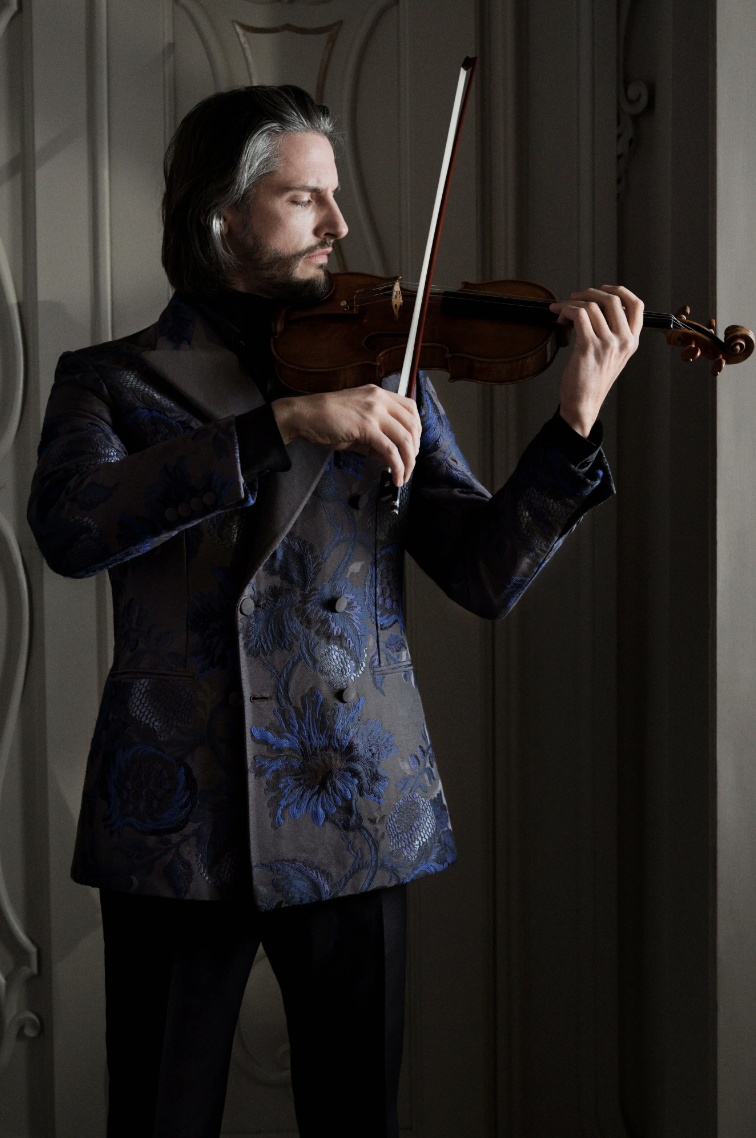
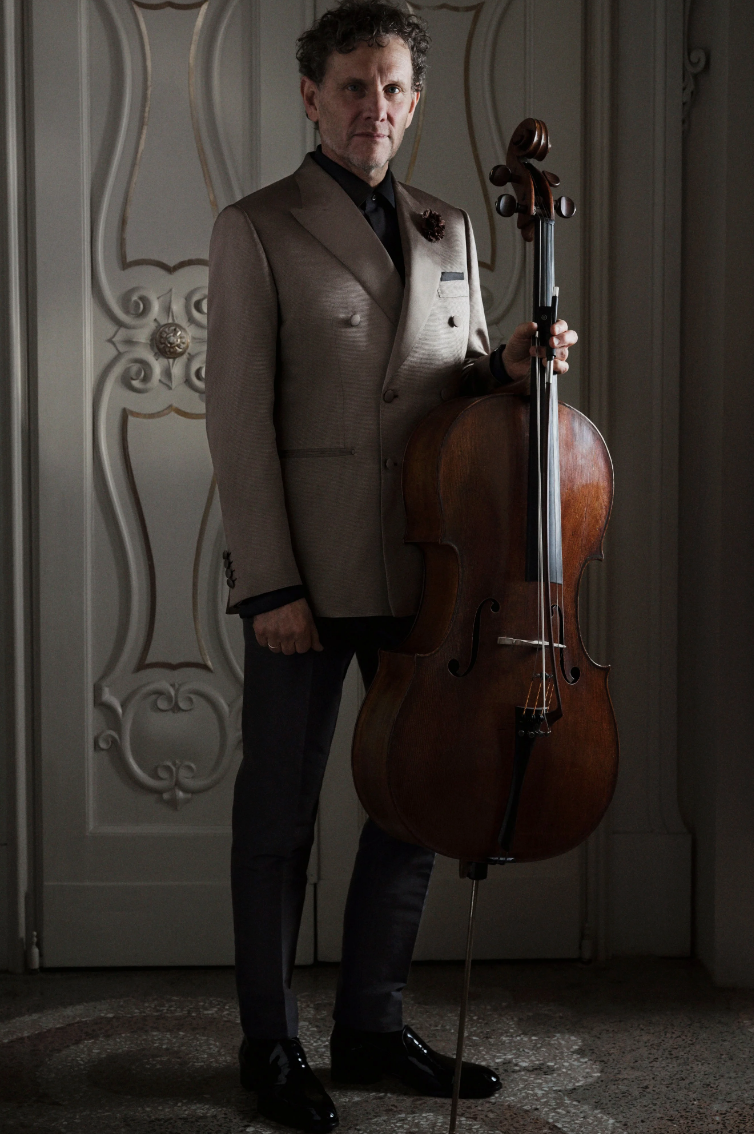
Thus in the Palazzo’s Sala Gialla, father and son cellists Andreas and Ingemar Brantelid (of the Royal Danish Orchestra) sat between the two long muslin-covered dining tables in the near darkness playing Tchaikovsky variations. Andreas’s instrument was a Stradivarius later observed to be worth probably more than the Palazzo: They both wore evening jackets, the son’s shawl-collared, the father’s silk and double-breasted with wide (11.5cm, Stumpfl specified later) reveres.

In another room, the star Greco-Peruvian soloist Alexandros Kapelis swayed behind his grand piano as just a few of us stood in the inky salon to be saturated in a Debussy arabesque. He wore classic pianist attire: black tailcoat and trousers in wool Barathea and a white cotton dress shirt.

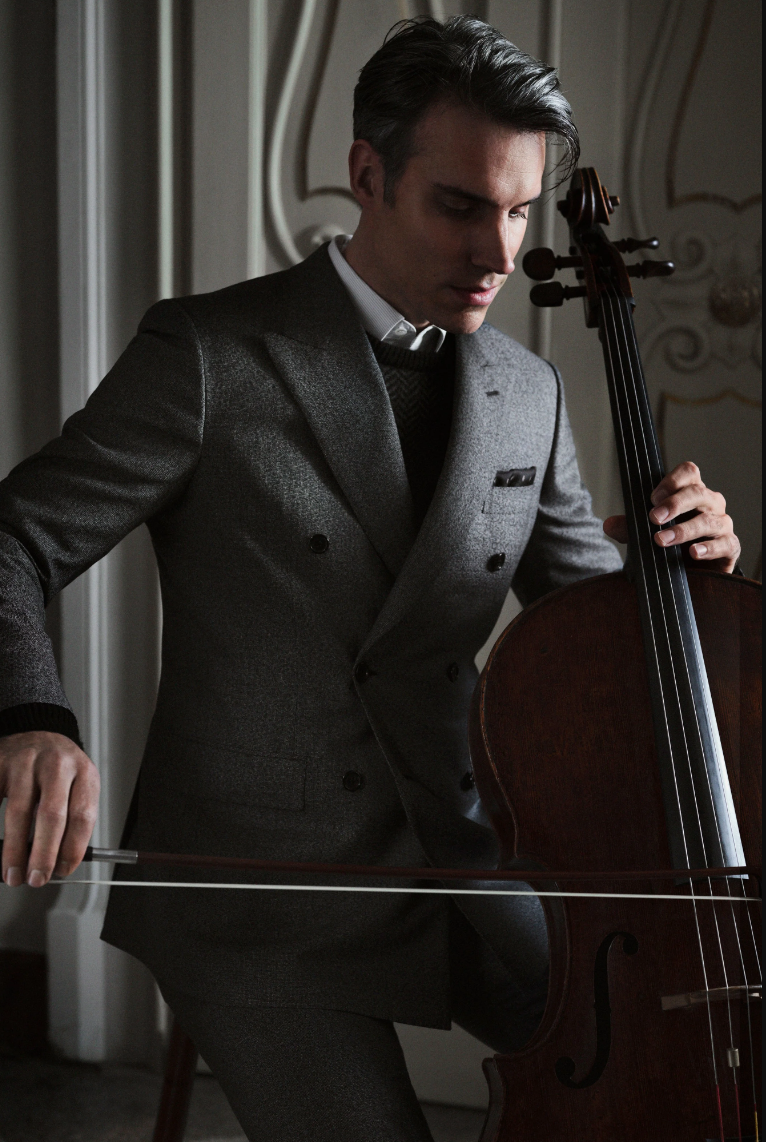
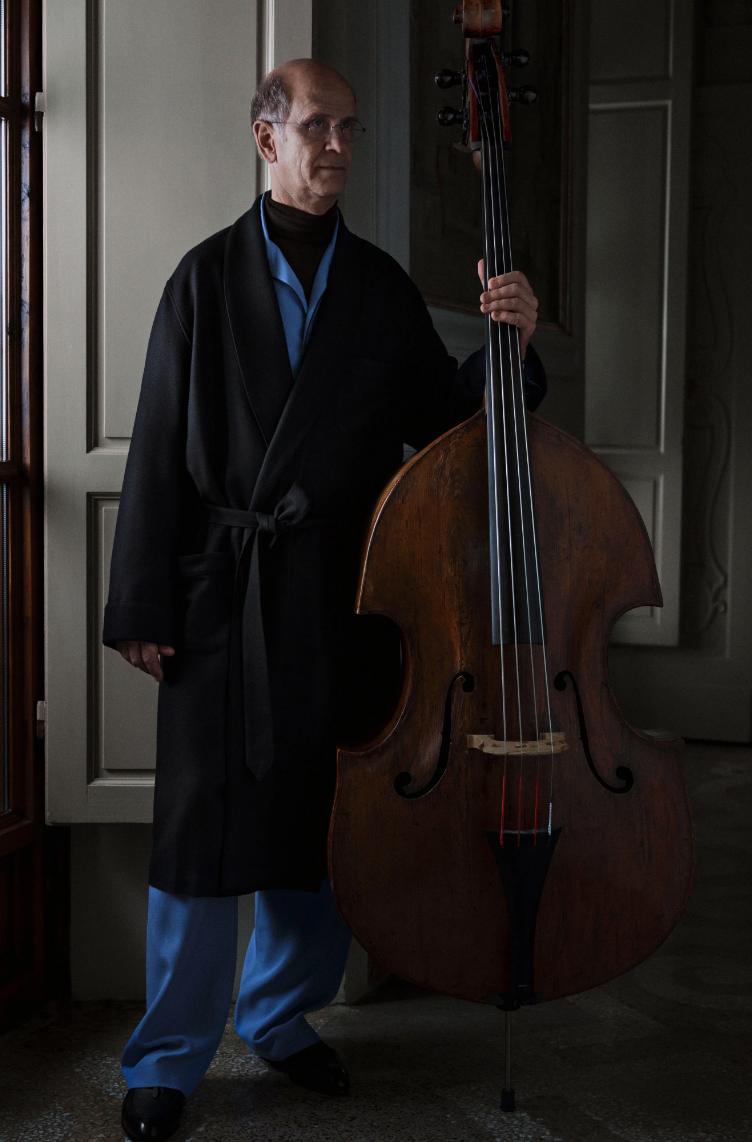
The most populated chamber was the White Room, or Sala Bianca, in which an eight-strong baroque ensemble led by Andrea Lucchi of Rome’s Orchestra Santa Cecilia on trumpet did stirring justice to two pieces by Purcell, and another by Handel. Double bassist Ulrich Wolff of the Berlin Philharmonic looked rather louche alongside his more formally attired colleagues in piped silk pajamas and a cashmere dressing gown—apparently he was also wearing two pairs of (non-Brioni) long johns for fear of a chill. On cello, Professor David Pia of the Conservatory of Geneva (who looked a little like the Dutch soccer striker Robin van Persie) had shed his mink scarf; his double-breasted mouline wool suit and herringbone jacquard cashmere sweater were insulation enough.

And so it went on, for seven beautiful rooms in total. At the chat afterwards Stumpfl revealed some crazily beautiful details. The almost punkishly animated string trio in the final Azzura room were all wearing decorative jacquard jackets whose fabric had been woven in Venice on a loom dating back to the 1600s. One white cashmere coat was not colored thus, but was sourced from the wool of an albino goat. “We do this to show we can do it,” Stumpfl expanded, “but the clothes are quite simple, quite basic.” By this he did not mean Old Navy basic (oh no), but canonically classic. “For me it’s, ‘I see the man and I don’t really see the clothes.’ ”

That might seem like an obtuse, or even counter-intuitive statement. Because who is going to buy an albino cashmere jacket (with albino horn buttons to boot) and not want it visible? The answer is the sort of unassuming mega-zillionaire—titans of industry, tech, entertainment, or lucky guys who got left a lot of money—who are classically inclined: men who want to wear their success but not have it wear them.

Brioni was at Pitti this season to mark its 75th anniversary. One of the most significant moments in its history happened here in Florence in 1952 when a debonair gentleman named Angelo Vitucci modeled Brioni’s Roman suiting for an audience of mostly American womenswear buyers at Palazzo Pitti. This was the first ever menswear fashion show, and also helped the brand crack a U.S. market (partly also thanks to the enthusiasm of famous customers including John Wayne) that has remained important to the brand ever since.

Tonight Brioni could have homaged that iconic moment much more directly, but instead chose a route more subtle, more refined, and truer to what Stumpfl is working to articulate at this Abruzzo-based house. Florence is perhaps the densest repository of European culture there is, and here he was reminding us—in a modest but undeniable manner—that Brioni is a part of this continent’s myriad mosaic of creativity and invention. This was an exercise in both deep luxury and profound culture that was beautiful to be immersed in.

Source: Vogue

FASHIONADO
Fall 2020 Menswear Art School

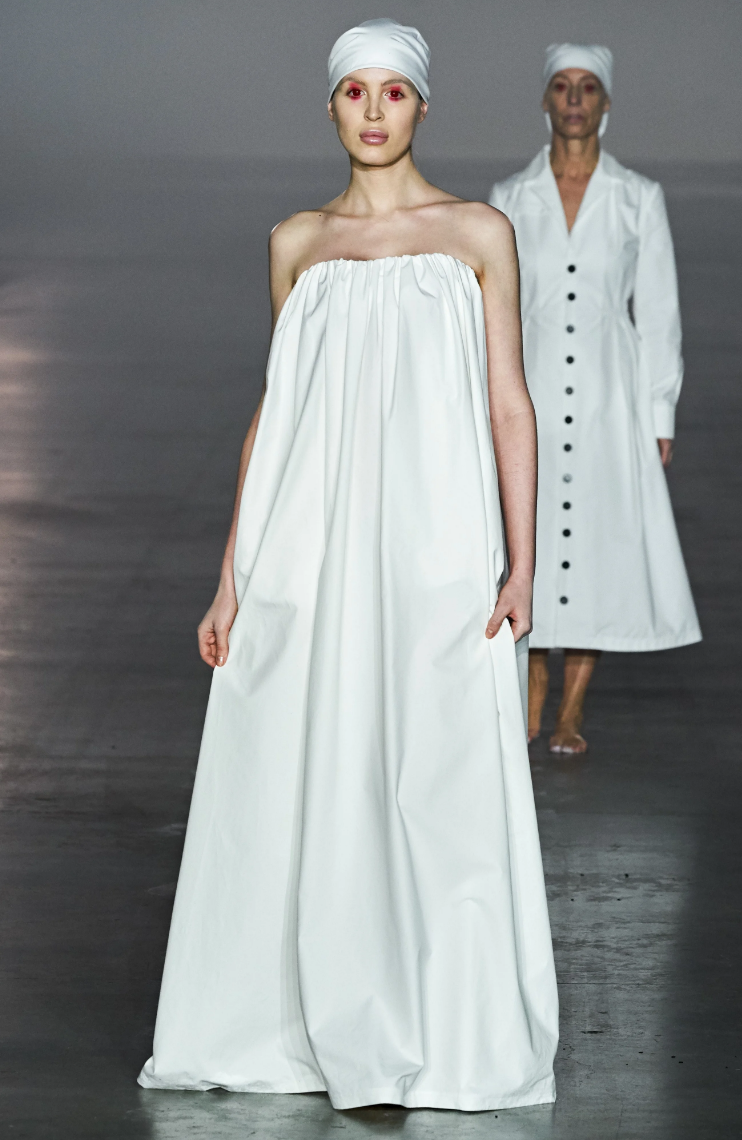
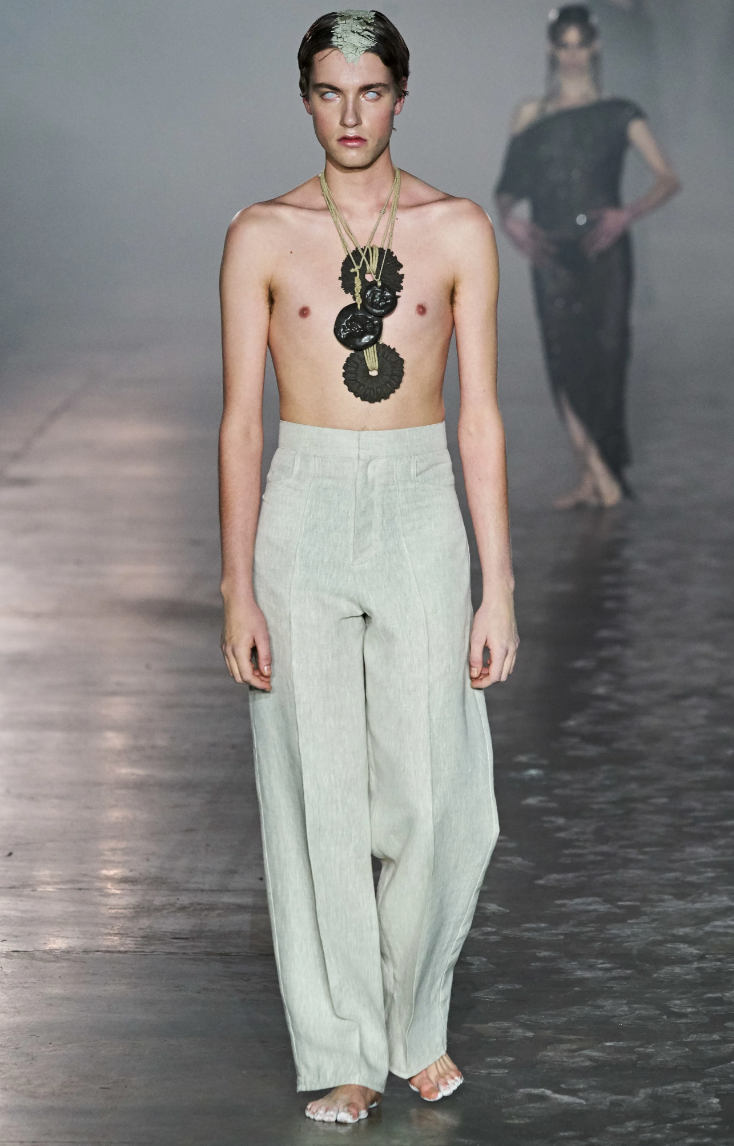
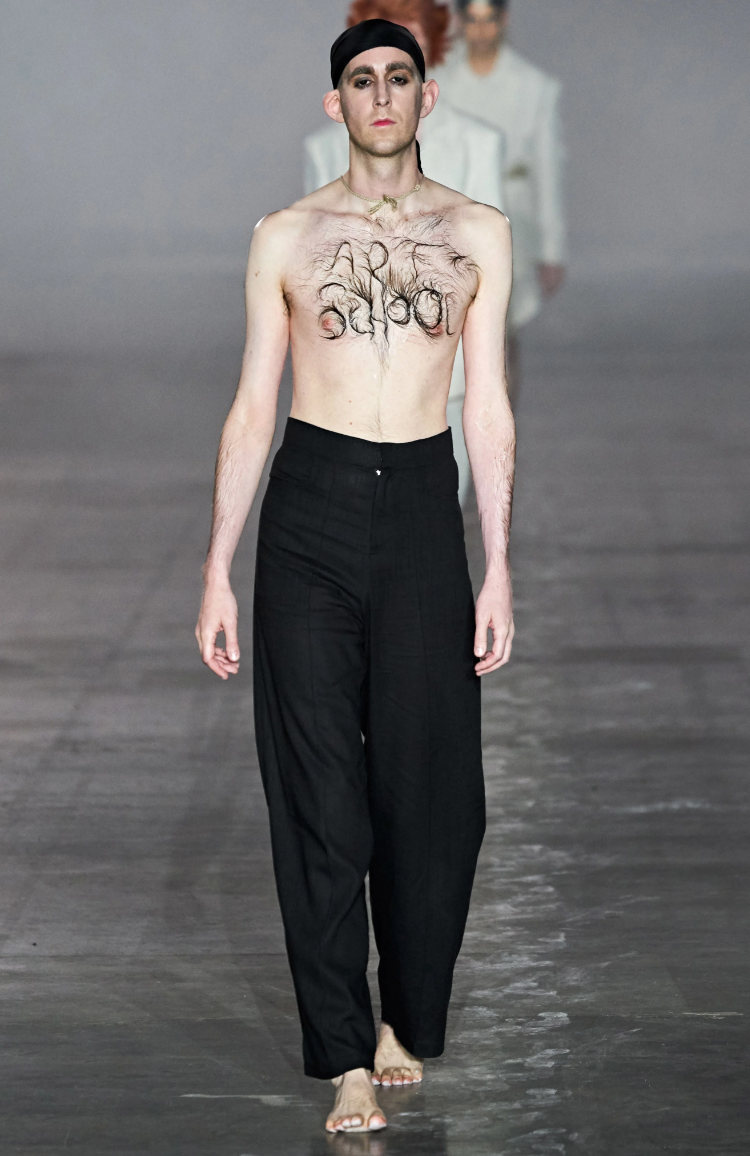
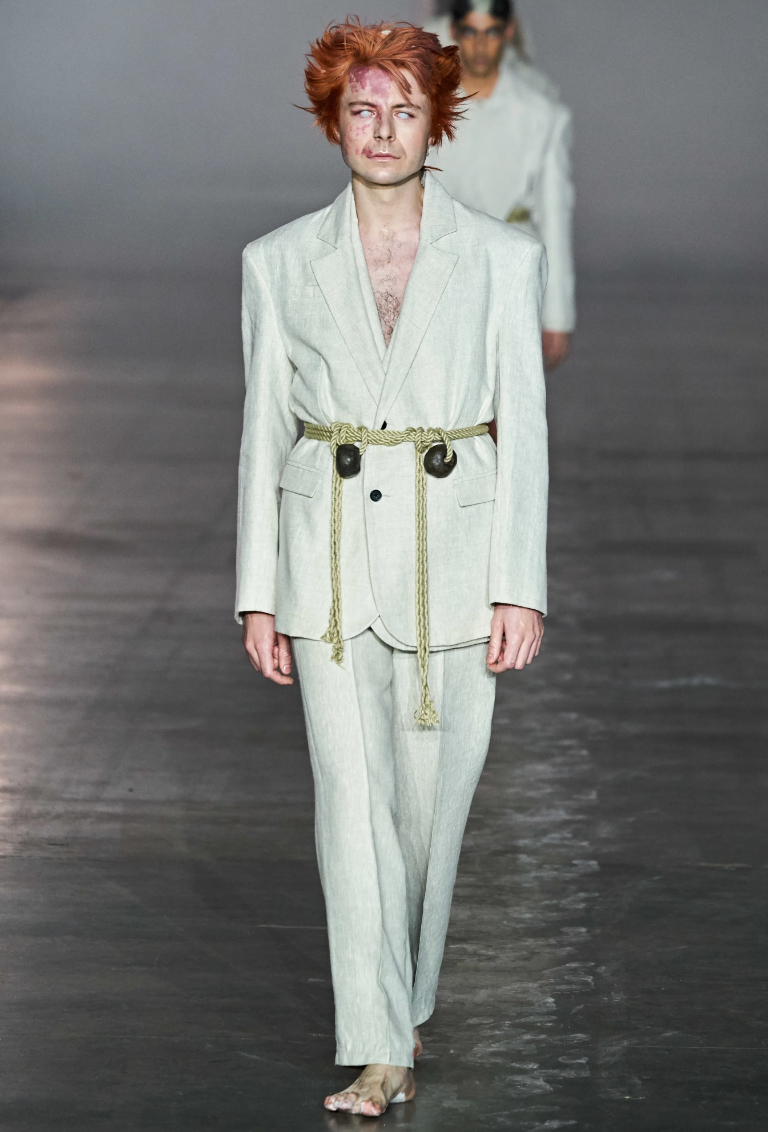
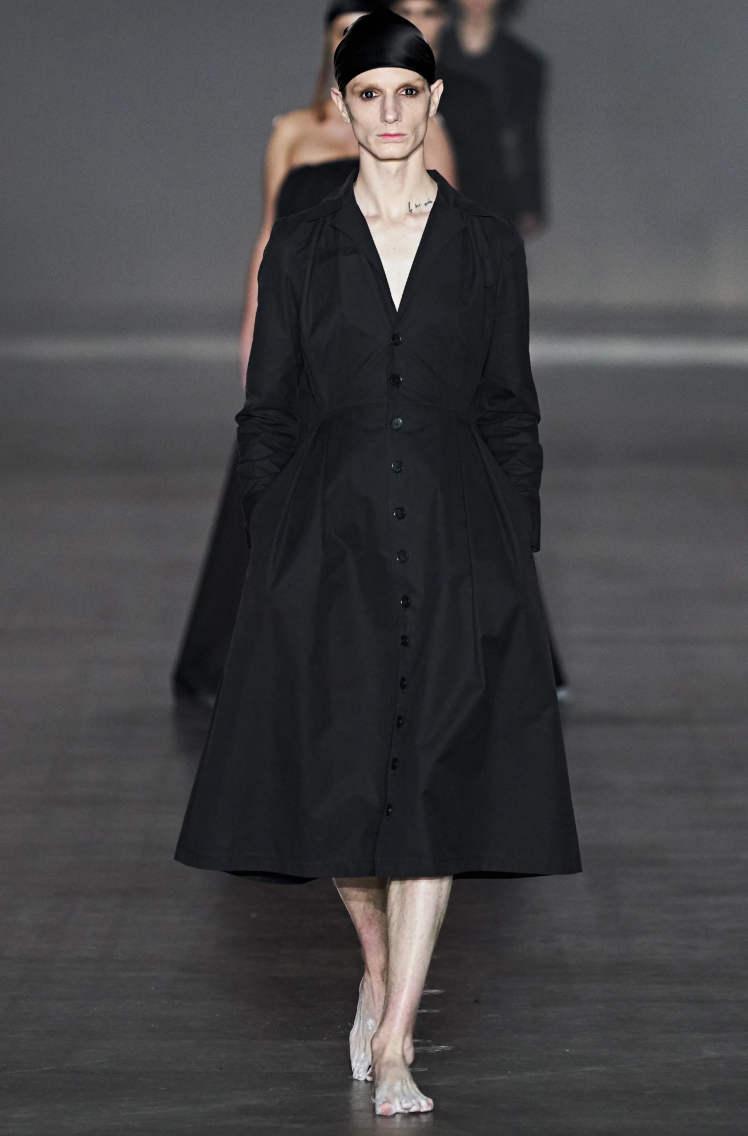
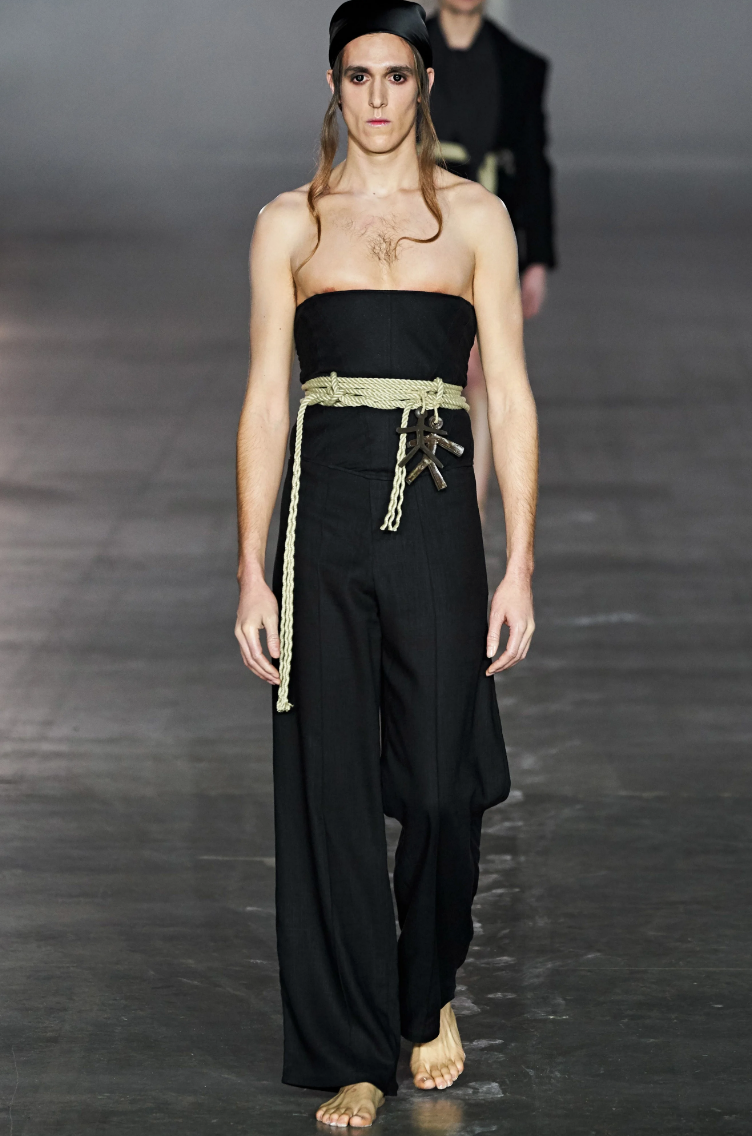
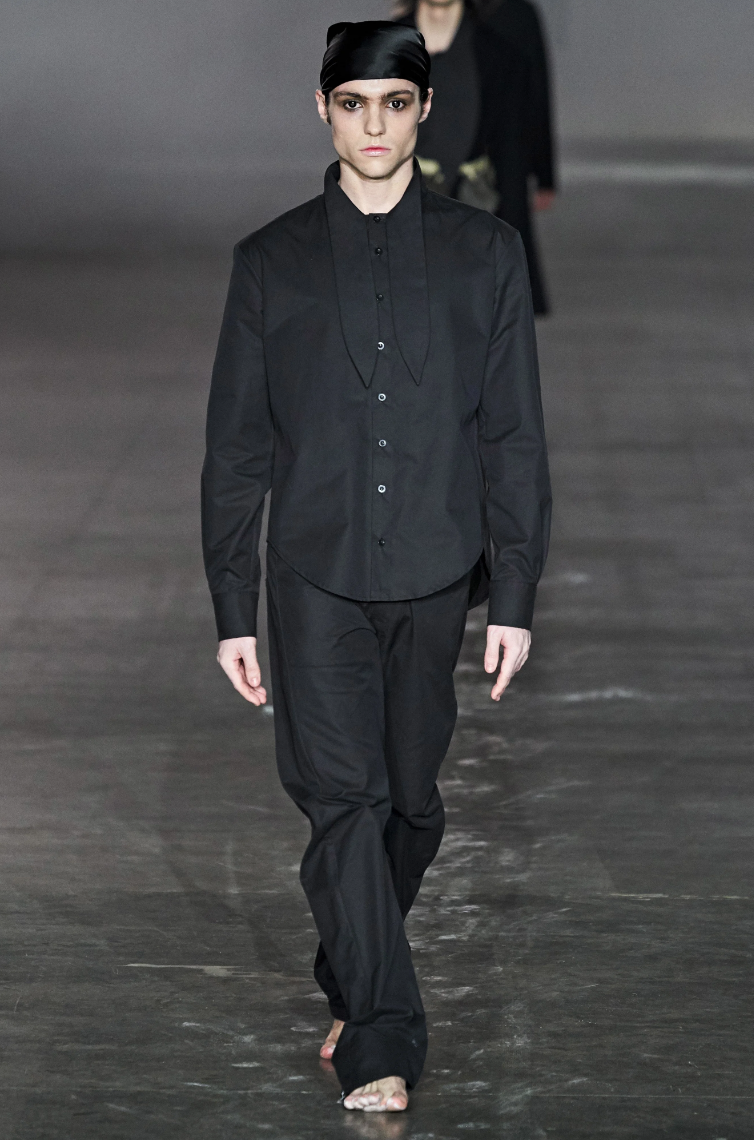
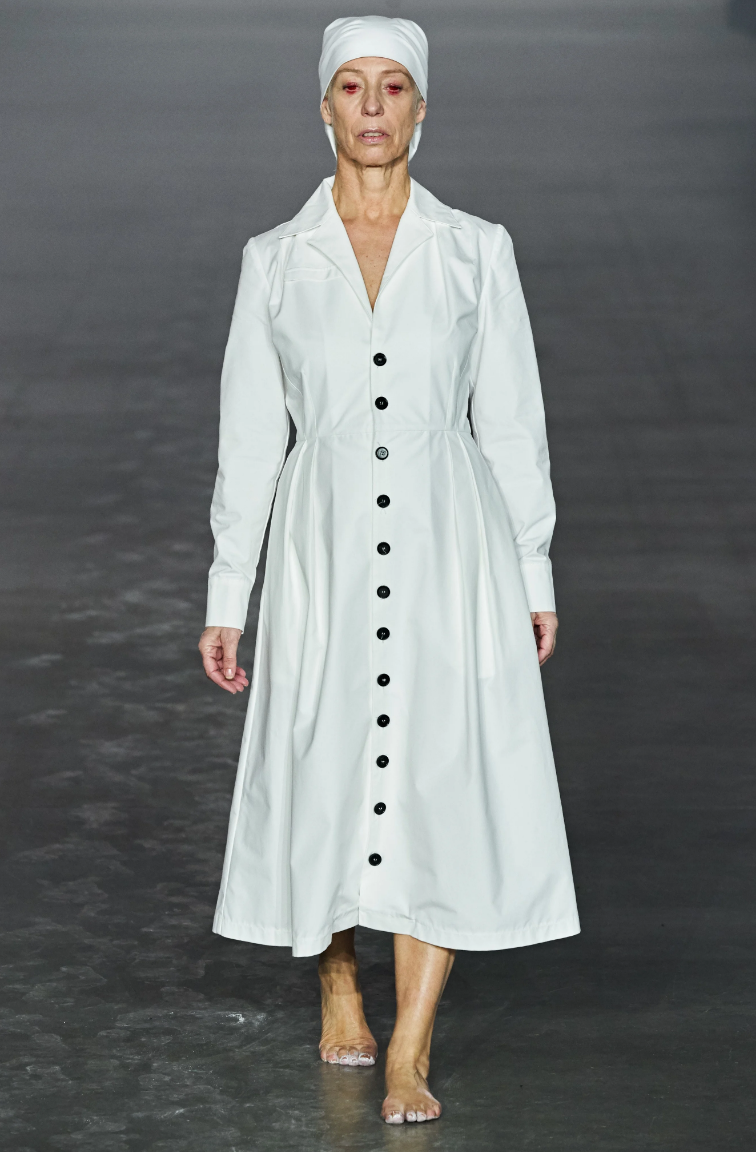
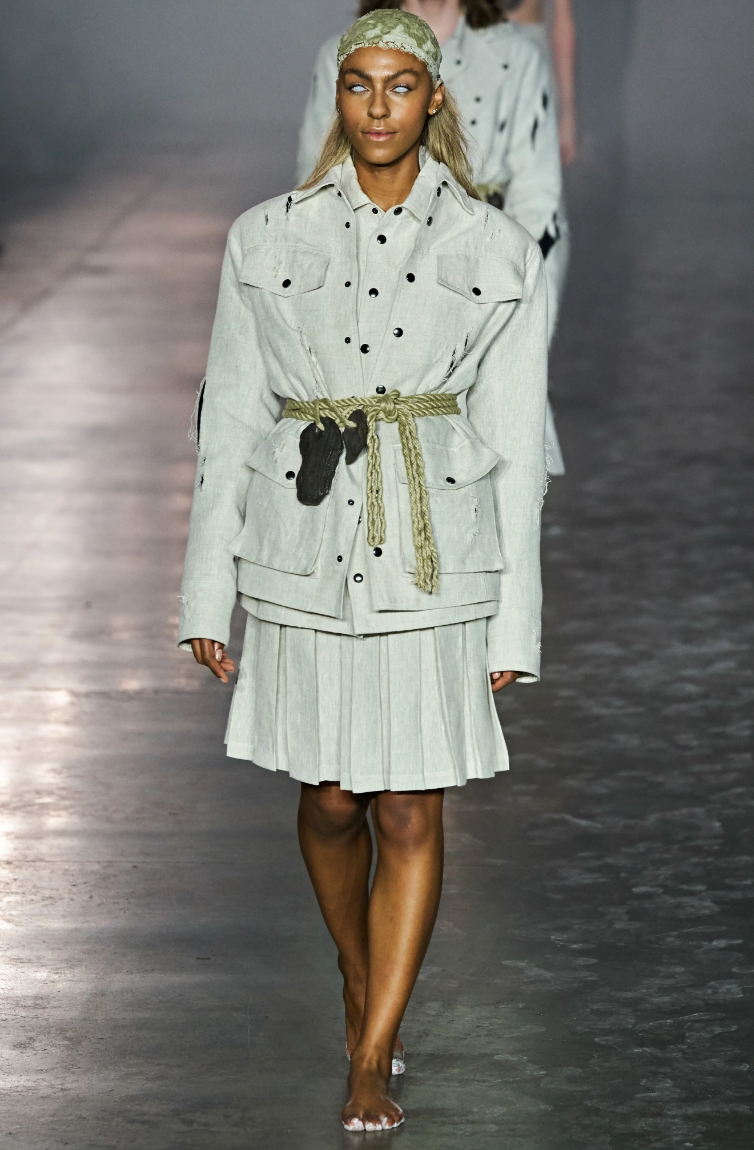
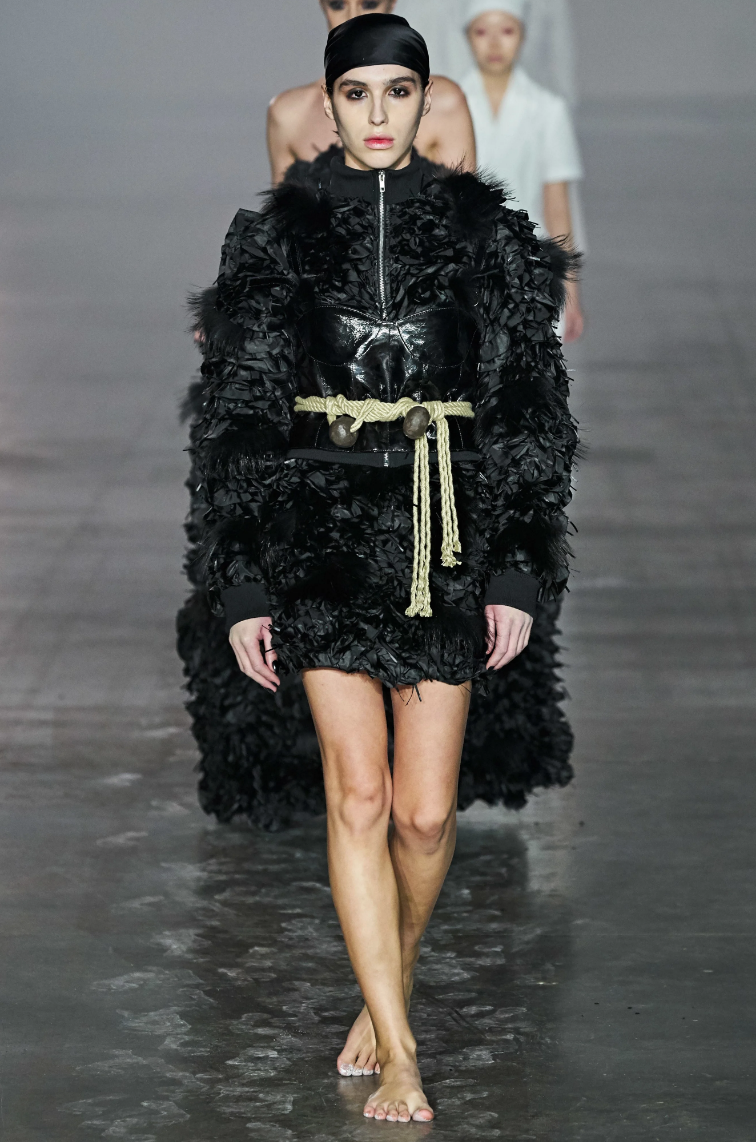
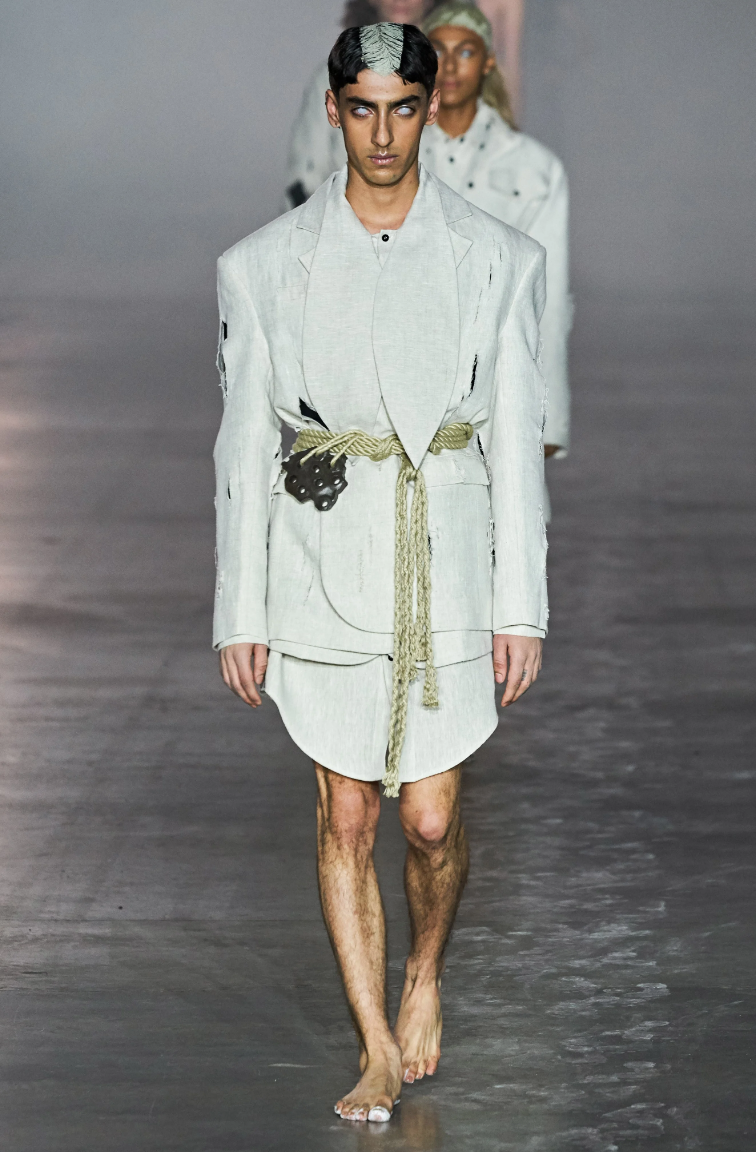
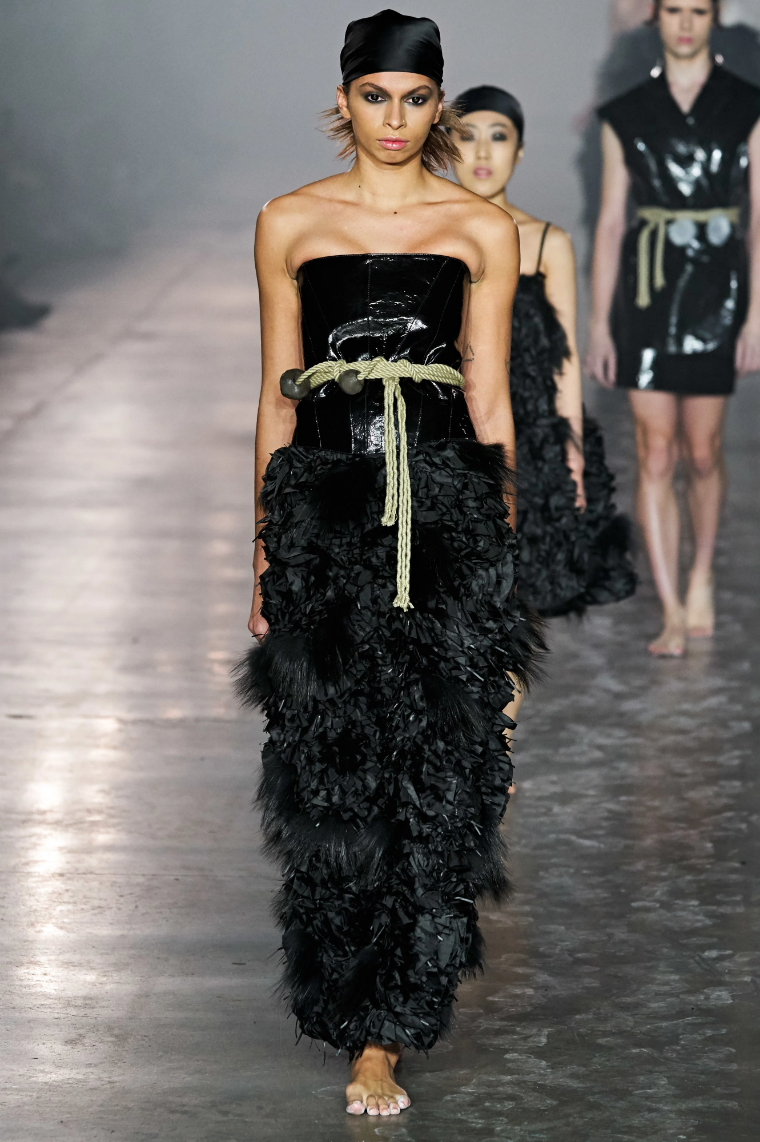
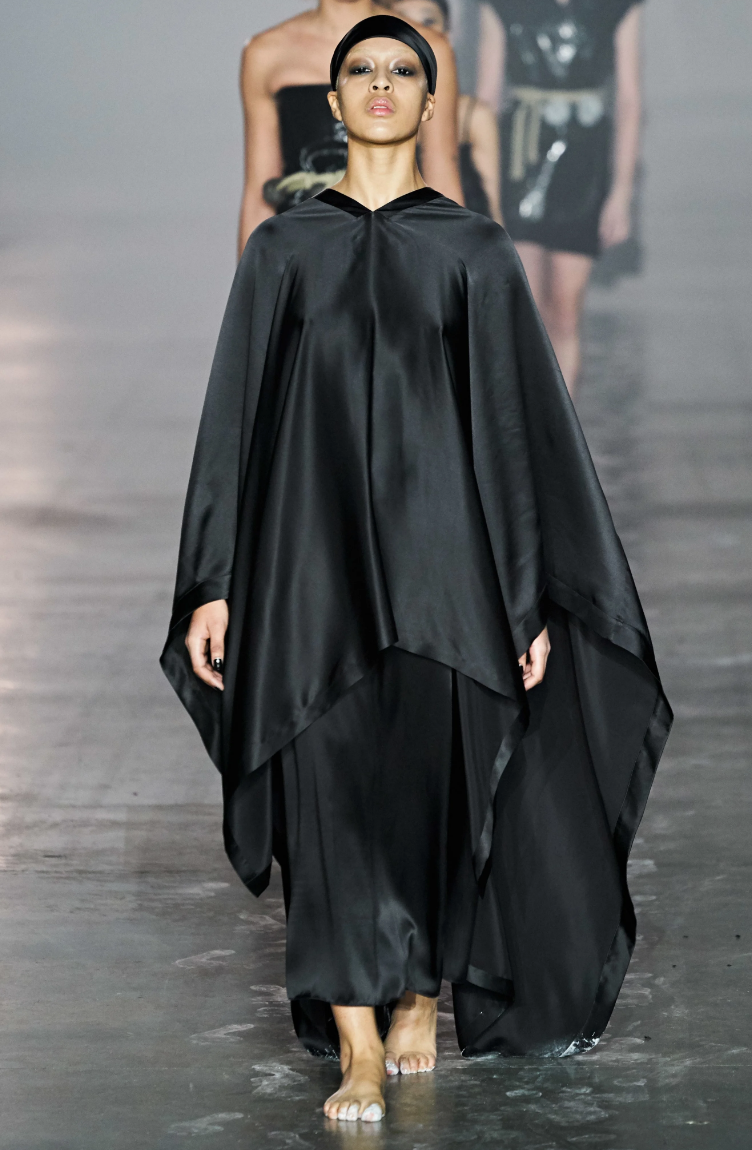
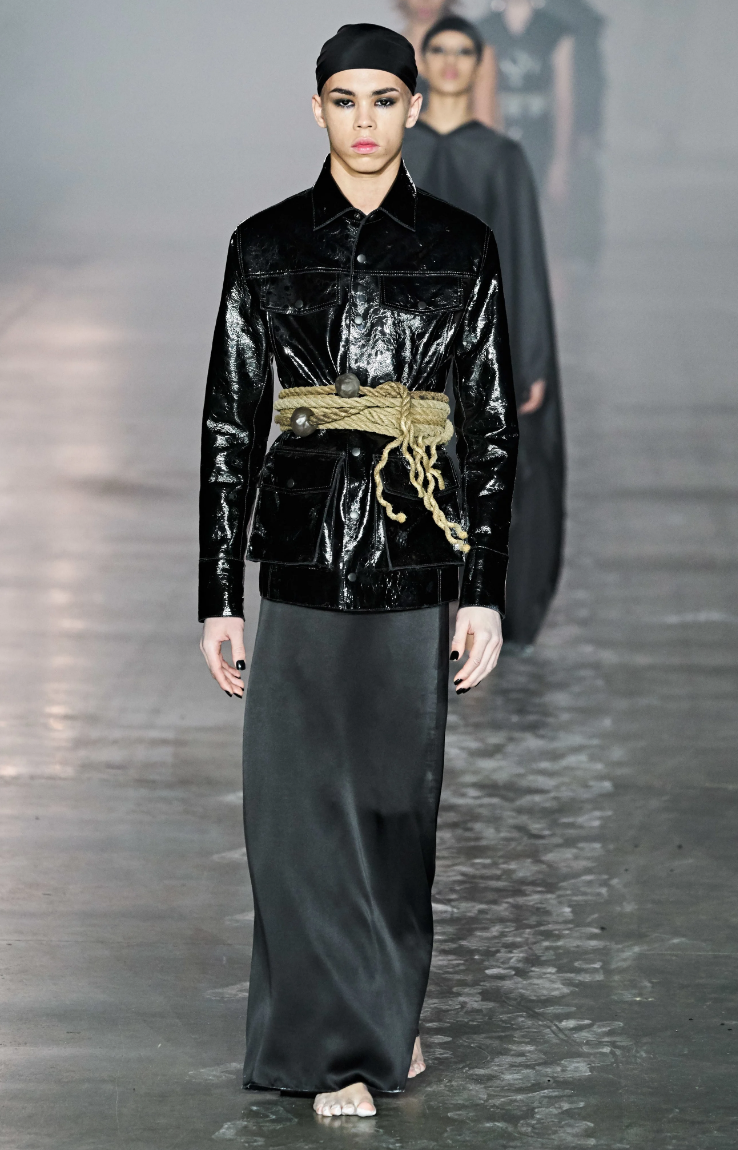
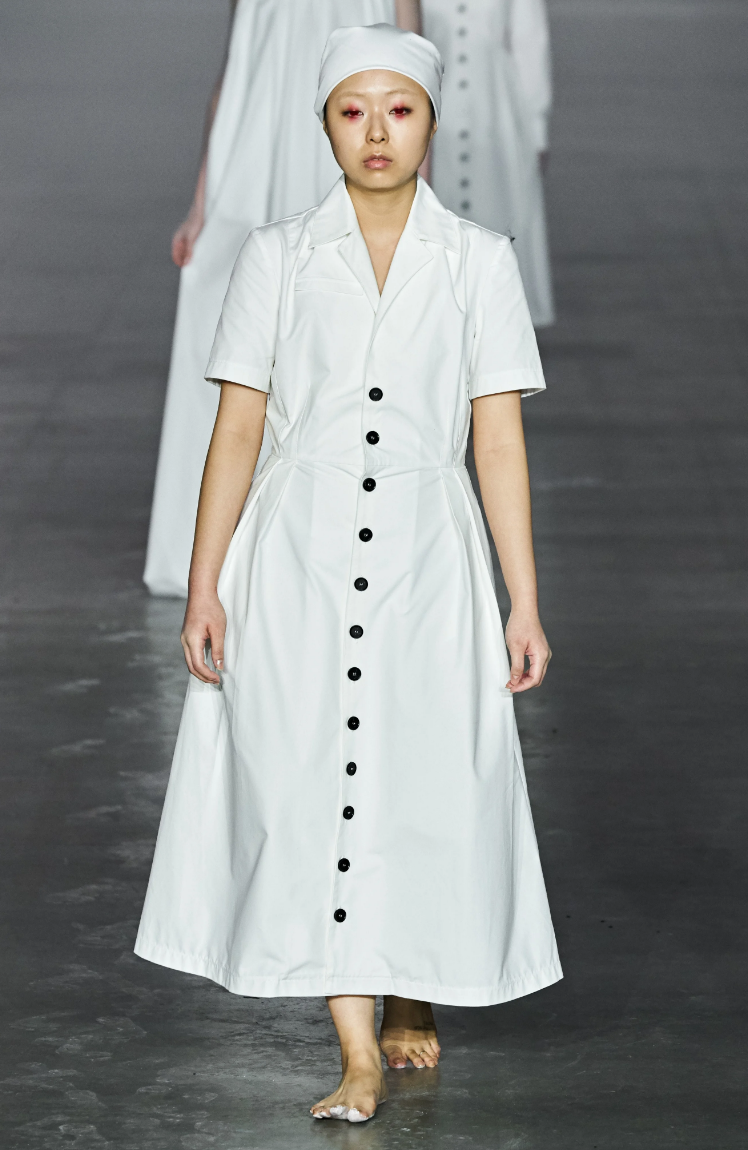
Slow, proud, and graceful, they emerged from the smoke-licked back of the runway. Their feet were bare but for powdered chalk, their eyes painted red or contact-lensed to be pupil-less. A piano’s soaring chords were engineered for emotion. One model in a pair of high-rise tailored trousers had his chest hair artfully styled to spell out Art School.

I hadn’t seen an Art School show since back in its boundary breaking MAN days in 2017, and on the face of it this one was consistent with its original Theo Adams–choreographed formula of unrepentantly celebratory dramatics: We’re LGBTQ+ and if you don’t like it, bad luck. Personally, I like it; however, between 2017 and now it feels like representation of non-cis sexualities—thanks much to Art School and others—is rightly well established in, if not the wider world, then certainly in the narrow realm of runway fashion. The ceiling that Art School once railed against has been rightfully shattered.

This means that the inherent subversive tension that imbued the original shows feels diluted. Thankfully, the real business of this business—you know, clothes—was well served when you looked beyond the chest hair. The press release spoke of a collaboration with the wonderful artist Maggi Hambling, but sadly this was hard to detect. Yet what did uplift were some of the garments: The slashed outerwear was tempered by some quite beautifully executed non-razored pieces that were transgressive in this context for being clothes that any unreconstructed norm with a sense of taste would, could, and should rightly hanker after. The same applied to the button-up dress that both prefaced (in black) and postscript-ed (in white) the show.

Source: Vogue

FASHIONADO
Charles Jeffrey Loverboy Fall 2020 Menswear

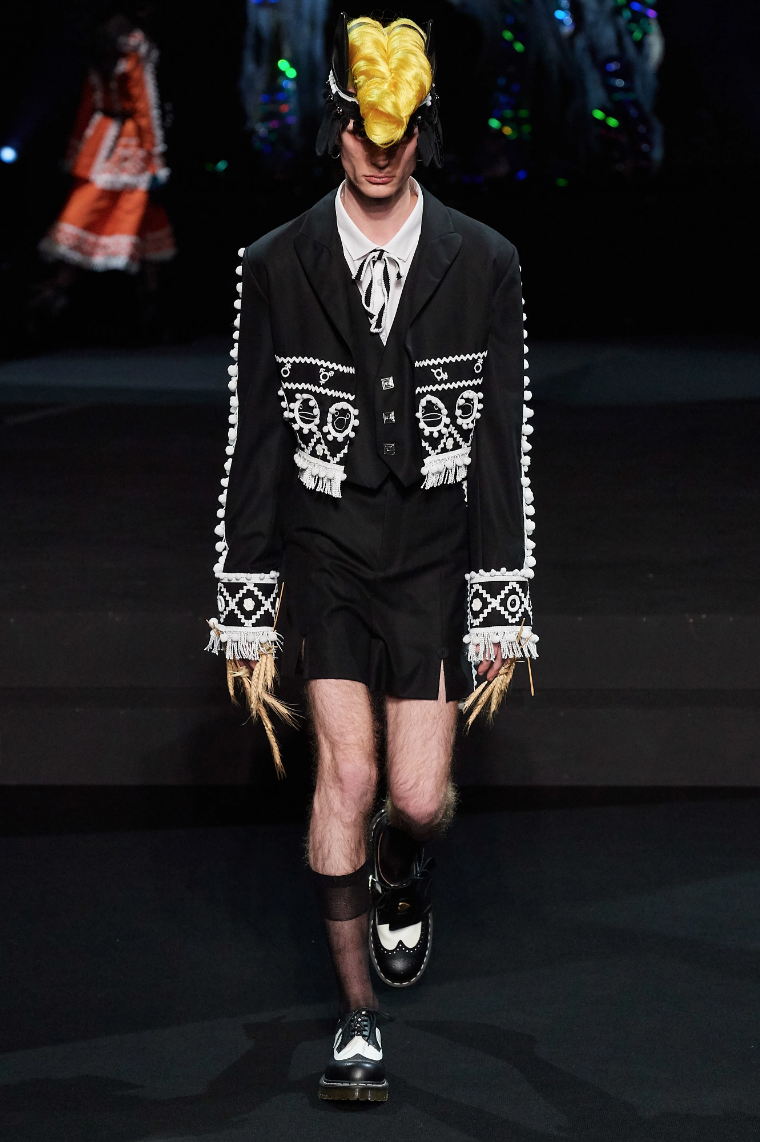
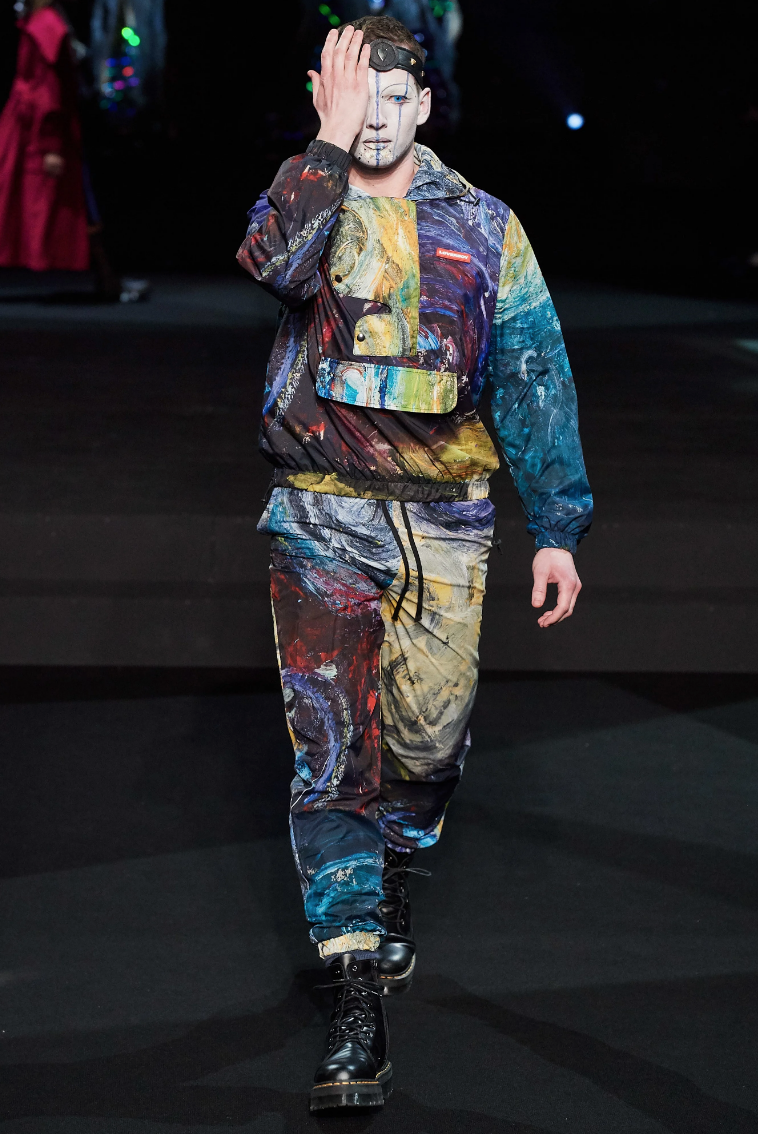
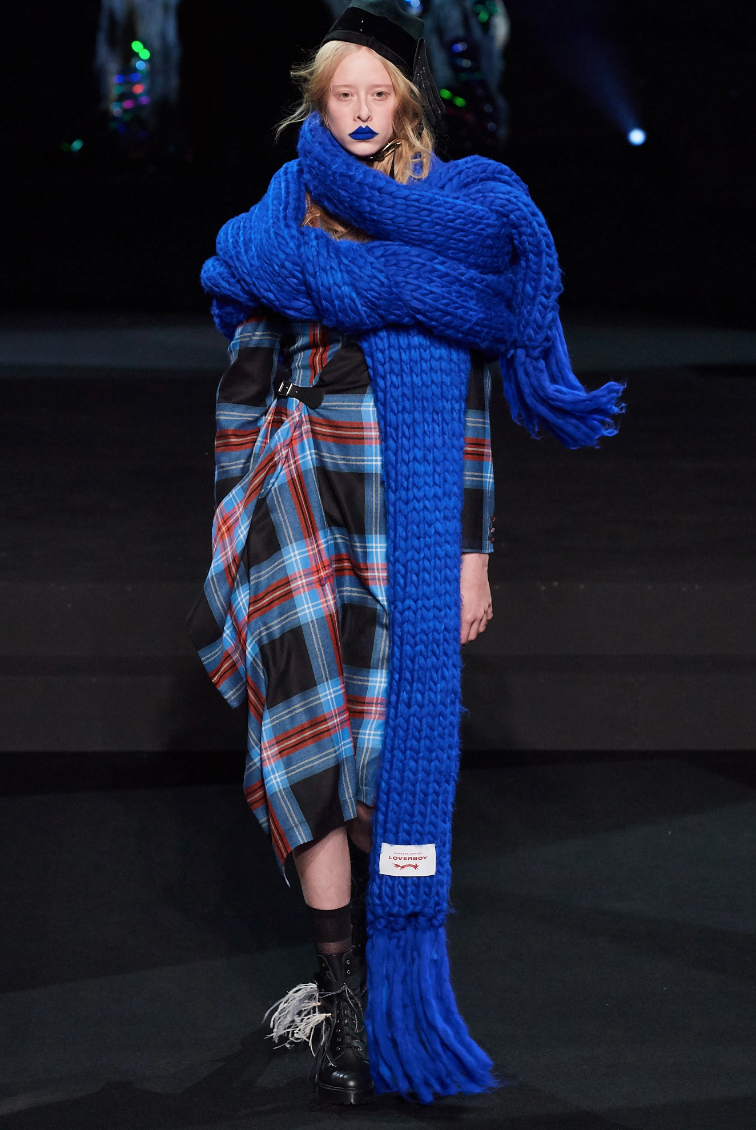
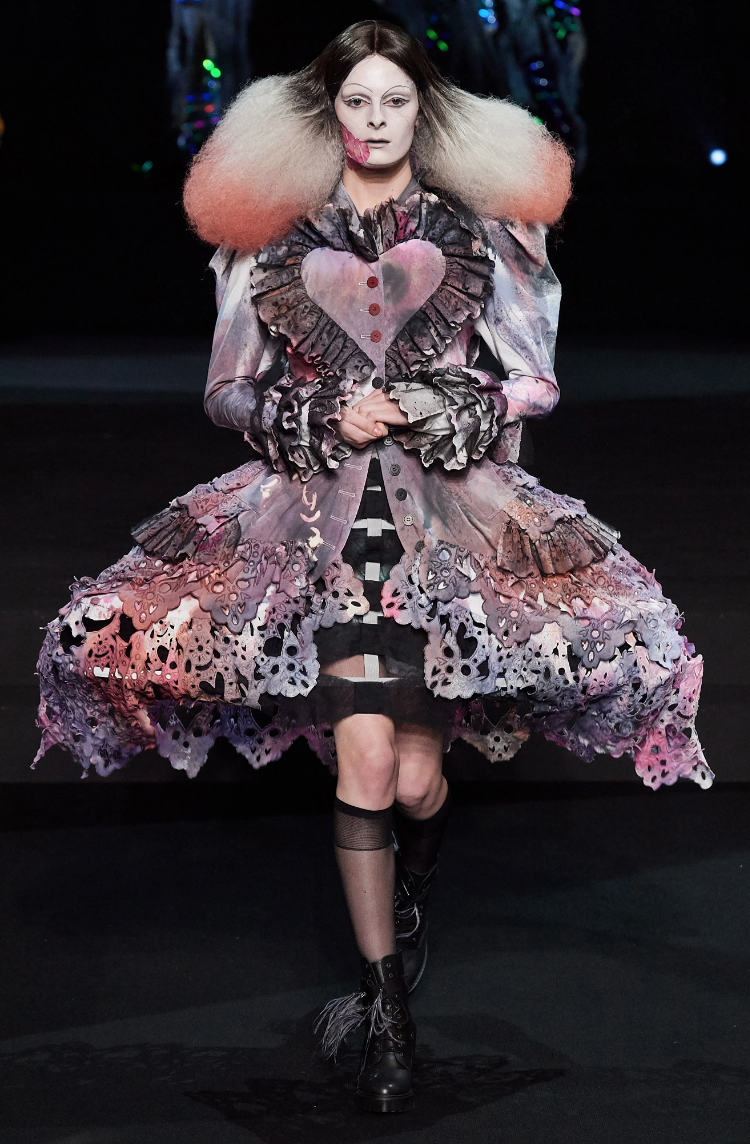
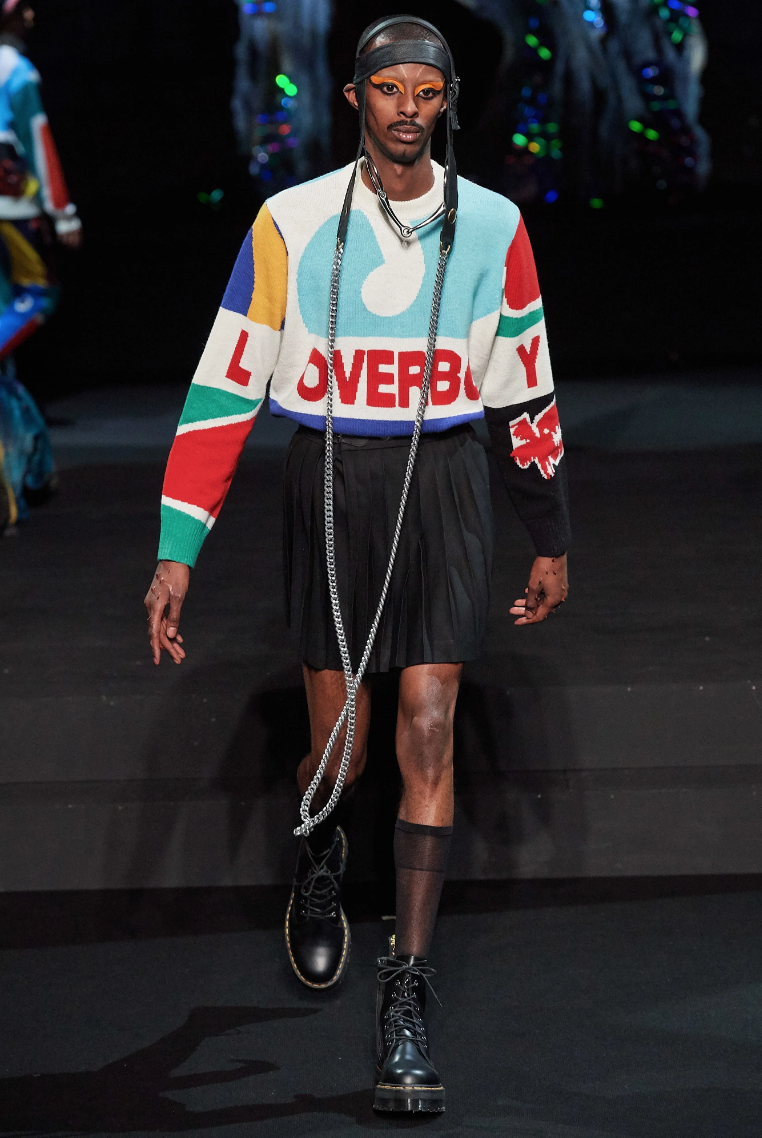
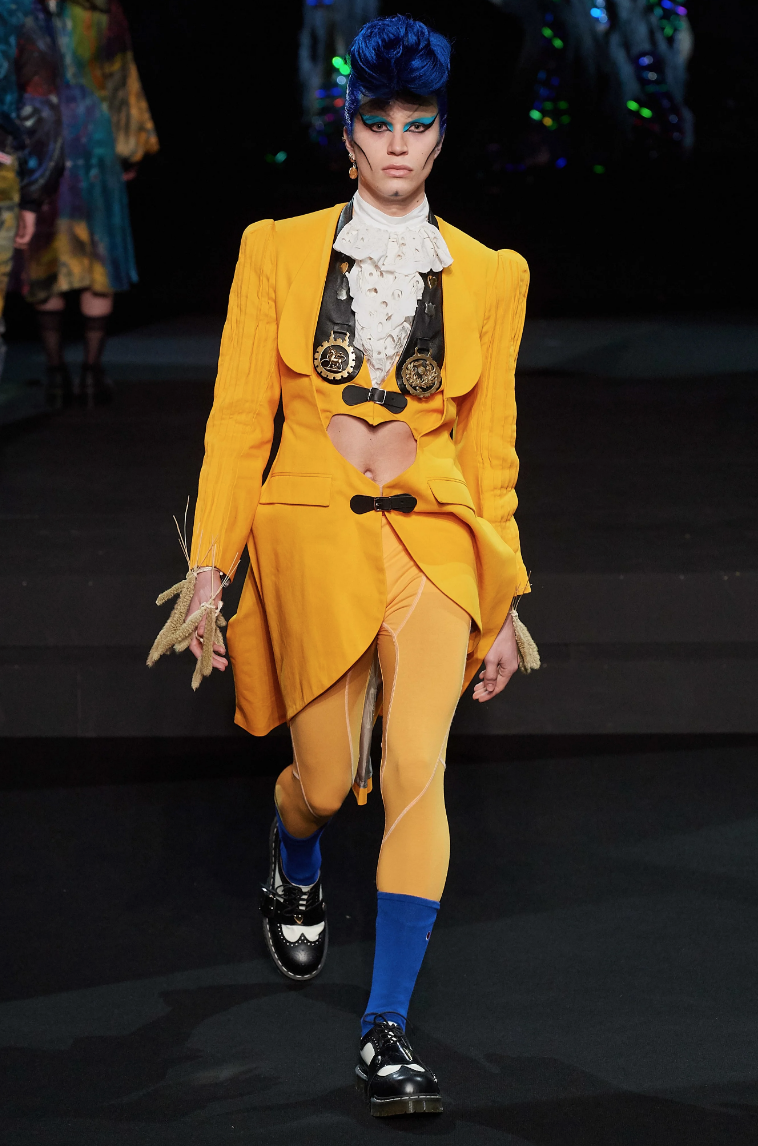
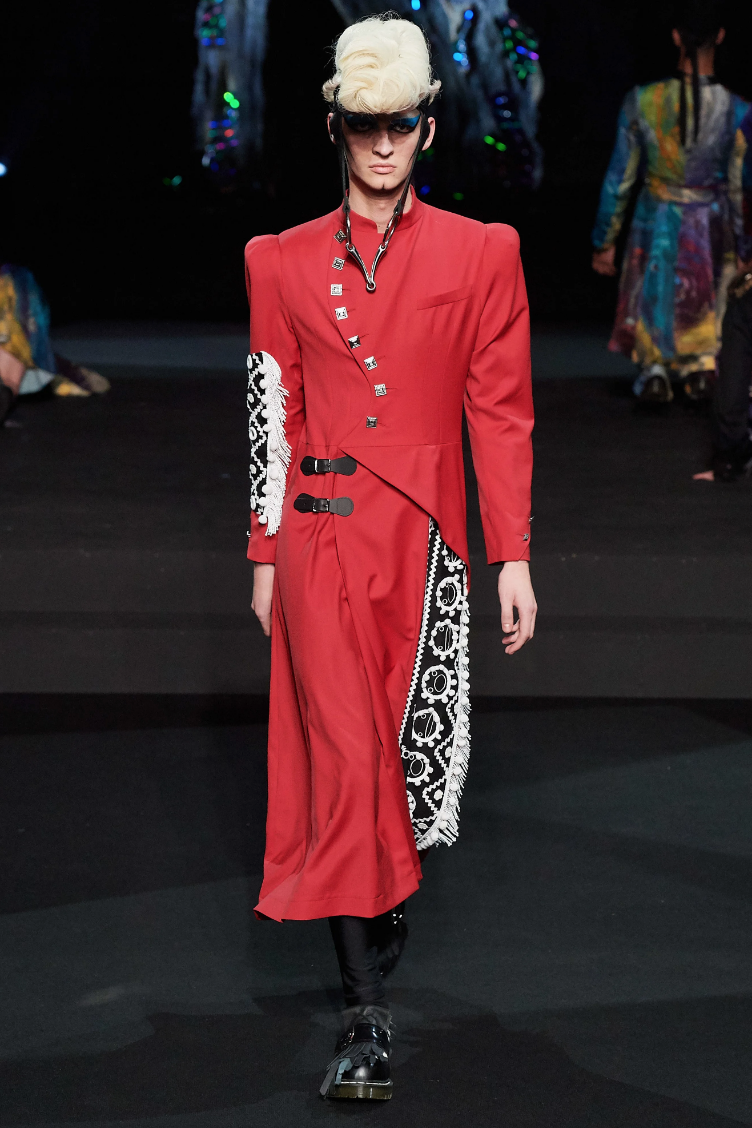
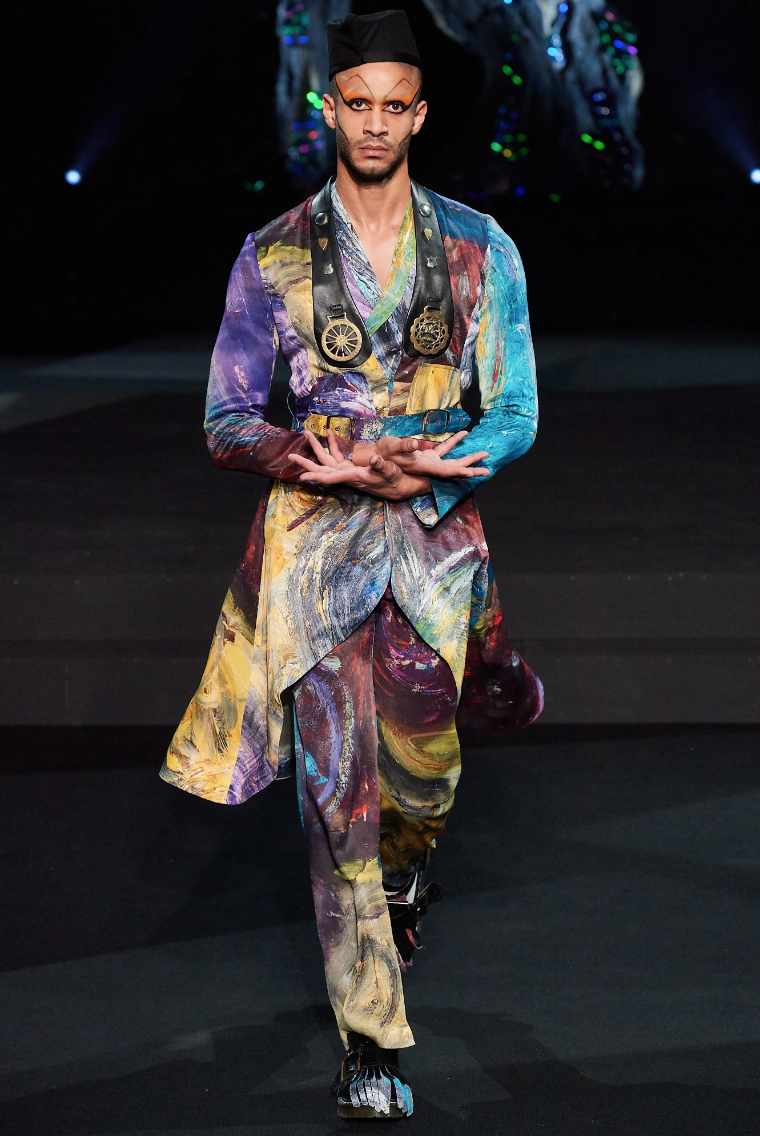
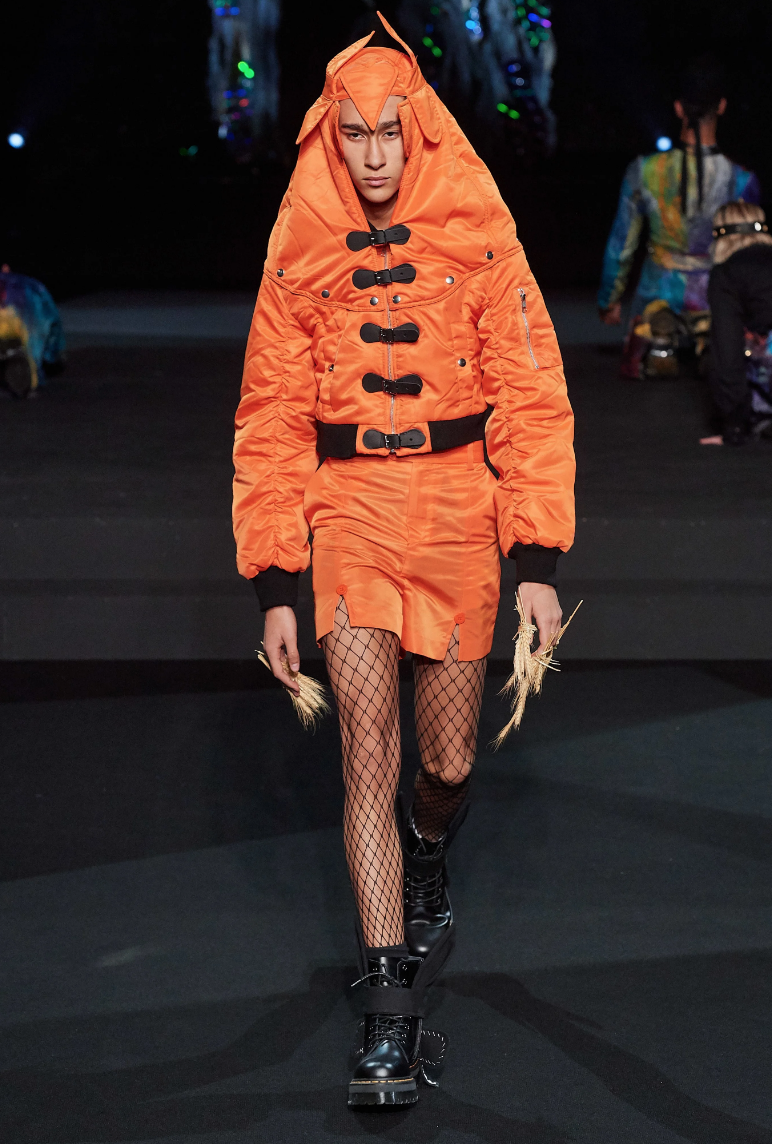
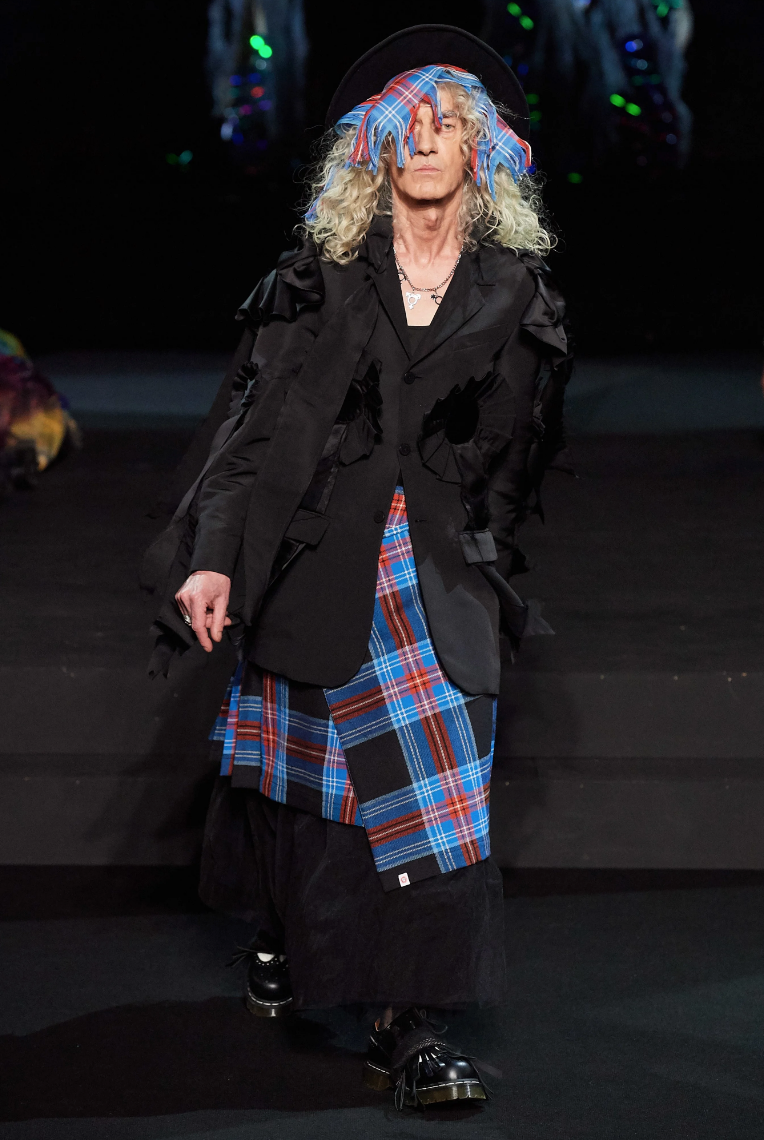
“It was a modern-day Scottish sacrifice,” said Charles Jeffrey at the beginning of his show debrief. There was an installation of a hollowed-out tree hung with CDs and topped by a disco ball silhouetted against the dark on a platform at the end of his runway—a place for the ritual propitiation of the ancient, abused forces of nature. So it seemed, as his characters came and went, some dressed in costumes hung with horse brasses and sporting huge equine quiffs, others in Loverboy tartans, and still more in pannier dresses. Another sect looked like a cult of eco-paganists clinging together in their own dance of lament.

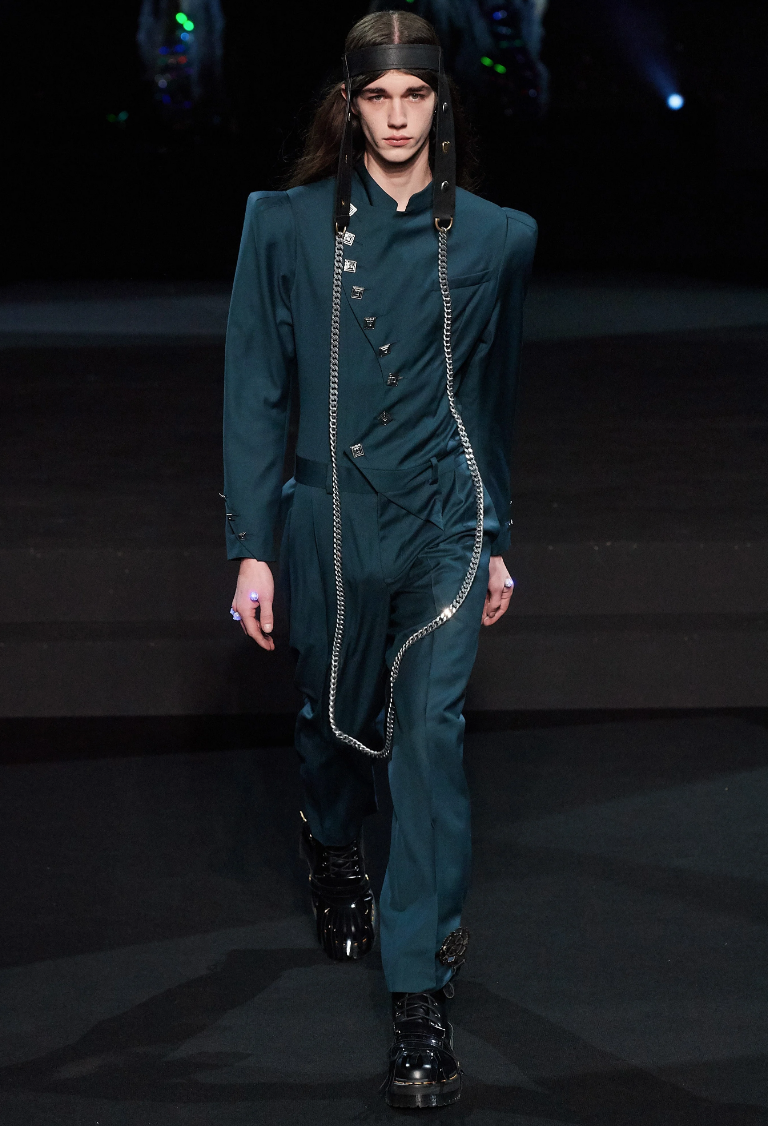
Let’s leave the narratives aside for a minute. What you see in these show pictures, shorn of surrounding context, is a clear view of his most accomplished, extensive setting out of his stall as a designer yet. Jeffrey has traversed that stage of his career where he’s presented generalized symbolic statements and reached a point where his tailoring fits impressively and sexily, starting with a teal all-in-one trompe l’oeil suit. His waisted, puff-shouldered jackets, flared asymmetric suits, and tartan trousers have magnetic swagger, and he’s gathered in a put-together softness in flower-sprigged prints. Good dresses. Great coats. Fun, bright Loverboy-fanboy sweaters and jersey polos.

There was a two-sided press release with this show. On one, a swirling, free-associative Scottish reel through folk tradition, art inspirations, and reimagined Glaswegian youth culture, undercut with intergenerational anger: “An older, hidden generation have made brutal calculations, and we’ve inherited their catastrophe.” On the other was his densely printed “Manifesto For Conscious Practice,” which contained the most salient takeaway. “We are working every day to improve our processes and working practices to ensure that we mindfully and with accountability respect our environment as much as we respect the people on whom the brand relies,” it began. “As part of this drive we are continuing to place equal value on human wellbeing alongside financial growth.”

Performing and costuming a fashion show confrontation with dystopian ecological disaster is one thing—many fashion shows have an undertow of this today. It’s another matter to actually do something concrete about it. Jeffrey is making that effort. Having gathered his team to study the weekly online sustainability course offered by the London College of Fashion, he is establishing better practices.

For Jeffrey, it goes beyond choosing to use GOTS-certified cotton, cutting down on chemical processes, and using recyclable plastic in packaging. “I think it’s about localism,” he said. “It’s about making sure that with the people you hire, that you’re giving them opportunity and training them. In a logistical way, too, it’s making sure that nothing transports too far, that fabrics are sourced nearby; that our teams go out to the factories we use to make sure the standards are okay.”

It was localism which circled him back to his Scottish roots for this collection. “I visited the Orkney islands and witnessed this pagan ceremony which has been going on for over 200 years. It’s a pageant that’s all about loving nature, amongst the rural families that live there.” The Horse Ceremony of Orkney involves ploughing contests and elaborate hand-crafted costumes. Their influences permeated the mad Teddy Boy horse-mane quiffs, the leather harnesses, and the lines of pom-pom, heart-shaped embroideries. Traveling on to Glasgow, he studied Margaret Mackintosh’s arts and crafts flower drawings.

Back to nature, again. Charles Jeffrey is a responsibility-taker and a realist; he didn’t hold back on acting out the doom he and his younger employees fear in this show. But he’s nevertheless a romantic, and a leader too. That must give those who work for him a rallying, optimistic sense of fun and purpose, even as they put on a show warning of impending disaster.

Source: Vogue

FASHIONADO